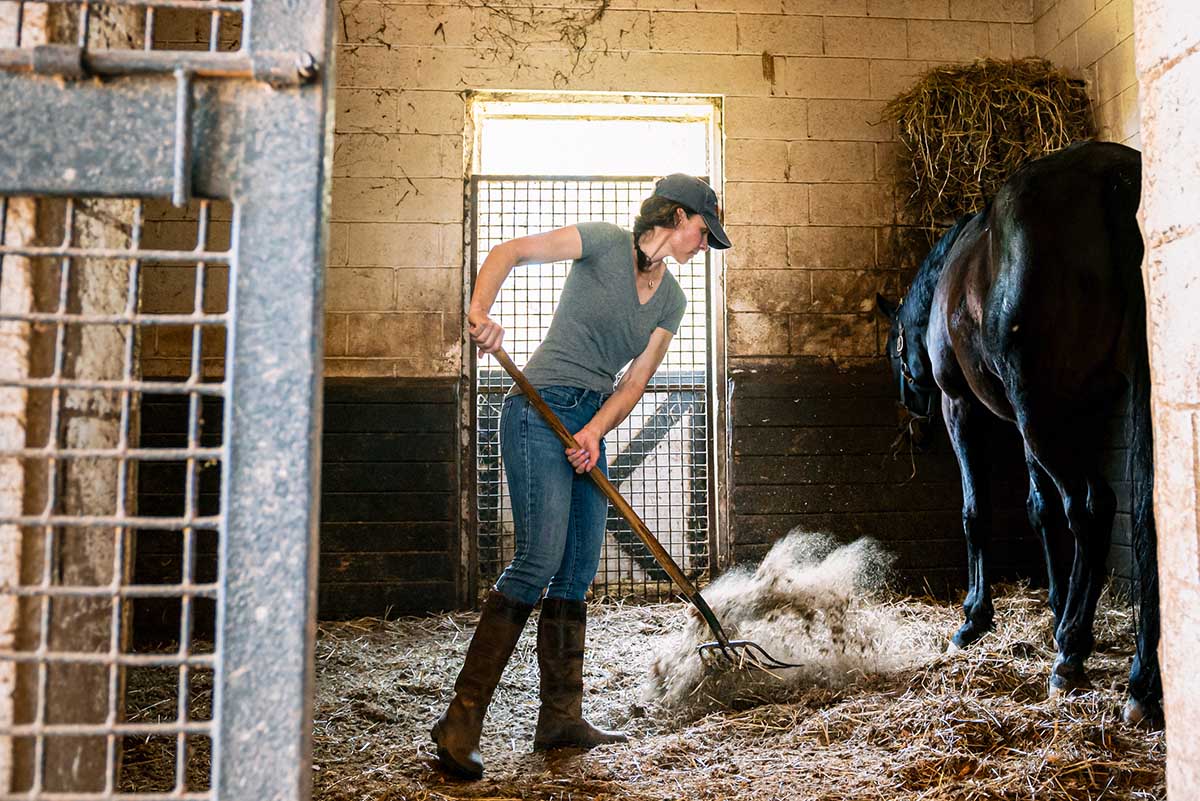
If you’re new to the horse world, you’re probably trying to figure out what to wear to the barn. Do you need fancy riding clothes? Can you show up in jeans and sneakers? The good news is you don’t need a whole new wardrobe to get started—you just need a few practical basics that keep you safe and comfortable. In this article, we’ll walk through the essentials so you can feel confident when you head to the barn, whether it’s for a riding lesson or a casual visit to spend time with your horse.
Footwear: Close-Toed and Sturdy
Common sense says to protect the toes. If you’re wearing sandals, flip-flops, or Crocs, you’re just asking to have your foot stomped on, lose a shoe in the mud, or feel the discomfort of rough ground through thin soles.
Lightweight shoes like sneakers might be comfortable for doing barn chores (especially during the heat of summer). Still, they don’t offer much protection when a hoof bearing the weight of a 1,000-pound horse comes down on your toes. Many an equestrian has suffered serious wounds and broken bones this way. Your footwear should adequately protect your feet and toes while providing you with traction to keep from slipping, especially when bathing your horse.
“Footwear is one of the most important things to pay attention to when it comes to your wardrobe at the barn, for safety’s sake,” says Kristin Waterman, a longtime owner. “Your footwear should protect you if you’re stepped on, help you be able to move more easily and securely, and you don’t want to worry about losing a flip-flop while handling a horse, especially if your horse spooks after seeing said flip-flop go flying.”
Ideally, you should wear sturdy shoes or boots that cover the ankle and have a slight heel. Choose a sock that rises slightly over the ankle or higher to guard against boot rubs on your legs. Moisture-wicking materials like merino wool are nice and breathable, while socks with extra padding around the heel and ball of the foot are comfortable on long rides.
Pants: Shorts, Jeans, or Breeches?
What you plan to accomplish during your time at the barn will dictate what pants are most appropriate. If we’re in the midst of a hot, sticky summer, one of the last things you want to do is wear heavy jeans while cleaning stalls and doing basic barn chores. In this case, shorts with closed-toe shoes like paddock boots might be more comfortable options.
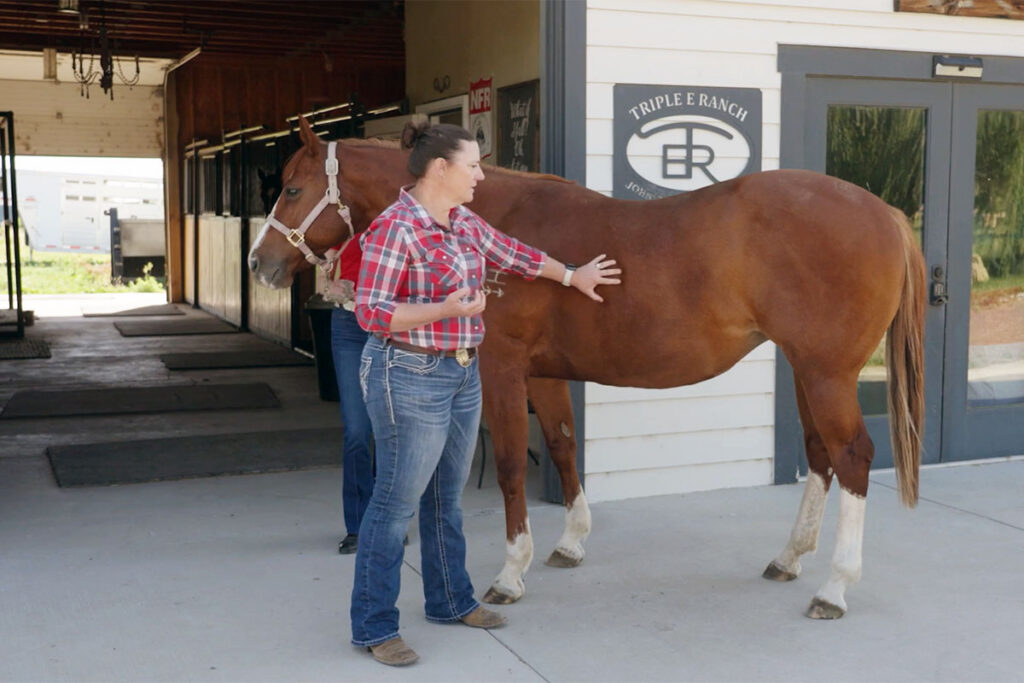
However, if you want to go for a ride, think about packing jeans or riding pants to change into. “Pants are a must-have when you’re riding,” says Waterman. “If you wear shorts, that leather pinching your inner thigh or calf over and over will remind you quickly why you should wear pants when riding.”
Avoid wearing overly baggy pants, whether you’re planning to ride or just work around the barn. Overly long or baggy pants can bunch up around your legs in the saddle, pose a tripping hazard, or cause an entanglement—potentially even with your horse’s hooves. Instead, wear properly fitted jeans or riding tights/breeches that allow you to move around the barn comfortably and keep you settled in the saddle. Some riding pants have grippy seats to help keep your place in the saddle for extra safety.
Keep your breeches or jeans secure with a belt. Riding involves a lot of movement, so a snug belt prevents slipping or sagging, especially with breeches that stretch over time.
Tops That Protect From the Elements
Again, neatly fitting shirts that aren’t too baggy will help you avoid getting caught on fence posts and bridle hooks. A comfortable shirt that can wick away sweat and protect you from the sun during the summer is your best bet, whether you’re performing chores or riding. In cooler weather, wear layers you can easily remove as your body temperature rises with activity.
“Long-sleeved sun shirts with mesh are perfect for the summer months,” says Erin Hsu, a lifelong horse owner, mom, and youth program volunteer. “They protect you from the sun as well as bugs or sand burn, in case of unplanned dismounts.”
Nonnegotiables
If you’re planning to ride, a helmet should be nonnegotiable, no matter your age. Hsu recommends taking the time to find one that fits you comfortably. “Any approved helmet is better than no helmet, but it’s worth getting one that’s light, comfortable, and fits well,” she says. “The best helmet is the one you’re most likely to wear.”
Of course, there are exceptions to most rules when it comes to what to wear at the barn. “There’s a difference between what you wear in lessons and what you wear if you were just riding around in your own barn,” says Waterman. “If you’re taking lessons somewhere, don’t hesitate to ask your instructor if she/he has any requirements for what to wear. I’ll make sure I wear clean pants, a clean shirt, and have my clean boots. How you present yourself to an instructor is important. It shows them respect.”
While personal style, discipline traditions, and barn culture all play roles in what people wear, the fundamentals don’t really change—especially when safety is on the line. Whether you’re riding at home, taking a formal lesson, or helping kids learn their first posting trot, the basics still matter.
“Working with beginner riders through 4H and other programs, we try to balance safety with ease of entry into riding,” says Hsu. “We don’t want to require a lot of expensive dedicated apparel! While there are a lot of specific trends and discipline preferences. At a baseline, we require our riders to have long pants and closed-toe shoes with a heel. Helmets are also nonnegotiable for riding.”
Take-Home Message
Barnwear doesn’t have to be boring (hello, fun socks, blingy belts, and colorful riding shirts!). But it should be safe and practical for tasks like riding and stall cleaning. Start by stocking up on the essentials: Helmet, boots, and comfortable riding apparel. Then you can expand your wardrobe to include trendy items and accessories like a cellphone holster for your belt as you figure out what you want and need.
Related Reading:
- Riding Safely: Essential Tips for Horseback Riders of All Levels
- Starting Horseback Riding Lessons: What To Know
- Hot Weather Hacks: How to Stay Cool at the Barn
Megan Arszman, a lifelong horsewoman, loves sharing her passion for horses with others, especially her daughter. Together, they enjoy riding their Quarter Horses around their Central Indiana farm and spend weekends showing Miniature Horses and dogs.
Are you enjoying this content? Sign up for My New Horse’s FREE newsletter to get the latest horse owner info and fun facts delivered straight to your inbox!