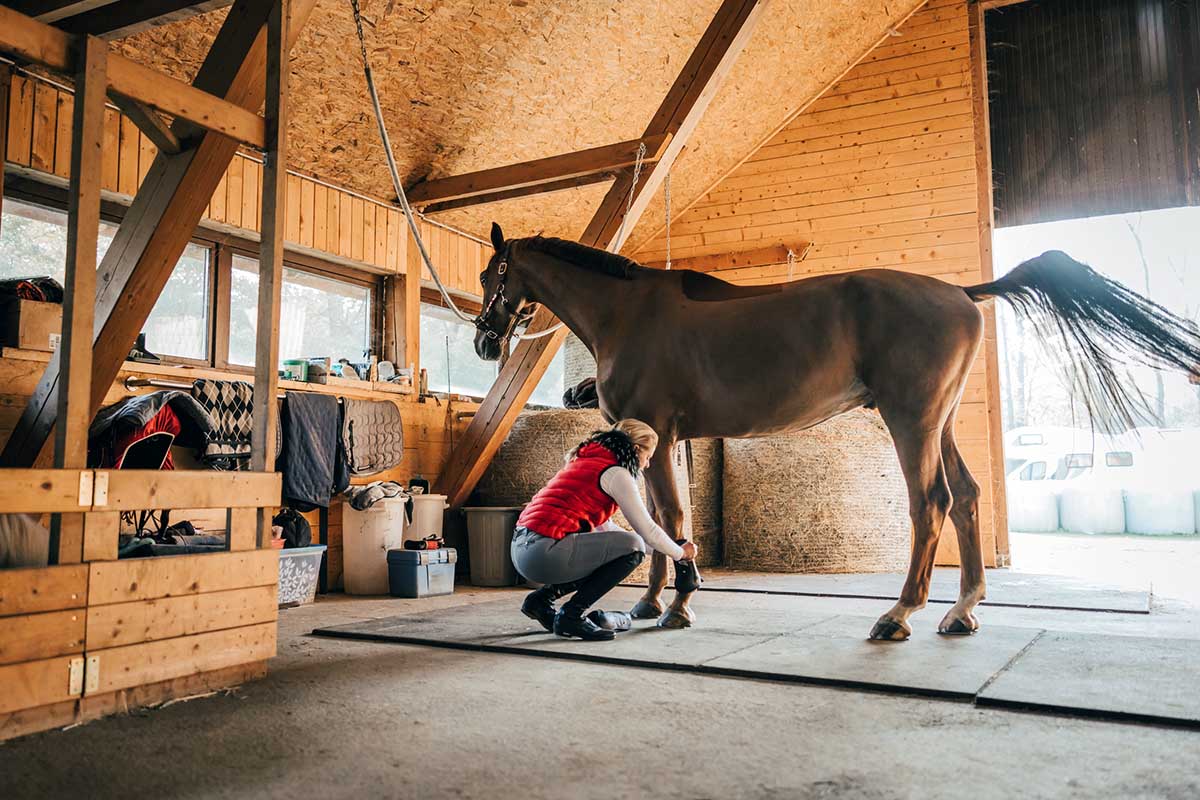
Numerous research papers have shown the link between pain and behavior in horses. The evidence is loud and clear: Pain consistently causes horses to behave in ways that we can readily observe. Let’s take a closer look at how pain can impact behavior. If you know how to recognize behavioral signs of pain in horses, you’ll be better positioned to get your horse prompt treatment when needed.
What Is Pain?
As was so eloquently stated in the classic film The Princess Bride, “Life is pain, highness. Anyone who says differently is selling something.” Pain is a natural part of life for all animals. Both a physical and mental experience, pain occurs when an animal is exposed to something that could harm or damage their body.
Nociceptors are special cells that detect things that could damage the body, such as pressure, chemicals, or extreme temperatures. When these cells detect possible harm, they immediately send a signal to the brain, and the brain processes this signal. Because every horse is different, how this signal is processed may vary. Some horses’ brains will ignore or endure the pain signal, while others will prompt the horse to swiftly react. This varying response to pain signals leads to different levels of “pain tolerance.”
How Pain Impacts Behavior
When horses experience pain, it is always accompanied by negative emotions. This is because pain is processed in brain structures that are also responsible for regulating emotions, particularly in emergency situations. This makes perfect sense when we remember that causing harm to the body can quickly become a dangerous situation, whether from immediate catastrophic injury or a wound that becomes infected days or weeks later.
When the brain detects pain, it triggers an instantaneous withdrawal reflex to move the body part away from the harmful stimuli as fast as possible, minimizing damage. However, it’s the involuntary emotions that cause the horse to engage in an even bigger behavioral response. Reflexes trigger withdrawal, but emotions like fear or anger prompt the horse to further escape or survive the situation to minimize harm. This might include a wide range of behaviors under several broad categories. Examples include freezing, fidgeting, fleeing, fighting, or even “fainting” (entering a state of tonic immobility). These behaviors are all about helping the horse minimize damage and survive to live another day.
Unfortunately, these behavioral responses to pain result in horses behaving in ways people often find problematic or unwanted. A horse with kissing spines might refuse to load in the trailer. A horse with gastric ulcers might bite when groomed or girthed up. Or a young horse that has been punished for pulling their leg away when shod might begin to pace anxiously in their stall when they hear the farrier’s truck arrive. In each situation, pain, or the anticipation of it, prompts the horses to behave in ways that might help them avoid or limit the pain they feel in those contexts.
Related Reading: From Body Language to Behavior: How Horses Communicate
Identifying Pain in Horses
Researchers have shown that observing behavior is a reliable way to identify pain in horses. Standardized pain scales have been developed using horses known to be pain-free as well as those known to be in pain. Because pain can have different qualities, such as dull or sharp, and it can occur in different body locations, pain scales have also been developed to reflect this.
Pain’s Prevalence and Greater Impact
When we know how pain affects emotions and behavior, we can better identify unwanted behavior that might stem from it. A recent review of a year’s worth of my own cases in which horse owners contacted me for behavioral issues showed that in 95% of the cases (excluding straightforward issues such as needle shyness), observable signs of pain were present. In almost all instances, the owners did not perceive their horse as having any physical problems. My colleagues have shared similar numbers, and we all find it deeply concerning. Pain isn’t just a welfare issue in the short term. Chronic, untreated pain reduces a horse’s quality of life. It also negatively impacts physical health, reduces immune responses, and impairs learning and performance. Left untreated, pain can even lead to states of despair or depression in horses.
Summary
Ultimately, your veterinarian is the person best suited to address pain in your horse. But by educating yourself on how pain can impact horse behavior and how horses in pain behave, you are better positioned to get your horse prompt treatment when they do inevitably experience some sort of pain. Life might be pain, but that doesn’t mean our horses need to suffer in silence.
Related Reading:
- Learn to Pick Up on These 6 Subtle Signs of Pain in Horses
- What Does Tail Swishing Mean in Horses?
- What Does it Mean When a Horse Pins Its Ears?
Lauren Fraser, MSc, FFCP, has helped people understand horse behavior problems since 2006. With a background working as a horse trainer, an MSc in clinical animal behavior, and more than a decade working as an equine behavior consultant, Lauren’s approach gets to the heart of why horses behave the way they do and addresses issues using low-stress methods. Lauren also guest lectures at universities, presents at conferences, and creates educational programs for horse owners and equine professionals.
Are you enjoying this content? Sign up for My New Horse’s FREE newsletter to get the latest horse owner info and fun facts delivered straight to your inbox!