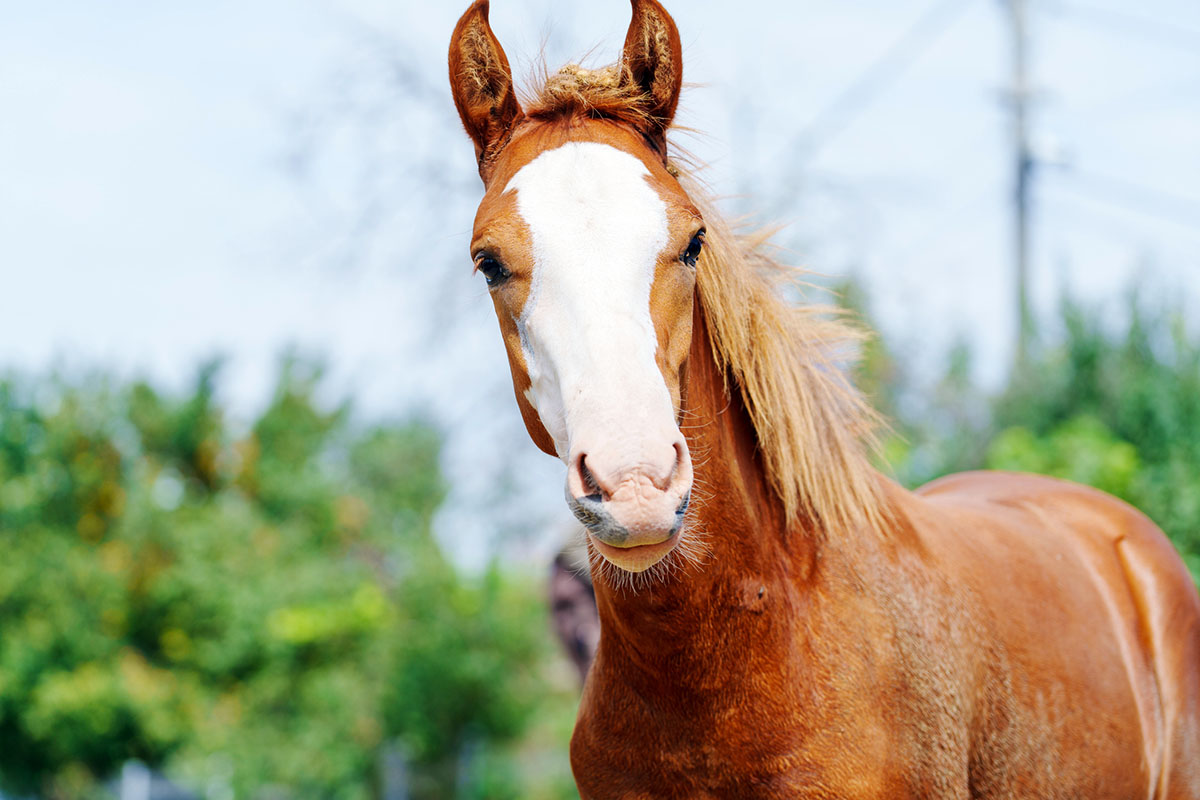
Horses come in a wide variety of coat colors and patterns, but their white face and leg markings are often what make them instantly recognizable.
Learning to identify these markings is a useful skill for any horse owner. Not only will it help you describe your horse accurately, but it also comes in handy when filling out registration paperwork, veterinary records, and other identification documents. Here’s a guide to the most common white markings you’ll see on horses and how to tell them apart.
Common White Face Markings on Horses
A horse’s facial markings are identified by their shape, size, and location. There are five basic types of white face markings, although individual markings can vary considerably.
Star
A star is a white marking on a horse’s forehead, usually above or between the eyes. Despite its name, it doesn’t have to be star-shaped. Stars can be round, oval, irregular, or even just a small patch of white hairs.
Stripe
A stripe is a narrow line of white running vertically down the center of the horse’s face. It can extend from the forehead toward the nostrils and might be straight, crooked, continuous, or broken into sections.
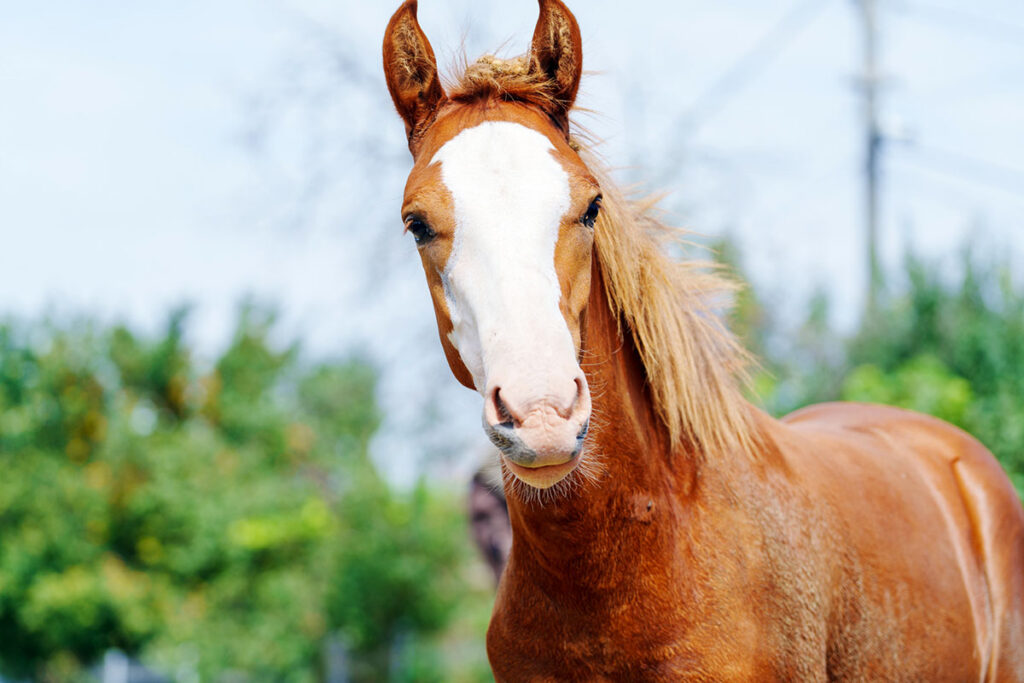
Blaze
A blaze is similar to a stripe but much wider. It typically extends from the forehead down the bridge of the nose and can vary considerably in width and shape. Unlike a bald face, a blaze generally doesn’t extend around the eyes.
Bald Face
A bald face features a large area of white covering much of the horse’s face, extending around one or both eyes and often down to the nostrils. Some bald-faced horses have blue eyes, although this isn’t always the case.
Snip
A snip is a small white marking on the muzzle, usually between the nostrils. Some snips extend onto the upper lip or into a nostril. A horse can have a snip on its own or in combination with a star or stripe.
Keep in mind that horses can have multiple facial markings. For example, you might describe a horse as having a “star and snip” or a “star, stripe, and snip.” The markings might connect or appear as separate patches of white.
Common White Leg Markings on Horses
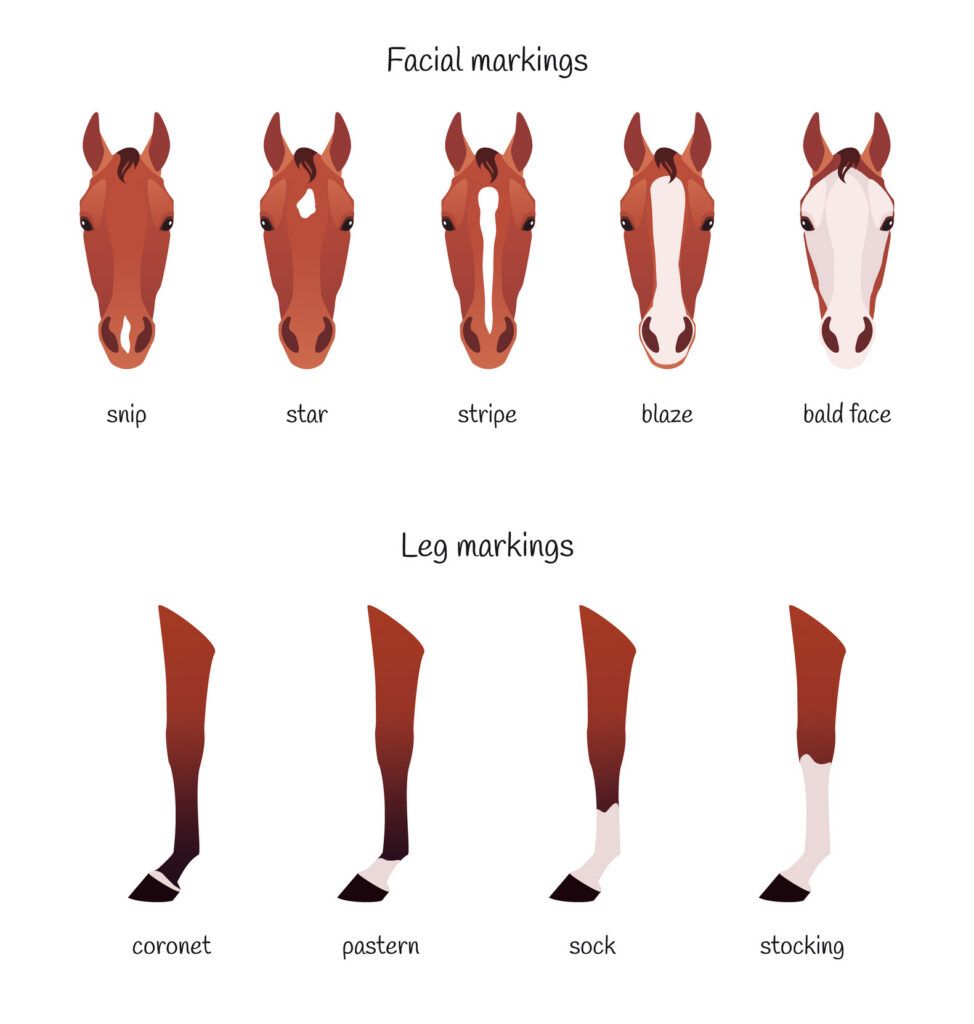
White leg markings are generally named according to how far the white hair extends up the leg. Understanding a few basic parts of the horse’s anatomy-particularly the coronet, pastern, fetlock, and cannon bone-will help you identify them.
Here are the most common terms, starting with the shortest markings and working upward:
- Coronet: A narrow band of white hair just above the hoof, along the coronary band where the hoof wall begins.
- Pastern: White that extends from the hoof up the pastern but stops below the fetlock joint.
- Fetlock or ankle: White that reaches or covers the fetlock, the prominent joint just above the pastern.
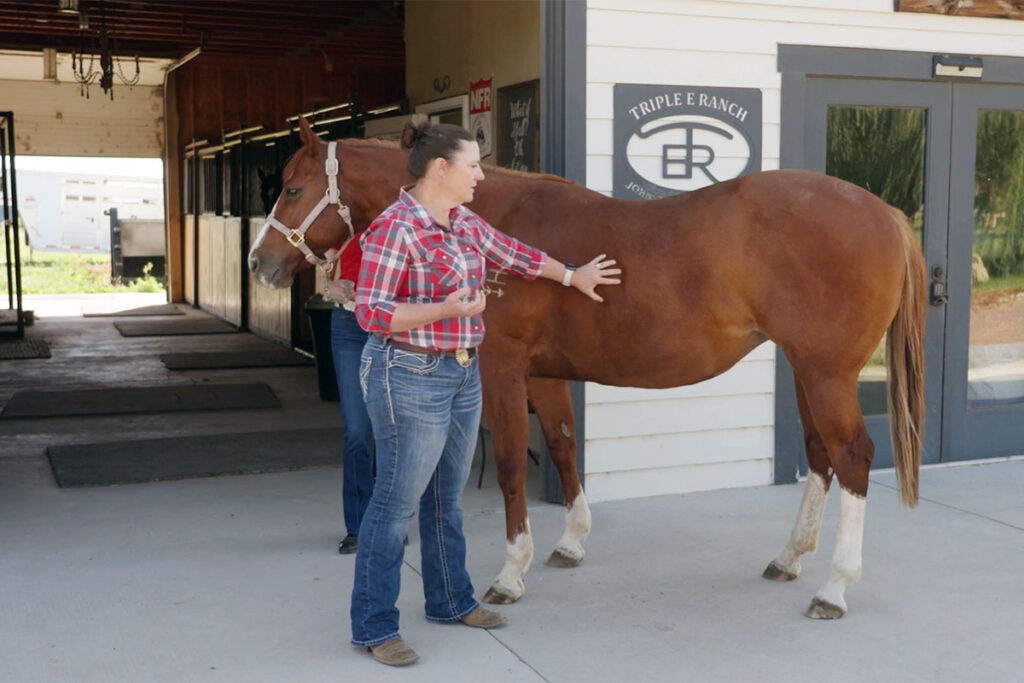
- Sock: White that extends above the fetlock and partway up the cannon bone. Some people also call this a half stocking.
- Stocking: A taller white marking that extends up to the knee on a front leg or the hock on a hind leg. Markings extending above these joints are sometimes called high white.
You might also notice small dark spots within a white leg marking, particularly near the hoof. These are called ermine spots and are another distinguishing feature.
The USDA’s equine identification guide provides illustrations and descriptions of these markings. Terminology can vary among breed registries, so describing exactly where the white ends is often more useful than relying on a general term like sock or stocking.
Why Is It Important to Know Your Horse’s Markings?
Beyond being interesting features of your horse’s appearance, white markings can serve an important practical purpose: identification.
For example, if you needed to describe your horse to a veterinarian, boarding facility manager, or animal control officer, saying “bay gelding with a star, snip, and two white hind socks” would be much more helpful than simply saying “brown horse.”
It’s a good idea to keep clear photographs of your horse’s face and all four legs, along with written descriptions of any distinctive markings. You can also record other identifying features, such as hair whorls, scars, and brands. Once you learn the basic terminology, identifying horse markings becomes second nature.
Related:
- A Comprehensive Guide to Common Horse Coat Colors
- Strange Anatomy: Spots, Ergots, and Chestnuts on Horses
- Unraveling the Rainbow: Paint Horse Coat Patterns
Are you enjoying this content? Sign up for My New Horse’s FREE newsletter to get the latest horse owner info and fun facts delivered straight to your inbox!