Horses are experts at hiding discomfort, and neck pain is one of the sneakier problems to spot. Your horse can’t tell you his neck is stiff, but he can show you through small changes in how he moves, eats, and responds under saddle. Here’s what to look for, so you can catch problems early and help your horse feel better faster.
Common Signs of Neck Pain
Neck pain doesn’t always look like a sore neck. Often it shows up as a change in attitude or performance. Researchers at Colorado State University note that some horses show only a subtle drop in performance, while others react in dramatic, even dangerous ways. Watch for:
- Stiffness when bending. Difficulty turning one direction or moving in circles, or bending easily one way but not the other.
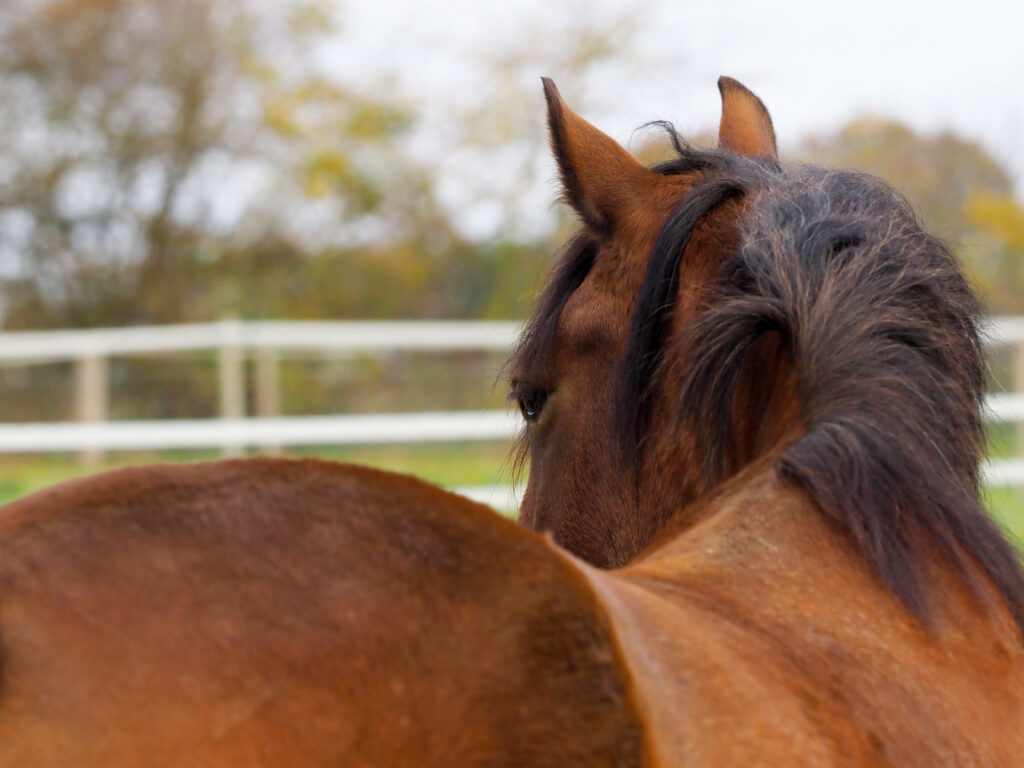
- Odd head or neck carriage. Holding the neck rigid, low, or stretched out, or turning only the eyes to look at you instead of the whole head.
- Changes under saddle. Head tossing, pulling on the reins, refusing to go forward, or bolting when asked to turn.
- Trouble eating from the ground. Some horses lose weight because reaching down to graze or eat their hay hurts.
- Touchiness. Flinching when groomed, resisting the bridle, or avoiding being caught.
- New spookiness. Sudden fearfulness in places your horse knows well.
- Movement clues. A stiff, still neck when walking, patchy sweating on one side of the neck, or a front-leg limp with no obvious cause.
Related: Understanding Behavioral Signs of Pain in Horses
Common Causes of Neck Pain
Neck pain can affect any horse at any age, from a young prospect to a retired trail buddy. Some of the most common causes include:
- Muscle soreness or strain. Overwork, a poorly fitting saddle or bridle, or simply sleeping in an awkward position can leave neck muscles tight and sore.
- Trauma. Pulling back while tied, getting cast in a stall, or a fall in the pasture can injure muscles, ligaments, or vertebrae.
- Arthritis. Wear and tear on the small joints between the neck vertebrae is one of the most common causes vets see, especially in older horses.
- Wobbler syndrome. Also called cervical vertebral stenotic myelopathy (CVSM), this condition squeezes the spinal cord inside the neck. It most commonly develops in fast-growing young horses but can also occur in older horses due to injuries, falls, or arthritis.
- Poll problems. Inflammation of the nuchal ligament that runs along the top of the neck or the small fluid sac (bursa) just behind the ears can make a horse resist flexing at the poll or wearing a bridle.
Steps to Keep Your Horse Comfortable
When managing a horse with a painful neck or while waiting for the vet, you can take a few steps to keep him comfortable.
Take a break. Pause riding and work until you know what’s going on. Pushing through pain can make an injury worse.
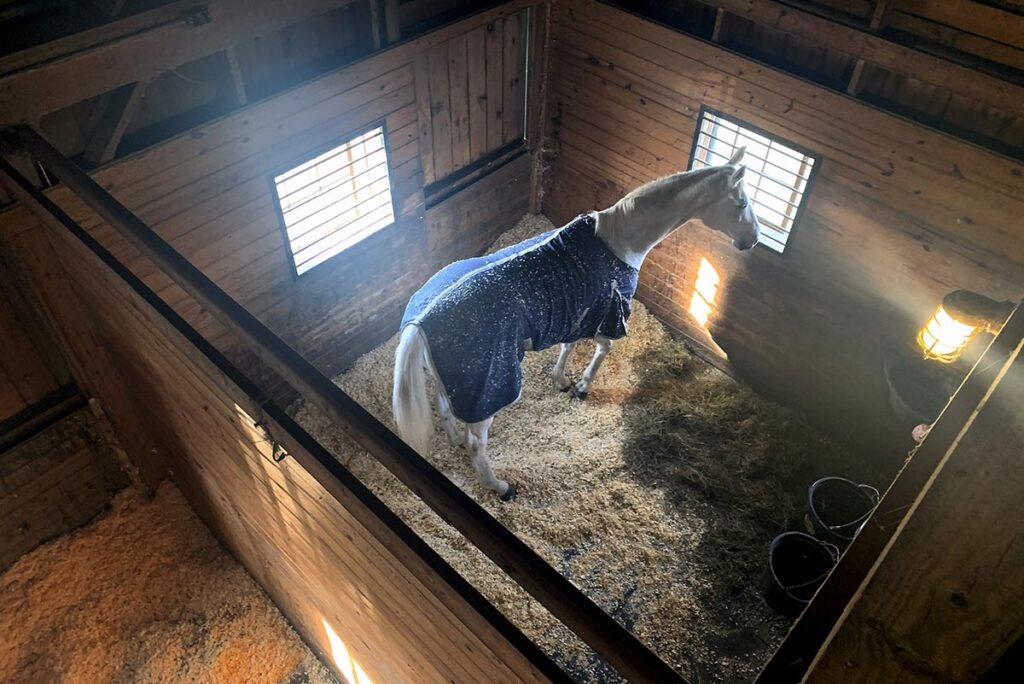
Make eating easy. If your horse seems bothered by lowering his neck, offer hay and water at a neutral level (about chest height) rather than on the ground.
Check your tack. A saddle or bridle that pinches or fits improperly can cause or worsen soreness. A professional saddle fitter can assess your tack and make adjustments to its fit.
Keep a log. Write down what you notice and when it started, and take videos of your horse moving. This helps your veterinarian a lot.
Skip the DIY meds. Don’t give pain relievers like bute without your vet’s guidance. They can mask important signs and aren’t right for every case.
Ease back in. Once your veterinarian gives the green light, return to work gradually with plenty of warm-up time. He or she might suggest stretches, acupuncture, or chiropractic work from a qualified practitioner.
Related: How Much Does a Saddle Fitter Cost?
When to Call the Vet
Any neck pain that lasts more than a day or two deserves a veterinary exam, since neck problems are hard to diagnose without X-rays or ultrasound. Call your vet right away if your horse:
- Seems wobbly, stumbles, or can’t place his feet normally.
- Can’t lower or turn his head at all, or the neck seems stuck.
- Fell, flipped over, or pulled back hard.
- Has a fever over 101°F or a resting heart rate above 48 beats per minute.
Wobbliness can point to spinal cord problems, and some neurologic conditions progress quickly, so early care gives your horse the best shot at recovery.
Take-Home Message
You know your horse better than anyone. If something seems off, trust that instinct. Many horses with neck pain do very well once the cause is found, and a quick call to your vet is always better than a wait-and-see approach.
Related:
- How to Treat and Prevent Muscle Soreness in Horses
- Is Your Horse’s Back Sore?
- Identifying Lameness in Horses: Which Leg Hurts?
Are you enjoying this content? Sign up for My New Horse’s FREE newsletter to get the latest horse owner info and fun facts delivered straight to your inbox!