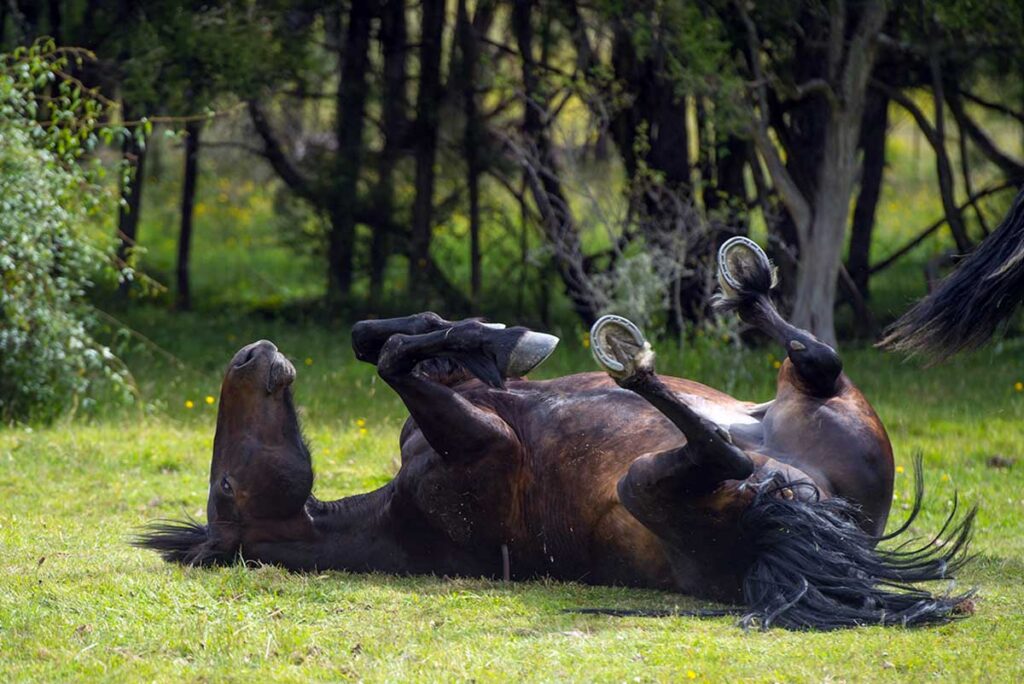
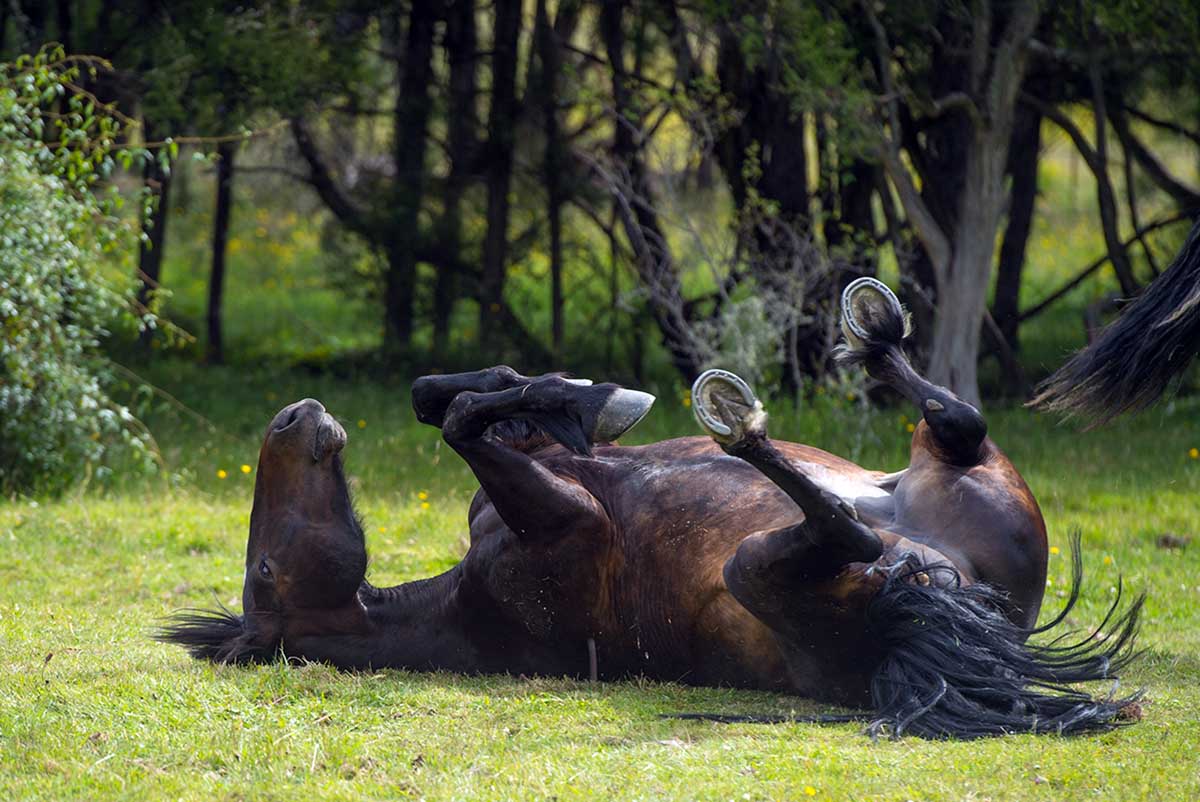
A horse about to roll will often paw the ground before lowering himself down, rolling from his back to his sides or all the way over, and then rising and shaking himself off. Horses might roll for a wide range of reasons—of which some are normal and some are not. Learning to recognize contextual clues around rolling can help you know the difference.
Rolling as Normal Behavior
Whether domestic, feral, or wild, horses and other Equus species engage in rolling behaviors. Ethologists (scientists who study animal behavior under natural conditions) use organizational tools called ethograms to help categorize the behavior of the species they study. Behaviors like rolling might be organized in an ethogram by things such as the function of the behavior or under what conditions it occurs.
One of the most common reasons horses roll is for general body maintenance. Ridding the skin of insects, helping a winter coat shed in the spring, or addressing feelings of cold or itchiness after a downpour are all reasons a horse might roll. Rolling loosens dead hair, fluffs up a winter coat, and can provide a nice back scratch and massage. Horses usually choose soft, dry, and/or sandy areas in which to roll. These spots often become permanently devoid of plant life, as all members of the herd roll in the same preferred location. A horse might also roll in mud or water, depending on the season and their needs.
Body maintenance isn’t the only reason for rolling. Horses have a very keen sense of smell, and rolling in the same location leaves scent molecules behind for others to detect later on. Just like urine or manure, these “scent signposts” can provide valuable reproductive status or health information about the horses in the area. Under natural conditions, two males interacting with one another might roll during their encounter, as will a stallion when courting a sexually receptive mare.
Why Horses Need Opportunities to Roll
Because rolling is a normal behavior, if horses are denied the ability to roll (e.g., because of a lack of turnout), they might display a phenomenon called “post-inhibitory rebound” once they have the opportunity again. This means they roll more than appears normal to us in the situation, but which likely feels right to them since they have been prevented from rolling. All horses should have ample opportunity each day to roll in a suitable location: one of adequate size, with at least one choice of desirable, dry substrate. Most horses also welcome access to a muddy area in buggy or hot seasons.
When Rolling Means Something’s Wrong
While usually normal, rolling can also indicate a horse is experiencing pain or discomfort, usually along their gastrointestinal tract. For example, horses often roll when they’re colicking. Signs to look for include getting up and down repeatedly without seeming to become comfortable, rolling excessively or violently, sweating, glancing at the flank, pawing at the ground repeatedly before or after rolling, and/or showing signs of a “pain face.” Knowing your horse’s normal vital signs can help you determine if his rolling indicates an underlying issue, as horses in pain will often have elevated heart and respiratory rates. If you see any such signs, call your veterinarian immediately.
Finally, there is an old wise woman’s tale that each time a horse rolls over, he’s worth exponentially more money. Is there any truth to this? A lack of flexibility and nimbleness while rolling could indeed indicate potential musculoskeletal discomfort, as can difficulty getting down to roll or up again. If you see any of these signs in your horse, especially if they are new to you, contact your veterinarian.
Related Reading: Understanding Behavioral Signs of Pain in Horses
Take-Home Message
Even if it’s not what you might want to see after giving your horse a bath, rolling is normal and necessary for horses. Your horse should be given the opportunity to roll every day. Familiarize yourself with your horse’s vital signs and indicators that something else might be going on, so you can spot health problems early.
Lauren Fraser, MSc, FFCP, has helped people understand horse behavior problems since 2006. With a background working as a horse trainer, an MSc in clinical animal behavior, and more than a decade working as an equine behavior consultant, Lauren’s approach gets to the heart of why horses behave the way they do and addresses issues using low-stress methods. Lauren also guest lectures at universities, presents at conferences, and creates educational programs for horse owners and equine professionals.
Are you enjoying this content? Sign up for My New Horse’s FREE newsletter to get the latest horse owner info and fun facts delivered straight to your inbox!