Do your horse’s hind limbs look like stovepipes, seemingly overnight? Well, it’s probably because he’s “stocking up”—a term horse owners use to describe this relatively benign type of lower limb swelling. We know stocking up in horses can be alarming. But by understanding why it happens and how to manage it, you can take steps to get your horse’s legs back to normal quickly and easily.
What Is ‘Stocking Up’ in Horses?

Stocking up is a relatively harmless condition that is a function of inactivity. The equine lymphatic system, which is responsible for “pumping” excess fluids from between cells back into the circulatory system, works best when aided by movement of surrounding tendons, muscles, and ligaments. So when a horse stands still for long periods—such as in a stall overnight—fluids can accumulate, particularly in areas farthest from the heart.
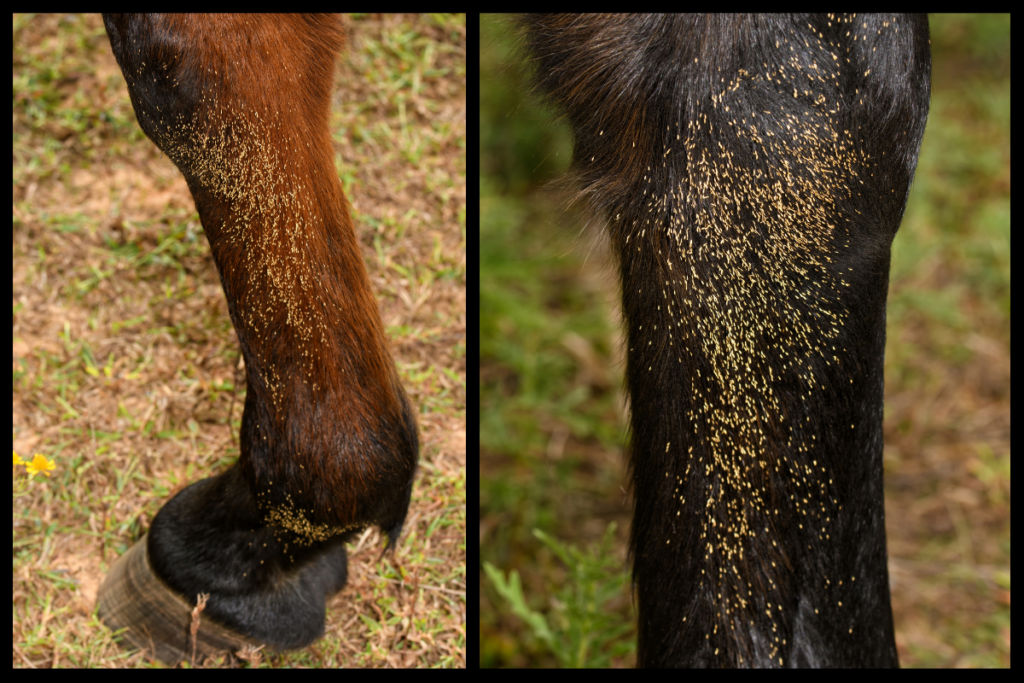
Stocking up typically develops in the hind fetlocks, with severity ranging from mild puffiness to an extreme swelling. It doesn’t cause lameness, and each leg will be equally puffy. It commonly occurs in:
- Older horses whose circulatory systems aren’t as efficient as they once were.
- Horses with past leg injuries or circulation issues.
- Horses with cellulitis, which is a bacterial infection of the skin tissues.
- Horses that typically live outside and get brought into a stall for a prolonged period.
Stocking up, however, can happen to any horse.
How to Reduce the Swelling
Treating stocking up in horses is easy—you simply need to get your horse moving. Ride him, longe him, walk him by hand, or turn him out with a pasture mate. With activity, swelling will usually diminish within the hour.
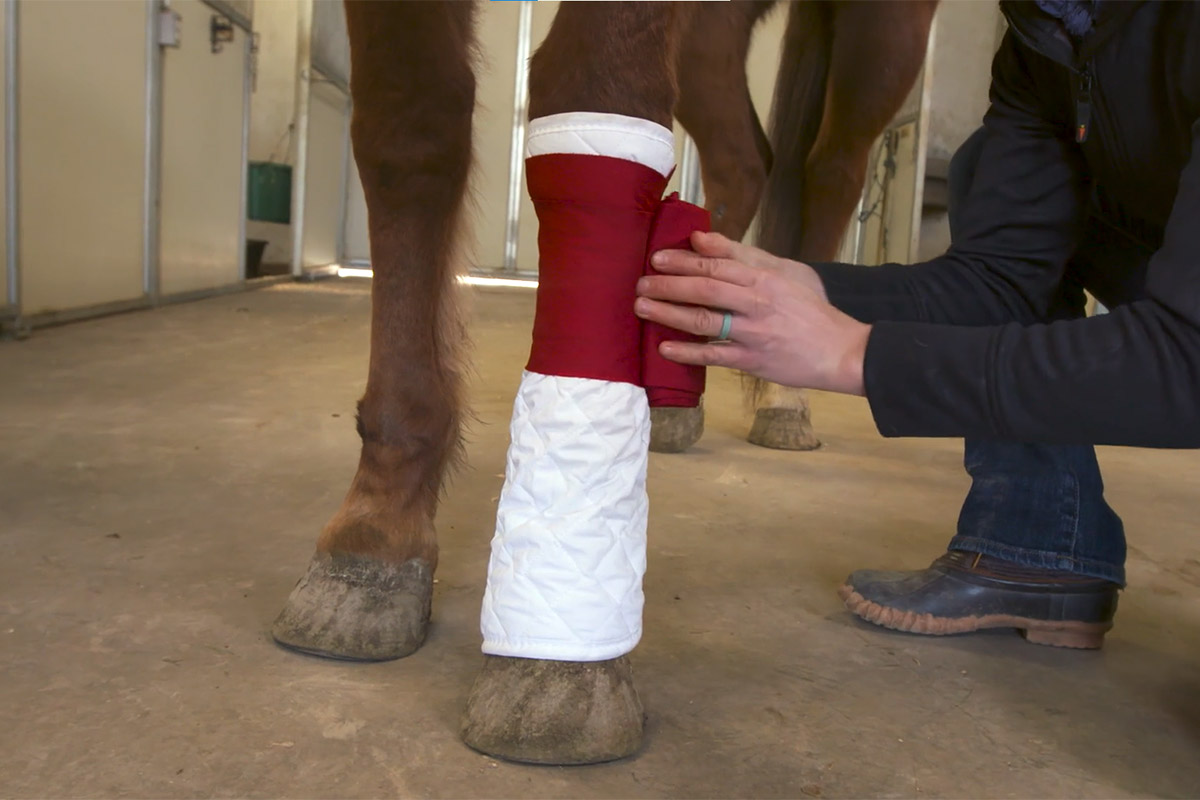
Support bandages like standing wraps can also speed things up. If you notice a pattern of your horse stocking up when stalled, consider applying standing wraps during these periods of confinement. The bandages maintain consistent pressure on the lower limb, which can help keep fluids circulating. Just be careful not to leave them on too long, as that could actually slow down circulation and make things worse.
If your horse’s leg swelling doesn’t resolve with movement or becomes a chronic issue, have your veterinarian come out to examine him. More serious things like infection or injury might be to blame.
Related Reading: How To Apply a Standing Wrap to Your Horse’s Leg
Parts of this article originally appeared on Equus.
Are you enjoying this content? Sign up for My New Horse’s FREE newsletter to get the latest horse owner info and fun facts delivered straight to your inbox!