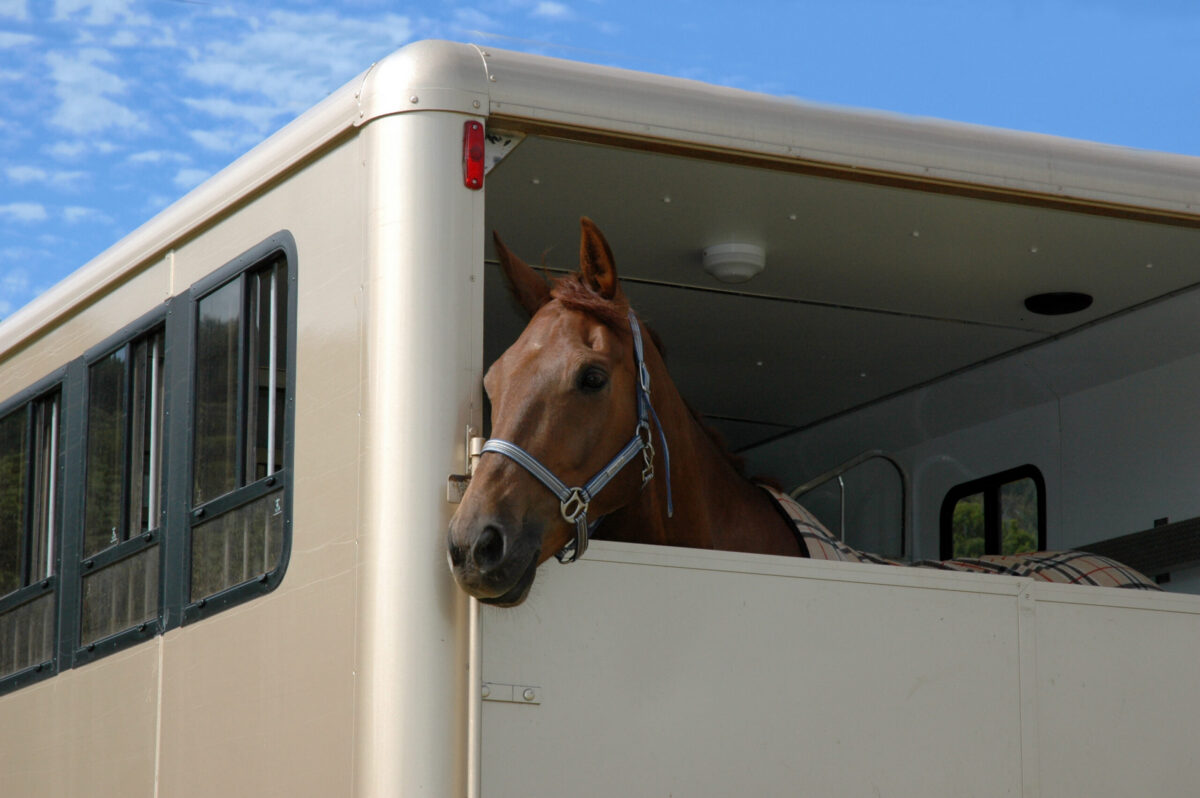
So you’re ready to hit the road with your horse! Maybe it’s your first trail ride away from home, a local show, a camping trip, or a move to a new barn. Whatever the reason, traveling with a horse is a whole different ballgame than tossing the dog in the back seat. Horses are large, sensitive animals with specific needs, and the logistics of moving them safely take a little more planning than most new owners expect.
The good news? With some preparation and the right checklist, you can keep your horse safe, healthy, and calm from point A to point B. Here’s everything you need to know before you load up and head out.
The Paperwork: Don’t Leave Home Without It
This is the part that catches new horse owners off guard the most. Horses have legally enforceable documentation requirements, and skipping them can get you in serious trouble on the road.
The Coggins Test
A Coggins test checks your horse for equine infectious anemia (EIA), a serious and incurable viral disease spread by biting insects. Nearly every U.S. state requires a negative Coggins result to travel across state lines. Many shows and trail ride facilities will ask to see it even for in-state travel. Most states accept a Coggins test that’s valid within the last 12 months, though some require it within six months. So, check your destination state’s requirements before you go. The test is simple, inexpensive, and done by your veterinarian.
The Health Certificate (Certificate of Veterinary Inspection/CVI)
This is a document completed by a licensed veterinarian certifying that your horse appears healthy and free of contagious disease on the date of examination. All U.S. states require a health certificate for horses entering their borders. Many show facilities and campgrounds require them even if you’re staying in-state.
The standard health certificate is generally valid for 30 days, though some states limit it to as few as 72 hours under certain disease conditions. That means you’ll need to schedule a vet appointment before you travel (sometimes just a week or two out), so plan accordingly.
Pro tip: The vet’s schedule fills up fast during show season. Book your appointment early, and bring any existing records (vaccination history, microchip information, prior Coggins) to the appointment to speed things up.
The Extended Equine CVI (EECVI)
If you travel with your horse frequently, ask your vet about an Extended Equine Certificate of Veterinary Inspection. This is a longer-validity option (up to six months) available in many states that requires one initial vet exam and a current Coggins. Before each trip, you enter your travel information online to generate a movement document. It can save a lot of time and money if you’re hauling your horse to multiple events in a season.
Proof of Ownership and Other State-Specific Requirements
Some states require a “brand inspection,” which serves as proof of ownership for horses. Colorado, Montana, and several other states require this for horses leaving state lines or traveling significant distances within the state. Check with your destination state to see what they require. You can look up specific state-by-state requirements at animalregs.com, a free resource maintained by GlobalVetLink.
Keep both physical copies and digital copies (photos on your phone) of all your documents. Some campgrounds and state parks will not let you check in without seeing them.
Related: Understanding the Importance of Coggins Tests for Horses
Feed and Hay: Bring More Than You Think You Need
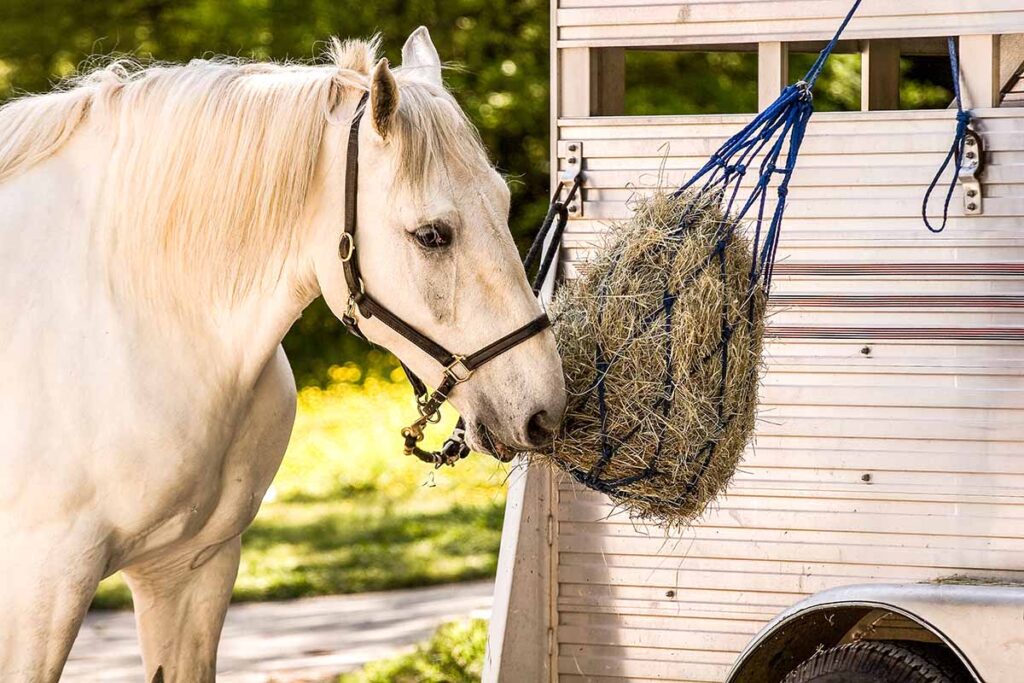
Horses are creatures of habit, and their digestive systems are not fans of sudden change. The stress of trailering, combined with changes in feed, water, and routine, can put horses at risk for colic. Consistency in their diet while traveling is genuinely important.
Bring Your Horse’s Own Hay
Horses should consume roughly 1.5–2% of their body weight in forage per day, which works out to about 15-20 pounds of hay daily for a 1,000-pound horse. When you’re traveling, bring enough of your own hay from home to cover the entire trip, plus a little extra as a buffer. Abruptly switching hay types (say, from the grass hay your horse gets at home to the alfalfa available at your destination) can upset the gut.
If your trip is long enough that you’ll need to source hay at your destination, mix it in gradually with your hay from home. A gradual transition is much easier on the digestive system.
Don’t Skip Hay in the Trailer
Horses should have access to hay during the ride, ideally in a hay net or bag hung at a safe and comfortable height (where the bottom is about level with the horse’s shoulder). Eating hay keeps their gut moving and can help reduce travel stress. It also gives them something to do.
Grain and Supplements
Bring your horse’s regular grain and supplements from home. Premeasured servings in labeled bags or containers make it easy to keep feedings consistent on the road. If your horse is on medications, make sure you have enough for the trip plus a few extra days in case of delays.
Water: A Bigger Deal Than Most People Realize
Horses need a lot of water—roughly 10 to 30 gallons per day in warm weather, and even more if they’re working hard. One of the most common problems with traveling horses is they don’t drink enough on the road. Some horses are picky about water that tastes or smells different from what they’re used to at home.
Bring Water From Home When Possible
For shorter trips, bring several gallons of water from your home barn. For longer trips, you might not be able to haul enough, but bringing some to mix with local water can help ease the transition.
Electrolytes Can Help
Doubling your horse’s daily salt intake for a few days before and during travel can stimulate thirst and encourage him to drink more. You can add loose salt to the feed or offer electrolyte paste. Just make sure fresh water is always available when offering extra salt.
Bring Your Own Buckets
Always bring your horse’s own water buckets or tubs. Don’t let them drink from communal water sources at shows or campgrounds. Those shared troughs and hoses are a prime way for illness to spread between horses.
What to Pack: A Practical Checklist
For your horse:
- Extra halter and lead rope (things get lost, broken, or chewed).
- Trailer tie (a quick-release snap is essential).
- Hay net or bag with hay for the ride.
- Water buckets (at least two per horse).
- Water (as much as you can reasonably haul).
- Feed, grain, and supplements measured out for the trip + extras.
- Fly spray and sunscreen (yes, horses with pink skin can sunburn).
- Grooming kit (brushes, curry, hoof pick).
- Blankets or sheets if traveling through changing weather.
- Leg wraps or shipping boots to protect legs during transport.
- ID on the halter—your name and phone number, in case something goes wrong.
Keep a dedicated first aid kit in the trailer and check it before every trip. Essentials include:
- Digital thermometer (know your horse’s normal baseline, which is typically 99-101°F).
- Stethoscope (for checking gut sounds and heart rate).
- Vet wrap and gauze pads.
- Antiseptic spray or Betadine.
- Bandage scissors.
- Electrolyte paste.
- Hoof pick and an emergency hoof boot (if your horse throws a shoe mid-trip).
- Banamine and/or Bute (by prescription—talk to your vet before you leave).
- Your vet’s contact information and the number for an equine vet near your destination.
Also keep a list of emergency veterinary contacts along your route. If you’re heading somewhere unfamiliar, a quick Google search before you leave for “equine vet near [destination]” can save time in an emergency.
Related: How To Take Horse Vital Signs and What They Mean
Biosecurity: Protecting Your Horse (and Others)

Every time your horse leaves home, they’re entering environments shared by other horses, and every other horse is a potential source of infection. Plus, the stress of trailering and being in a new environment takes a toll on a horse’s immune system, making them more vulnerable to illnesses like equine influenza, strangles, and equine herpesvirus (EHV). Here’s how to minimize the risk.
Before you leave:
- Make sure your horse’s core vaccinations are up to date. Talk to your vet about what’s recommended for the areas you’re traveling to and the types of events you’re attending.
- Don’t haul a horse that seems “off.” Lethargy, runny nose, temperature above 101.5°F, or loss of appetite are signs to call your vet before loading.
On the road and at the destination:
- Use your own water buckets and don’t let your horse drink from shared sources.
- Tie your horse to your own trailer when possible, rather than letting them interact nose-to-nose with unfamiliar horses.
- Clean and disinfect any stall your horse will use before putting them in it.
- Designate travel equipment as “travel only.” Brushes, buckets, and pitchforks you use away from home shouldn’t go back to your main barn without cleaning first.
When you get home:
- Horses returning from events should ideally be isolated for 10 to 14 days from horses that didn’t travel, just in case they were exposed to something that hasn’t shown symptoms yet.
- Monitor for fever, nasal discharge, or behavioral changes in the days after returning.
- Don’t bring unused hay or bedding from the event grounds back home.
Related: Safe and Sound: A Guide to Biosecurity for Horses
If You Have Your Own Trailer
Having your own trailer is wonderful for flexibility, but it comes with its own set of responsibilities that go beyond just hitching up and driving.
- Know your equipment. Make sure your tow vehicle’s weight rating is appropriate for the trailer and horses. Trailer tires fail more often than people expect. Check tire pressure, tread, and condition before every trip, and consider carrying a spare.
- Practice driving before you need to. If you’re new to towing, practice in an empty parking lot before you have a 1,200-pound animal in the back. Turning, backing up, and braking feel very different with a loaded trailer.
- Clean and disinfect your trailer regularly. Old manure, urine, and organic debris can harbor pathogens. A good scrub-down with an appropriate disinfectant between uses is good biosecurity practice.
- Ventilation matters. Trailers can get significantly hotter inside than the outside air temperature. Make sure vents are open, and check on your horse at every stop. If it’s a hot day, even a short stop can turn dangerous.
- Carry a roadside kit. Trailer jack, wheel chocks, spare tire, and jumper cables or a jump starter are all worth having on long trips.
Related: Horse Trailer Safety Checklist
If Someone Else Is Hauling Your Horse
Plenty of horse owners don’t have their own trailer, and that’s completely fine. But when you’re entrusting someone else to move your horse, you want to do your homework.
- Verify they’re licensed and insured. Ask any commercial hauler for their U.S. Department of Transportation (DOT) number, and verify it online. If something goes wrong with an uninsured hauler, you could be held liable.
- Ask about their experience with horses. Can they recognize signs of distress? Do they know what colic looks like? A good hauler is an experienced horseperson, not just a driver with a big trailer.
- Ask how they’ll keep you informed. A reputable shipper will tell you the pickup window, where any layovers will be, and an estimated arrival time. They should also give you a way to contact the driver directly during the trip. A hauler who resists giving updates is a red flag.
- Ask what you need to provide. Some haulers bring their own hay and bedding; others expect you to supply it. Clarify this ahead of time, so your horse isn’t going without.
- Send your paperwork. Make sure your health certificate and Coggins are ready to go and that the hauler has copies. They’ll need them on the road.
Things Novice Owners Often Don’t Think About

Here are a few extra details that don’t always make the standard checklists but come up more often than you’d think.
Horses may not drink for hours after trailering. Don’t panic if your horse doesn’t immediately dive into the water bucket when you arrive. Give them time to settle, and monitor them over the next few hours. If they still aren’t drinking by the next morning, it’s worth a call to your vet.
Trailer loading should be practiced at home. A horse that loads reluctantly at home will be even more difficult in a new, stressful environment. Work on loading practice as part of your regular routine and not when you need to leave in 20 minutes.
Temperatures inside trailers can be extreme. Horses in a dark metal trailer in summer heat can overheat quickly. Plan travel for cooler parts of the day (early morning) on hot days, and never leave your horse standing in a closed, unventilated trailer in the heat.
Know your horse’s vital signs before you travel. Normal temperature (99-101°F), heart rate (28-44 beats per minute), and gut sounds are all things you should know how to check. If you don’t, ask your vet to walk you through it at your next appointment.
Take photos and video of your horse before loading. This is good practice for insurance and documentation purposes, especially if your horse is being hauled by someone else.
Plan for delays. Traffic jams, road closures, and breakdowns can happen. Make sure your horse has hay available in the trailer for any wait, and give yourself enough buffer time that you’re not rushing.
Take-Home Message
Traveling with your horse can be great fun. There’s nothing quite like exploring a new trail or attending your first show together. The key is preparation: Sort out the paperwork, pack smart, protect your horse’s gut, and know who to call if something goes sideways. Once you’ve done it a few times, it starts to feel like second nature.
Resources
- AnimalRegs.com: Free lookup tool for state-by-state horse travel requirements (health certificates, Coggins rules, etc.).
- GlobalVetLink: Platform where your vet can create electronic health certificates and EECVIs.
- AAEP Biosecurity Guidelines: The American Association of Equine Practitioners’ recommendations for biosecurity.
- Equine Disease Communication Center: Up-to-date disease alerts and biosecurity how-to videos.
Are you enjoying this content? Sign up for My New Horse’s FREE newsletter to get the latest horse owner info and fun facts delivered straight to your inbox!