If cleaning your horse’s stall every day has become tedious, you might be wondering how dirty you can let it get before it’s actually a problem. The answer, as with most things in horse care, is “it depends.” But the good news is once you understand why cleanliness matters, the “how often to clean a horse stall” question pretty much answers itself. Let’s break it all down.
The Short Answer: Daily Cleaning Is the Gold Standard
If your horse spends any significant time in a stall, that stall needs to be cleaned at least once a day. This isn’t just a barn rule—it’s a health necessity.
Most experienced horse keepers agree that daily mucking out (removing manure and wet bedding) is the minimum for an occupied stall. Once you’re in a routine, a daily stall clean typically takes around 20 minutes. That’s a small investment for keeping your horse comfortable and healthy.
But How Long Is Your Horse Actually in a Stall?
The single biggest factor determining how often you need to clean is how much time your horse spends in the stall.
Horses on full-time or near-full-time stall rest (such as those recovering from injury, in harsh winter climates with limited turnout, or show horses kept in for grooming purposes) need the most diligent attention. In some situations (e.g., during winter when turnout is limited), stalls might need to be cleaned multiple times a day.
Horses that are in and out (e.g., stalled at night and turned out during the day) have a bit more flexibility. You’ll still want to clean daily, but the job will be lighter.
Horses kept primarily on pasture that only use a stall occasionally (for feeding, bad weather, or veterinary visits) need cleaning after each use, but you won’t be on a strict daily schedule.
A good rule of thumb: The more time your horse spends in the stall, the more frequently it needs to be cleaned. If a stall is used lightly, a quick once-daily pick still makes sense to prevent odor and bacterial buildup.
| Situation | Recommended Frequency |
| Horse stalled full-time (22-24 hrs/day) | Twice daily, or at minimum once daily with thorough checks |
| Horse stalled nights only (12 hrs/day) | Once daily |
| Horse stalled part-time (a few hours) | Daily pick (or after each use) still recommended |
| Horse primarily pasture-kept, stall rarely used | Clean after each use |
| Stall housing a foal, injured horse, or horse with respiratory issues | More frequent than standard; consult your vet |
Related: How To Decide Between a Stall, Pasture, or Both for Your Horse
Why It Really Matters
It’s easy to think of stall cleaning as just a cosmetic chore, but it’s not. A dirty stall creates real health risks for your horse.
1. Ammonia and Respiratory Health
This is the big one. When horse urine sits in bedding, bacteria break down the urea in it and produce ammonia—that eye-watering, nose-burning smell you’ll recognize immediately if you’ve ever walked into a poorly managed barn.
Ammonia isn’t just unpleasant; it’s caustic. Research has linked airborne ammonia concentrations in stables to respiratory inflammation in horses. A paper published in the journal Animals found that ammonia concentrations in wood-shaving-bedded stalls ranged from 1.5 to 7.0 ppm, which was high enough to cause continued respiratory signs in horses throughout the study period. Chronic ammonia exposure is also associated with equine asthma. In severe cases, asthma causes horses to struggle to breathe even at rest and significantly impacts their quality of life.
It’s also worth knowing that the ammonia that hurts your horse’s lungs also hurts yours. Research from Tufts Cummings School of Veterinary Medicine found that people who spend 10 or more hours in horse barns have up to 10 times the risk of developing respiratory symptoms consistent with asthma. So, clean stalls protect everyone in the barn.
2. Hoof Problems Like Thrush
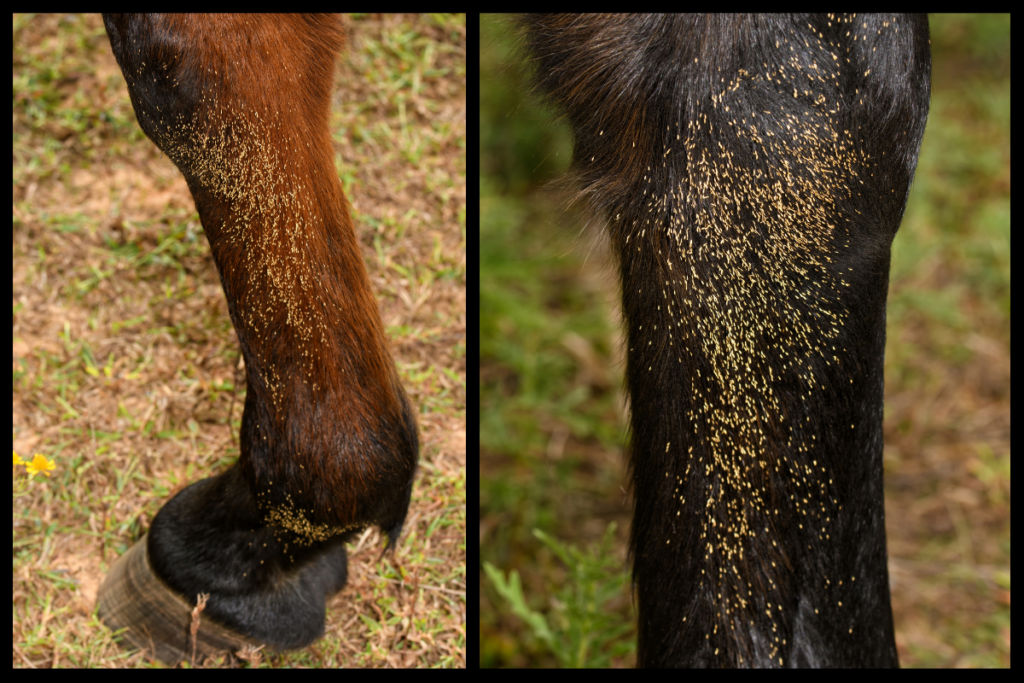
The other major concern is thrush, a bacterial infection of the hoof that targets the soft, rubbery “frog” tissue on the underside of the foot. The primary culprit is Fusobacterium necrophorum, a bacterium that thrives in wet, decaying organic material—exactly the environment of a dirty, urine-soaked stall.
When a horse stands in wet bedding packed with manure, the lack of airflow next to the frog creates ideal conditions for these bacteria to take hold and literally rot the frog tissue. Left untreated, thrush causes pain and lameness.
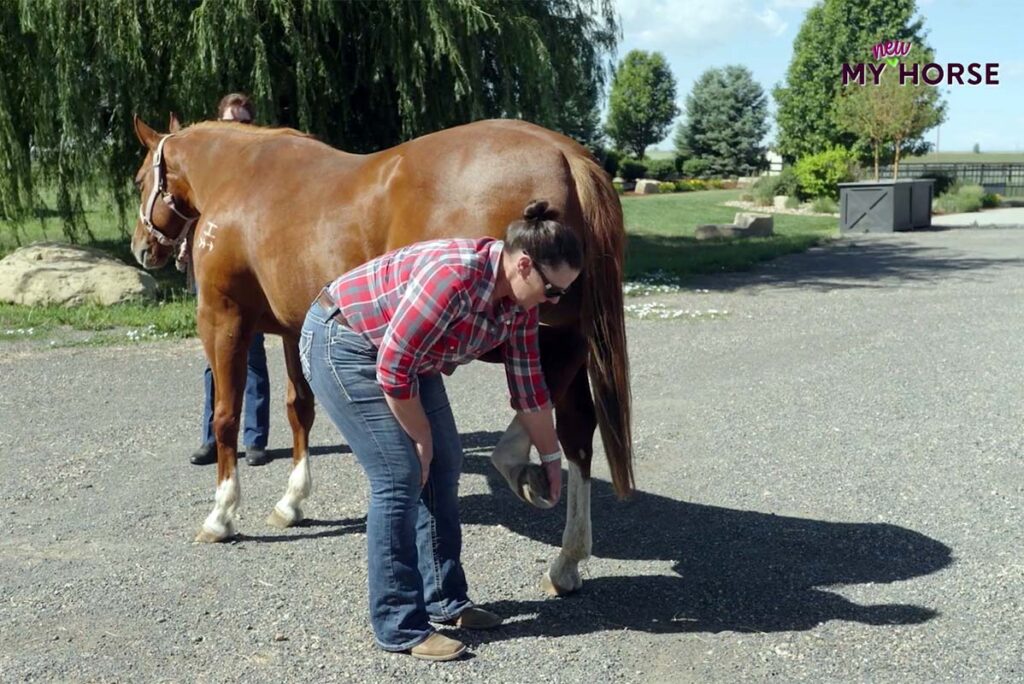
The fix and the prevention are the same: Keep stalls clean and dry, remove wet spots and manure daily, and pick out hooves regularly.
3. Pest and Disease Control
A clean stall is also less inviting for flies, rodents, and the bacteria and parasites they carry. Rotting manure and wet bedding attract insects and can harbor disease-causing organisms. Regular cleaning is one of the most effective ways to control the spread of illness in a barn environment.
Signs a Stall Definitely Needs Attention
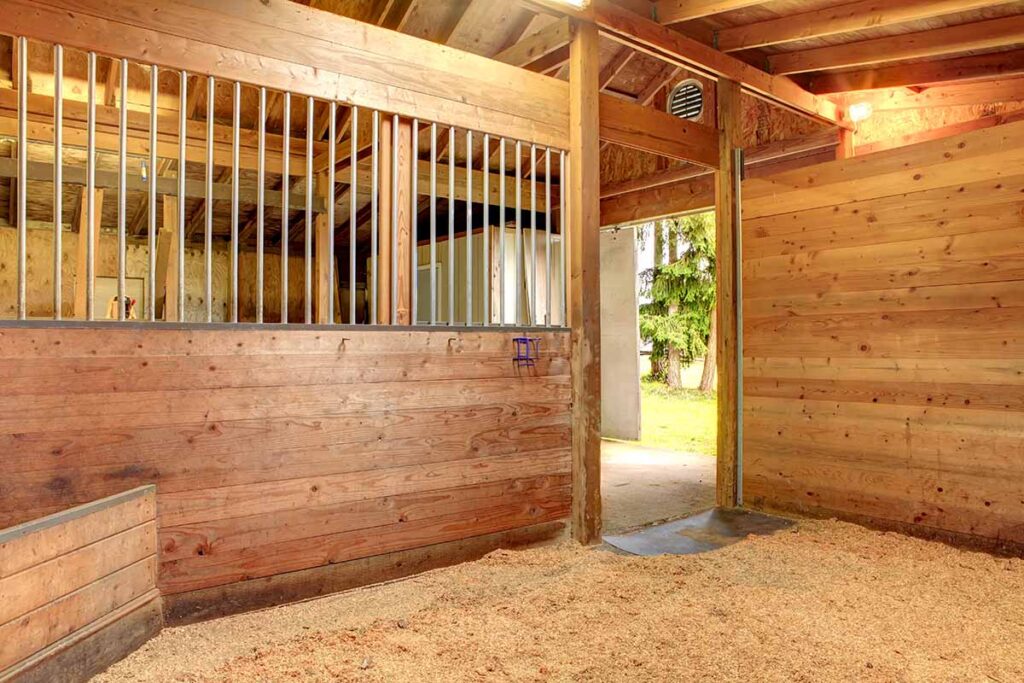
If you’re trying to figure out your stall-cleaning routine, here are some red flags that mean it needs immediate attention:
- You can smell ammonia. If you can smell it at stall height, your horse is breathing it constantly at nose level.
- Wet spots are pooling or spreading. Urine should absorb into bedding, not sit on the floor.
- Manure is piling up. An adult horse produces around 8-9 manure piles per day. If multiple days’ worth are accumulating, you’re overdue for stall mucking.
- Bedding looks gray, matted, or compacted. Fresh bedding is fluffy; old, saturated bedding loses its texture and stops doing its job.
- Your horse seems restless or reluctant to lie down. Horses can be particular about their environment. A horse that won’t lie down might be avoiding wet or uncomfortable footing.
- You notice a black, foul-smelling discharge around the frog of the hoof. This is a classic sign of thrush and means conditions have been too damp and dirty.
The Daily Muck-Out: What It Actually Involves
A daily cleaning doesn’t mean stripping the stall bare every day. It means:
- Removing all visible manure with a manure fork (pick the piles out cleanly).
- Finding and removing wet spots. Dig around a bit, since urine soaks down through bedding and can be harder to find than manure.
- Adding fresh bedding to replace what you removed.
- Sweeping the aisle to keep the surrounding area tidy.
Once every few months, you can do a full deep clean or “strip,” removing all bedding down to the bare floor, scrubbing, disinfecting, and starting fresh. Some people do this more frequently; it depends on your stall, your horse, and your bedding type.
Related: Clean Stall, Happy Horse: A Beginner’s Guide to Stall Cleaning
What You Can Reasonably Let Slide
Now, here are some things that are lower priority than a good daily pick:
Perfectly fluffy bedding at all times. As long as you remove the wet spots and maintain enough dry, clean bedding for your horse to stand and lie on comfortably, you don’t need a magazine-worthy presentation every time you close the stall door.
Deep-cleaning every week. Unless your horse has a respiratory condition or is on stall rest, a monthly or bimonthly full strip is reasonable for most horses on normal turnout schedules.
A manure ball here and there. Don’t worry if you don’t remove every last speck of manure from your horse’s stall. A few pieces that fall through the pitchfork fines or hide in corners aren’t likely to cause problems and can be picked up during the next cleaning.
Perfectly clean walls and corners. Manure and urine are the priorities. A spider web in the corner won’t hurt your horse; ammonia soaking into the floor absolutely will.
Deodorizing after every clean. Products that help neutralize ammonia (like zeolite-based stall powders or baking soda) are useful, but they’re a supplement to regular cleaning, not a substitute for it.
Take-Home Message
A horse that has a clean stall breathes better, has healthier hooves, and is simply more comfortable. When you understand that a dirty stall isn’t just “messy” but is actively producing ammonia and bacterial conditions that can damage your horse’s body, the daily muck-out feels less like a chore and more like fundamental horse care. And remember: The best way to cut down on time spent cleaning stalls is to let your horse have as much turnout as possible. Horses evolved to move and graze constantly, and being outside supports both their physical and mental health.
Related Reading:
Are you enjoying this content? Sign up for My New Horse’s FREE newsletter to get the latest horse owner info and fun facts delivered straight to your inbox!