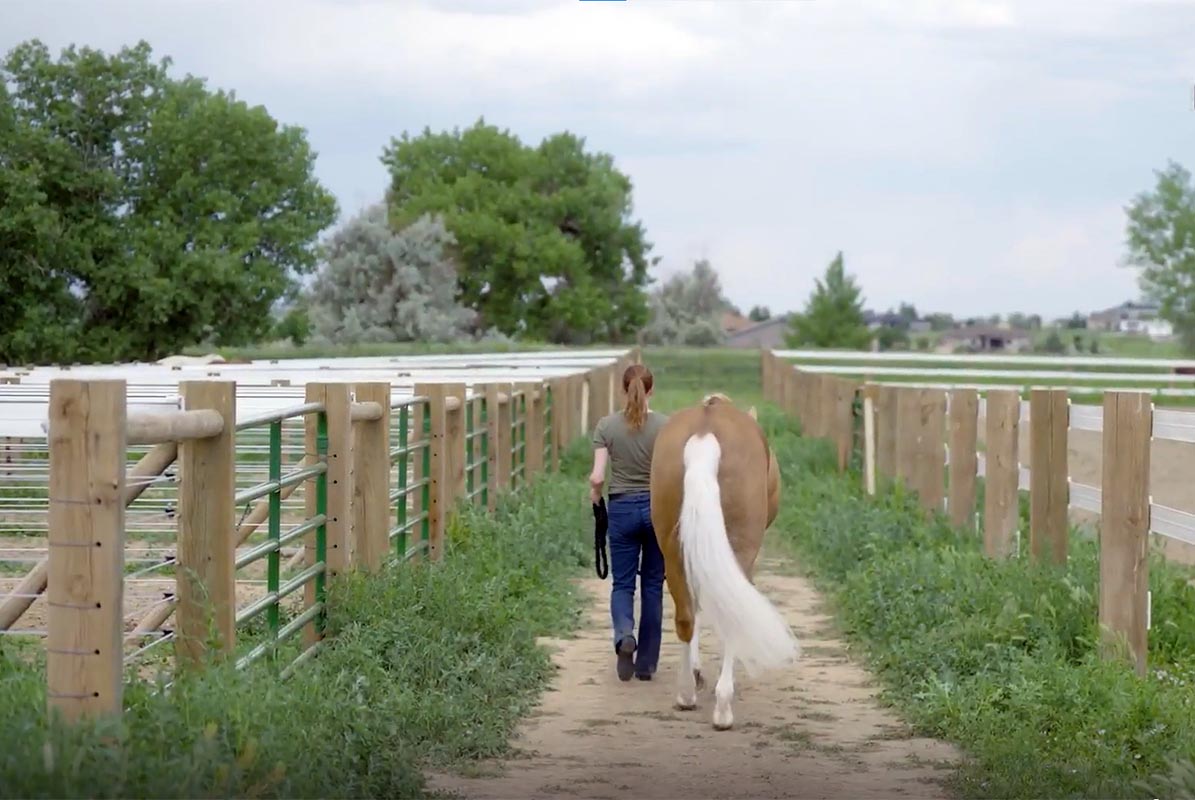
When it comes to leading your horse, ideally he leads on a loose rope without you tugging on his face. He walks on your right side without trying to get in your space and doesn’t lag behind or drag you along by walking in front. Other than the simple fact that we want our horses to have good ground manners, here are three reasons your horse should lead respectfully.
Safety First
Safety is arguably the most critical reason for making sure your horse leads well. Horses are large, powerful animals, and a moment of unruliness can result in severe injuries not only to you but also to others nearby. Proper ground manners prevent your horse from pushing, shoving, or stepping on you. Many of us have been knocked over or shoved by a horse with poor ground manners, and this can happen in an instant.
Whether you’re navigating busy showgrounds, loading into a trailer, or simply moving around the barn, a horse that leads well can prevent many dangerous situations. An excitable or unruly horse can easily spook, pull away, or even cause injuries to you or others. By training your horse to walk calmly by your side, you ensure that both of you remain safe and in control in various environments.
Teaching your horse to lead calmly and with good manners is crucial for a variety of situations. For instance, when leading your horse through a busy barn aisle or around other horses, having precise control over his movements can avoid wrecks and maintain order in potentially chaotic environments. Or consider the scenario of loading him into a trailer. A horse that leads well and responds to your cues will step into the trailer with minimal fuss, reducing the risk of accidents or injuries. Similarly, when walking through a crowded event or along a trail, a well-mannered horse will stay focused on you, making it easier to avoid potential hazards and keep everyone around safe.
Bonus Tip: Don’t coil your leadrope or loop it around your hand. If your horse should bolt, you could end up being dragged if the rope is pulled tight and you can’t get free.
Handling Emergencies
In emergency situations, your horse’s ground manners can make all the difference. Whether it’s a sudden storm, a fire, or any unexpected event, a horse that respects you and is easy to lead is easier to manage under stress. Good ground manners allow you to lead your horse quickly and efficiently to safety without unnecessary panic or resistance.
In times of crisis, the significance of your horse’s ground manners becomes unmistakably clear. Picture a scenario where chaos strikes unexpectedly—a raging storm, a swift-spreading fire, or any other unforeseen event. In such moments, a horse that has been trained to lead respectfully can minimize chaos. Instead of facing heightened panic or resistance, a horse with solid ground manners responds promptly and cooperatively to your directions.
You don’t want to be fighting your horse to walk beside you or load into a trailer when every second counts. Take time now to train your horse to lead respectfully, so if emergencies do arise, you can get him where you need to go as quickly as possible. This can potentially save both your lives.
Building Respect and Trust

Good ground manners are foundational for establishing mutual respect and trust between you and your horse. By teaching and reinforcing these manners, you show your horse what behavior is acceptable, which helps build a more harmonious relationship.
A horse that respects your space, responds to cues, and follows your lead demonstrates a higher level of trust. This mutual respect translates into better overall behavior, making training sessions and daily interactions more enjoyable and productive. You are the leader, and your horse will look to you for guidance or reassurance. Be confident when leading him, and work with him to build trust and respect on the leadrope. Letting him lag behind, drag you along, or eat while you’re trying to walk teaches your horse that he can make the decisions when being led. Again, this can create scenarios where your safety and those around you are at risk when your horse doesn’t lead respectfully.
Furthermore, in unfamiliar or unpredictable environments such as trail rides or public events, a horse that leads confidently and courteously can put you both at ease in crowded environments. This level of training not only ensures your safety but also instills a sense of confidence in your horse, promoting a calm demeanor even in potentially stressful situations.
Related Reading: Smart Ways to Use Treats to Train Your Horse
How to Teach Your Horse Good Ground Manners
Start with the Basics
Begin by teaching your horse simple commands like “walk,” “stop,” and “back up.” Use consistent verbal cues and body language to communicate your expectations. Practice in a calm, familiar environment before introducing distractions.
Use Positive Reinforcement
Reward your horse for good behavior with treats, scratches, or verbal praise. Positive reinforcement helps your horse associate good manners with positive outcomes, making him more likely to repeat the desired behaviors.
Be Consistent
Consistency is key when teaching ground manners. Ensure you use the same commands and enforce the same rules. Inconsistency can confuse your horse and hinder his learning process. Don’t expect perfection right away, but stay consistent with your methods and watch his confidence grow.
Address Bad Behavior Immediately
If your horse displays poor manners, correct the behavior promptly but gently. Use a firm voice and appropriate cues to guide him back to the desired behavior. Patience and persistence are essential during this process.
Take-Home Message
Good ground manners are not just about making your horse easier to handle. They’re about ensuring safety, being prepared for emergencies, and fostering a respectful and trusting relationship. By investing time and effort into teaching your horse these essential skills, you’ll enjoy a safer, more enjoyable, and more rewarding partnership.
Related Reading:
This article originally ran on Horse&Rider.
Are you enjoying this content? Sign up for My New Horse’s FREE newsletter to get the latest horse owner info and fun facts delivered straight to your inbox!