
Winter can be tough on a horse with arthritis. Just as you might feel twinges in your own joints when the temperatures drop, an arthritic horse is likely to be a bit stiff and achy, too. The good news is how you manage a horse can make a huge difference in how he moves and feels. Here are just a few ways you can keep arthritic horses comfortable and sound this season.
1. Provide Regular Exercise
As tempting as it may be to leave your arthritic horse in his warm, snug stall on cold days, that will only make him stiff and sore. Movement keeps the tendons, muscles, and ligaments that stabilize joints in good shape while encouraging circulation of lubricating synovial fluid within the joint space. If your horse is sound, make it a priority to ride several times a week. Remember that even if an arthritic horse feels very stiff when you first get on, he will loosen up within a few minutes.
2. Allow for Plenty of Turnout
An easy way to keep horses active in the winter is daily turnout for as many hours as possible. You can maintain a turnout schedule in even the coldest weather with the help of blankets and wind-blocking sheds. If turnout isn’t feasible and you don’t have time to ride your horse, daily hand-walking—even just around an arena or up and down the driveway—can help accomplish the same goals.
3. Tend to Your Footing
Horses with arthritic joints might have trouble navigating slick, churned-up, or frozen ground. In fact, they might simply stop moving, standing as still in turnout as they would have in a stall. To encourage healthy movement, make sure the footing in your arena and around your barn is dry and level. It’s not feasible to manage the footing in an entire pasture space, so focus on the ground around gates, sheds, water troughs, hay racks, and anywhere your horses congregate, as well as the natural paths between them. Also, when you venture out of the arena, listen for footing that “rings” under each hoofbeat. That’s an indication the ground is frozen solid, which will be hard on your horse’s joints. On those outings, stick to a walk.
4. Keep up With Farriery Care
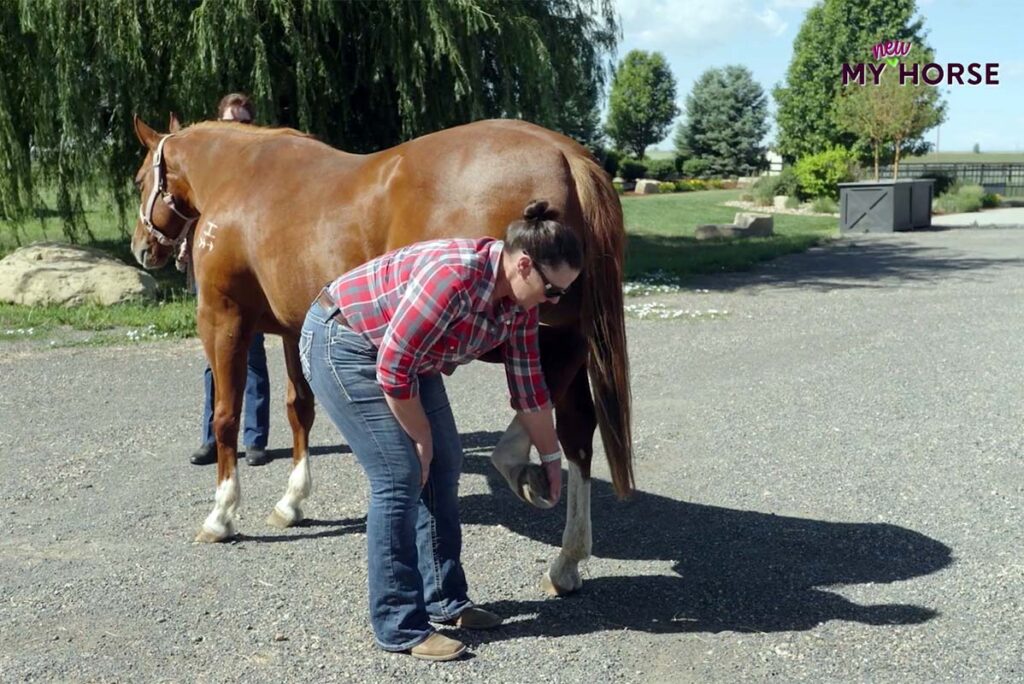
Even if you don’t plan to ride much during the winter, it’s important to maintain a consistent hoof care schedule. An out-of-balance hoof will stress the joints above it. This isn’t good for any horse but can be particularly damaging for those with arthritic changes. Don’t wait until a hoof looks like it needs attention to call the farrier, though. Set up appointments now, all the way through spring, and resolve to keep them. If harsh winter weather makes appointments unpleasant for the horse or farrier, find a better space for them—a covered area, blocked from wind with dry ground.
5. Supply Joint-Supporting Nutrients
If your horse isn’t on a joint supplement, it might be a good time to start. Choosing a product can be daunting, so start by reading the label. Look for ingredients such as glucosamine, hyaluronic acid, methysulfonylmethane (MSM), and chondroitin sulfate, all of which help support cartilage, connective tissues, and synovial fluid. Some products call for giving a larger “loading dose” for a few weeks before moving to a lower “maintenance dose,” so start early to have full effect before winter months.
6. Talk to Your Vet About Therapeutic Treatments
Horses with severe or advanced arthritis might benefit from therapies delivered by injection. Formulated to ease discomfort, reduce inflammation, and promote health and healing, injectables might contain ingredients like glucosamine, hyaluronic acid, MSM, and chondroitin sulfate. Consult your veterinarian on the best options for your horse.
Related Reading:
This article originally appeared on EquusMagazine.com.
Are you enjoying this content? Sign up for My New Horse’s FREE newsletter to get the latest horse owner info and fun facts delivered straight to your inbox!