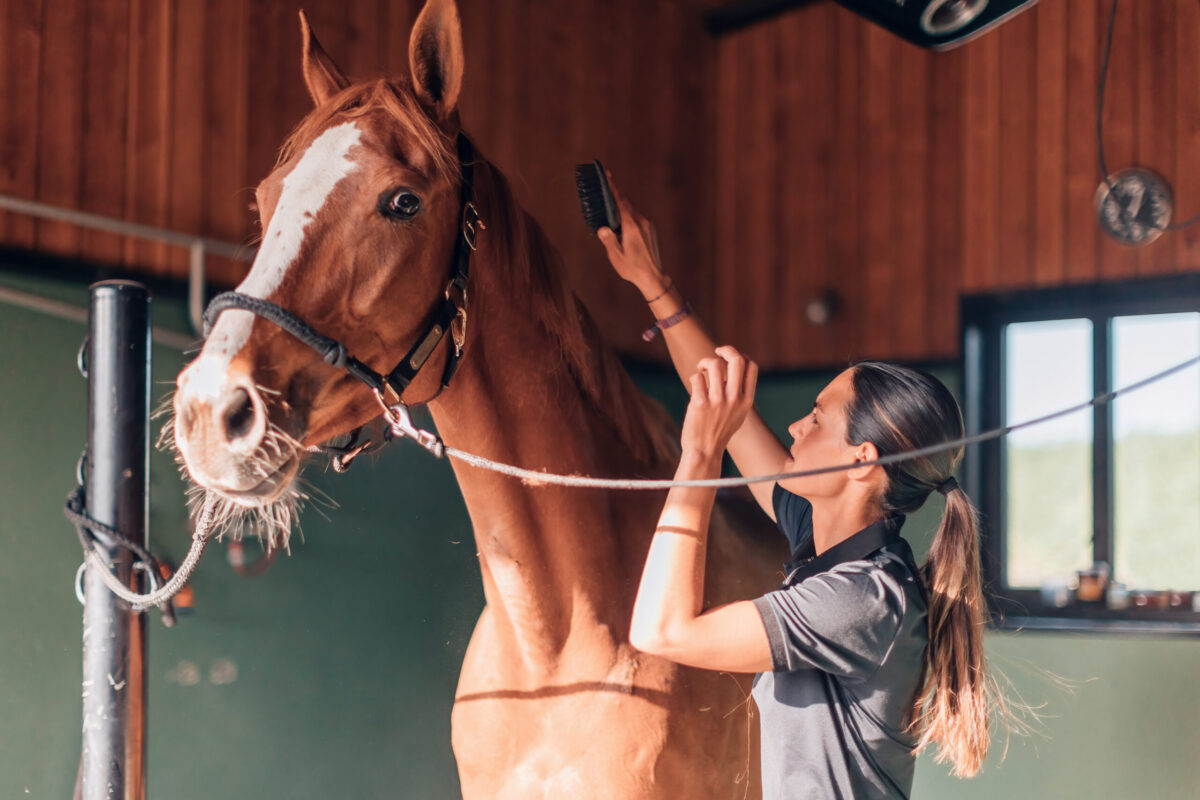
During a grooming session, have you ever noticed white flakes in your horse’s coat, mane, or tailhead? Flaky skin in horses is very common, especially during seasonal coat changes, dry weather, or periods of less frequent bathing. And fortunately, dandruff is more cosmetic than concerning in most cases. But sometimes those flakes can point to an underlying skin, nutritional, or health issue worth investigating. So let’s review the causes of flaky skin in horses and how to manage it.
Common Causes of Dandruff and Dander in Horses
Mild dandruff (primary seborrhea) is usually an aesthetic issue rather than a medical one. Many horses develop flaky skin during winter, while shedding out, in dry climates, after wearing blankets, or with inconsistent grooming routines.
Dry Skin and Weather Changes
This is probably the most common cause of dandruff that horse owners encounter. Cold weather, heated barns, dry climates, and winter blanketing can all dry out the skin and lead to flaky patches, especially along the topline, mane, and tailhead. Many horses also appear flakier during seasonal shedding because dead skin and loose hair become trapped in the coat.
Infrequent or Ineffective Grooming
Grooming does more than make a horse clean and shiny. Currying and brushing help:
- Remove dead skin.
- Distribute natural oils.
- Improve circulation.
- Lift dirt and debris from the coat.
Without regular grooming, dead skin builds up and becomes much more noticeable.
Overbathing or Harsh Products
Ironically, too much bathing can also cause dandruff. Frequent shampooing, especially with harsh soaps or dish detergents, can strip the skin of its natural oils. Some medicated products might also dry sensitive horses’ skin if overused.
Sweat, Dirt, and Blanket Friction
Sweat trapped under blankets or tack can irritate the skin and create flaky patches. Horses that wear blankets for long periods sometimes develop dandruff along pressure points or under the mane. Poorly fitting blankets can also cause rubbing and inflammation.
Parasites
External parasites such as lice and mites can cause intense itching, dandruff, and hair loss. Signs might include:
- Constant scratching.
- Patchy hair loss.
- Thick crusts.
- Restlessness.
- Tail rubbing.
A 2026 study examining horse skin and coat quality found that higher parasite loads were associated with poorer coat quality.
Fungal or Bacterial Skin Infections
Conditions such as rain rot, ringworm, and bacterial folliculitis can all begin with crusting or flaky skin. Research has identified infectious skin diseases as a common cause of scaling and crusting in horses.
Allergies and Skin Sensitivities
Some horses develop flaky, itchy skin due to sensitivities or allergies to insects, grooming products, feeds, or environmental allergens.
Nutritional Imbalances
Poor-quality nutrition or deficiencies in essential fatty acids, minerals, or vitamins can affect skin and coat quality. Horses on low-quality forage or poorly balanced diets might develop dull coats, dry skin, or flaky areas.
Areas Where Dandruff Commonly Appears
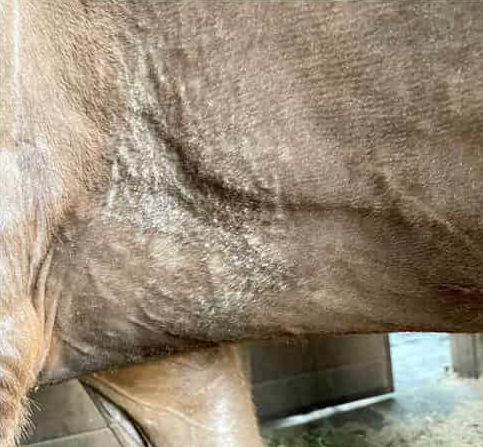
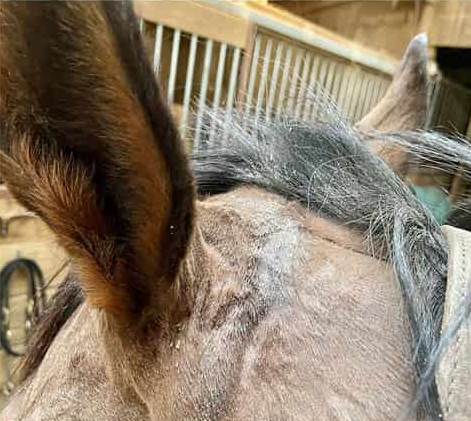
Different dandruff locations can sometimes offer clues as to the cause:
- Flakes in the mane and tail are often linked to sweat buildup, infrequent bathing, sweet itch or allergies, tail rubbing, blanket friction, or fungal irritation.
- Leg dandruff can occur from mud exposure, irritation near the feathers, mites, pastern dermatitis (aka scratches), or wet conditions.
- Dandruff along the back and saddle area can result from sweat accumulation, dirty tack, blanket rubs, or dry winter skin.
How to Manage Mild Dandruff at Home
Here are some steps you can take to minimize dandruff in your horse’s haircoat.
Improve Your Grooming Routine
Regular grooming is the first line of defense. Focus on:
- Daily currying when possible.
- Gentle circular motions to loosen dead skin.
- Thorough brushing afterward.
- Cleaning brushes regularly.
A good curry comb can dramatically reduce flaky buildup.
Related: How to Groom a Horse in 6 Easy Steps
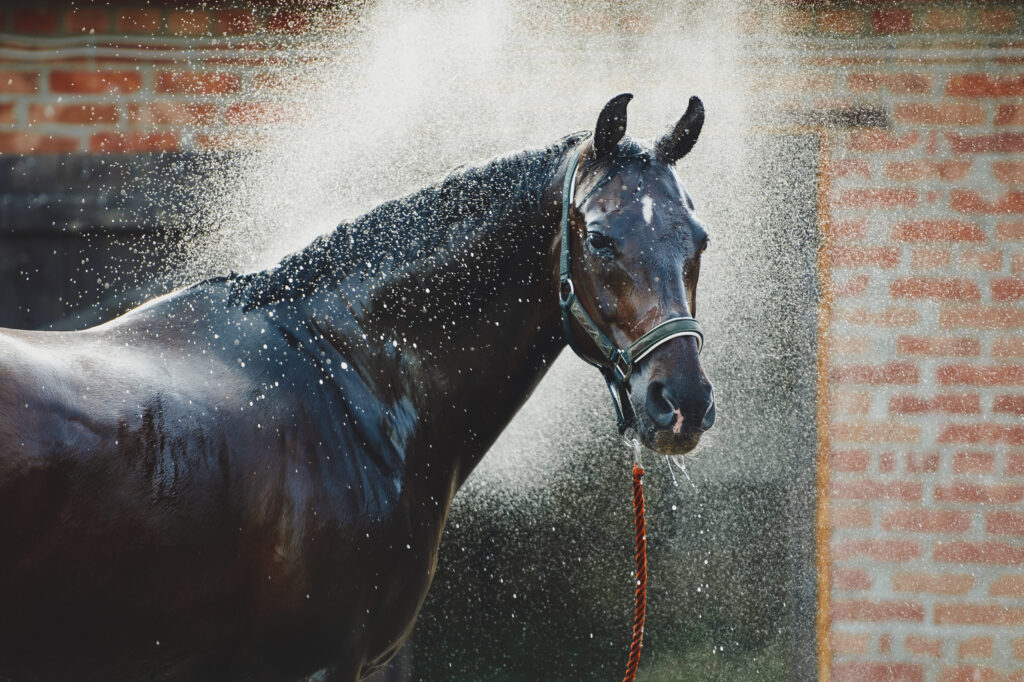
Bathe Strategically, Not Excessively
When dandruff is noticeable, a bath might help remove excess flakes and debris. Choose mild moisturizing equine shampoos, oatmeal-based products, or sensitive-skin formulas. Avoid harsh detergents, overbathing, or scrubbing aggressively. Always rinse thoroughly, because leftover shampoo residue can worsen irritation.
Veterinary references note that different types of seborrhea might respond differently to shampoos and that moisturizing products can help when the skin becomes overly dry.
Add Moisture Back Into the Skin
Helpful options include coat conditioners, leave-in moisturizing sprays, omega-3 fatty acid supplementation, and flax-based feeds or supplements (with veterinary guidance).
Evaluate Your Horse’s Diet
Healthy skin starts internally. Make sure your horse receives:
- Balanced minerals and vitamins.
- Quality forage.
- Adequate fat intake.
- Plenty of fresh water.
If your horse has poor coat quality overall, ask your veterinarian or equine nutritionist to review his diet.
Check Blankets and Tack
Look for sweat buildup, dirt and hair accumulation, pressure points, and rubbing under the mane or shoulders. Clean equipment regularly and ensure proper fit.
Preventing Dandruff and Dander Long-Term
The best prevention plan is usually consistency. Focus on:
- Regular grooming.
- Balanced nutrition.
- Clean tack and blankets.
- Parasite control.
- Occasional moisturizing baths.
- Good ventilation in barns.
- Monitoring for allergies or skin infections.
Many horses with mild seasonal dandruff improve dramatically with better grooming and skin care alone.
Commonly Asked Questions
What does horse dandruff look like?
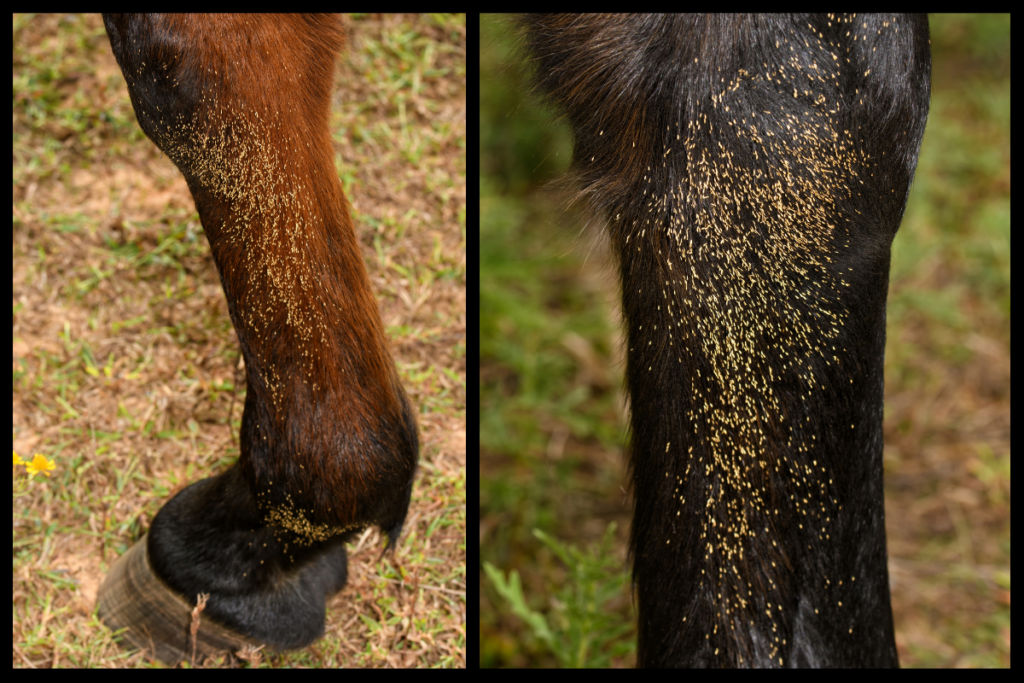
Horse dandruff appears as white or grayish flaky skin particles scattered throughout the coat, similar to what you’d see in humans. You’ll typically notice dry, flaking skin at the base of the mane and tail, along the back, and sometimes across the shoulders and hindquarters. When you run your fingers through the horse’s coat or curry them, the flakes become more visible and might fall off in small powdery specks or larger scales, depending on the severity.
Can human dandruff shampoo be used on horses?
Horse owners sometimes discuss using human anti-dandruff shampoos, particularly products containing ingredients like selenium sulfide or zinc pyrithione, to treat horses with mild flaky skin. However, horses have different skin sensitivities than people, and not every product is safe or appropriate. It’s best to consult your veterinarian before trying medicated human products on your horse, especially if the skin is inflamed, cracked, or infected.
What is the best shampoo for horses with dandruff?
Horses with dandruff benefit most from shampoos containing antifungal or antimicrobial ingredients. Look for products with selenium sulfide, ketoconazole, or chlorhexidine as active ingredients—Virbac’s Sebohex shampoo is a popular option. Sulfur- and salicylic-acid-based shampoos can also help by loosening and lifting flaky skin. That said, persistent or severe dandruff can signal an underlying issue, so it’s worth having your vet take a look if the condition doesn’t improve with a medicated shampoo after a few weeks.
Take-Home Message
A little dandruff in horses is extremely common and often harmless. Seasonal shedding, dry weather, and normal skin turnover can create visible flakes, especially in the mane and tail.
But heavy scaling, itchiness, hair loss, or crusting deserve closer attention. Since dandruff is often a symptom rather than a disease itself, persistent cases should be evaluated to rule out parasites, infections, allergies, or nutritional issues.
Call your veterinarian if you notice severe itching, hair loss, bleeding or sores, thick crusts, widespread scaling, bad odor, oozing skin, persistent tail rubbing, or no improvement with basic care.
Related Reading:
Are you enjoying this content? Sign up for My New Horse’s FREE newsletter to get the latest horse owner info and fun facts delivered straight to your inbox!