
Horses’ nutritional needs shift with the seasons. Cold weather, shorter days, and limited turnout can affect how your horse eats, drinks, and maintains body weight. By planning ahead, you can take some of the stress out of winter horse feeding and keep your horse in good body condition until spring. Read on to learn how to “winterize” your horse’s feed program, from stocking up on hay and feed to ensuring your horse is getting the nutrients he needs.
Why Adapt Your Horse’s Feed Program in Winter?
With winter comes a few horse-keeping changes and challenges. This time of year, horses in cold climates are burning more calories to stay warm. Forage and grain typically have lower moisture levels, so horses will need to drink more water to ward off impaction colic risks. Horses might also drink less water if it’s too cold or frozen. Then you have to worry about your hay supply and forage quality, which can fluctuate because of weather.
Meanwhile, you must be careful not to make sudden diet changes, such as increasing rations or changing hay types, to avoid digestive upset.
First, Stock Up on Hay
The forage digestion process helps generate heat, making hay your horse’s “internal heater.” In winter, horses should consume at least 1.5-3% of their body weight in forage per day, which might include a combination of long-stem hay, cubes, high-fiber pellets, beet pulp, or chopped hay. That can add up: For example, a 1,000-pound horse can eat 15-30 pounds of hay daily.
To estimate your winter hay needs, count how many horses you’re feeding, how many pounds of forage each one needs per day, and how many months of “full winter” (when pasture is unavailable or minimal) you anticipate. Add a 10-20% buffer for spoilage, waste, or cold snaps.
When you buy your hay and how much you get at once depends on your available storage. You don’t want to be scrambling to restock midwinter when supply is low, but you also don’t want to buy all your hay at once and risk it spoiling or molding. Get the highest-quality hay you can, and avoid overly mature batches, which are less digestible. A hay analysis (ask your supplier for one or submit a test yourself) will give you information about the hay’s nutrient content.
Plan Ahead for Hay and Grain Storage
When you stock up on your winter hay and grain supply, have a plan for storing it away from the elements. Keep hay in a dry environment to prevent mold growth and wastage. Ideally, you’ll want to store it off the ground (e.g., on pallets) in a well-ventilated and covered area. Organize your bales so you’re feeding the oldest ones first—label them by delivery date if you have a large supply.
Keep concentrate feeds in rodent-proof metal or heavy plastic bins with tight lids. As with hay, try to keep moisture and humidity levels low, and check the feed periodically for mold or spoilage.
By keeping your feed in good condition, your horses are more likely to eat their full rations and less likely to suffer problems associated with mold or mycotoxins.
Ensure Your Horse Stays in Good Body Condition
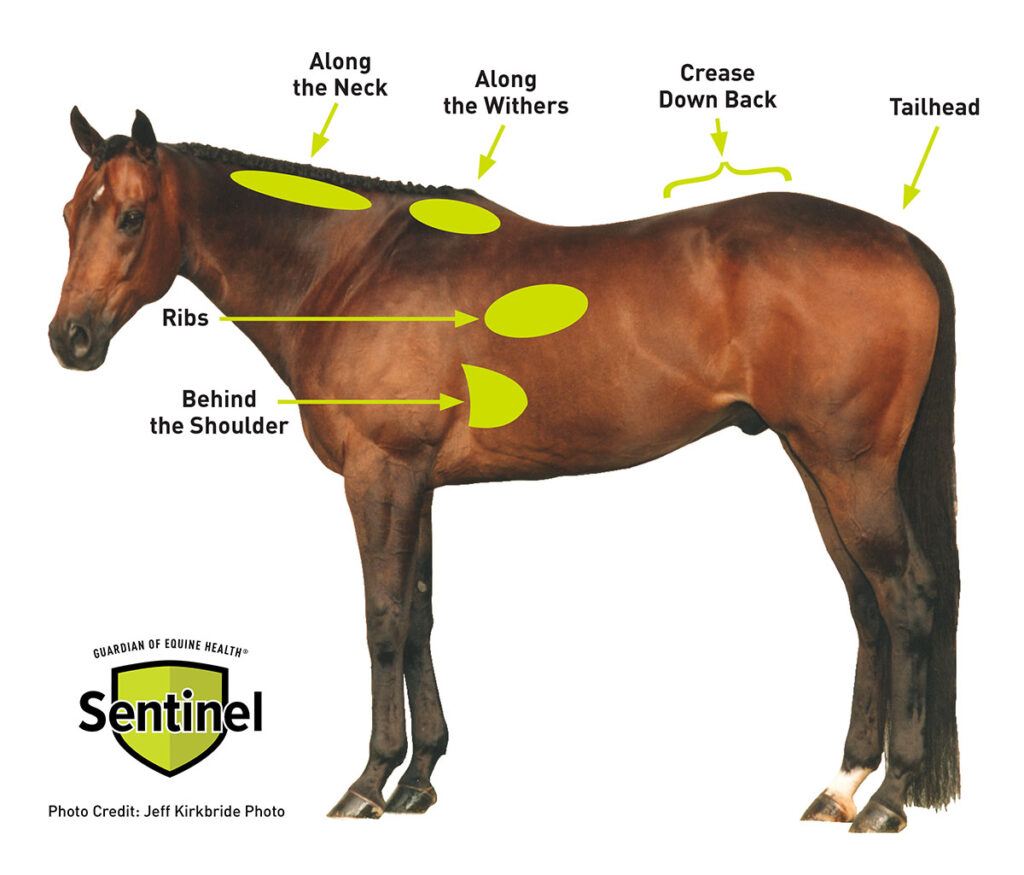
Some horses have difficulty maintaining weight in winter because they’re burning extra calories to stay warm. Here are some steps you can take to keep your horse in good body condition:
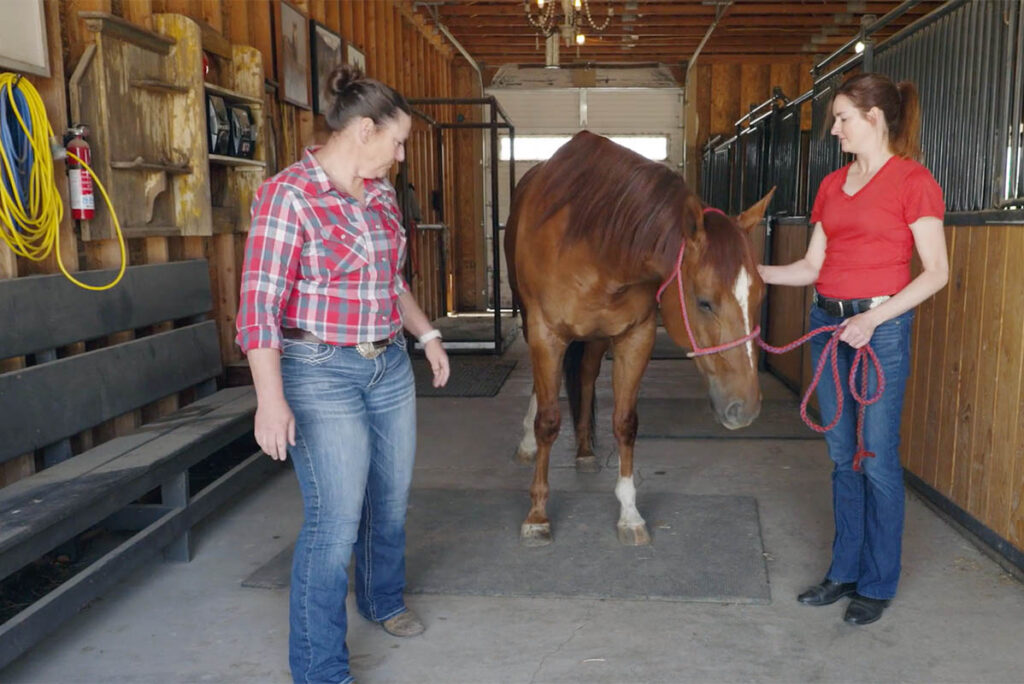
- Know your horse’s baseline body condition score (BCS). This 1-9 scale measures fat cover over the horse’s ribs, topline, and behind the shoulder. Learn to take your horse’s BCS score, and record it monthly to monitor for changes.
- Weight loss can be easy to miss beneath thick winter coats or blankets. So run your hands over your horse’s body regularly to pick up on body condition changes early.
- If your horse starts to drop weight, gradually (over 7-10 days) increase hay rations or add calories in the form of a high-fat supplement, oil, or concentrate feed.
- If you need to supplement your horse’s diet with a concentrate, choose the right product for his workload, age, and lifestyle, and feed it in the recommended amount on the package’s label to properly meet his nutrient requirements. Senior feeds, for instance, are designed for older horses and those with dental, digestive, or metabolic challenges.
Encourage Good Hydration
Horses often drink less in cold weather, but they actually need more water because their forage and feed are typically drier. This is why some horses are at higher risk of impaction colic during winter. To ensure your horse stays well-hydrated, offer water in the 45-65-degree Fahrenheit temperature range, which researchers have shown is what horses prefer.
Prevent water in buckets and troughs from freezing by using deicers, heated buckets, or tank heaters. And provide free-choice salt (loose or block) to encourage your horse to drink.
Winter Feeding Program Checklist
Here’s a list of steps you can take before winter hits so you’re well-prepared to keep your horse in great condition:
- Estimate your total winter hay needs, plus a small buffer.
- Divide and schedule hay purchases over time if you have limited storage space.
- Inspect and shore up hay and grain storage areas so they’re protected from snow, wind, rain, pests, and UV exposure.
- Get your hay analyzed.
- Repair or purchase new grain storage bins if needed.
- Establish your horse’s baseline body condition score, and take photographs to compare over time.
- Determine which feed or supplement you’re going to buy if you need to adjust your horse’s energy intake.
- Set up water deicers or heated buckets, and make sure waterers are functioning properly.
- Stock up on salt.
- Have your veterinarian perform a wellness and dental exam to make sure your horse is healthy and can chew well going into winter.
- Check and maintain paddocks and turnout shelters, since a solid windbreak or run-in can help prevent your horse from burning so many calories just trying to stay warm.
- Monitor and record your horse’s weight and condition monthly.
With advanced planning, you can help your horse sail through the cold months in good health. Start early with your hay purchases and storage prep, keep your horse’s diet changes gradual, and watch his body condition closely.
Related Reading:
This article is brought to you by Sentinel Horse Feed.
Are you enjoying this content? Sign up for My New Horse’s FREE newsletter to get the latest horse owner info and fun facts delivered straight to your inbox!