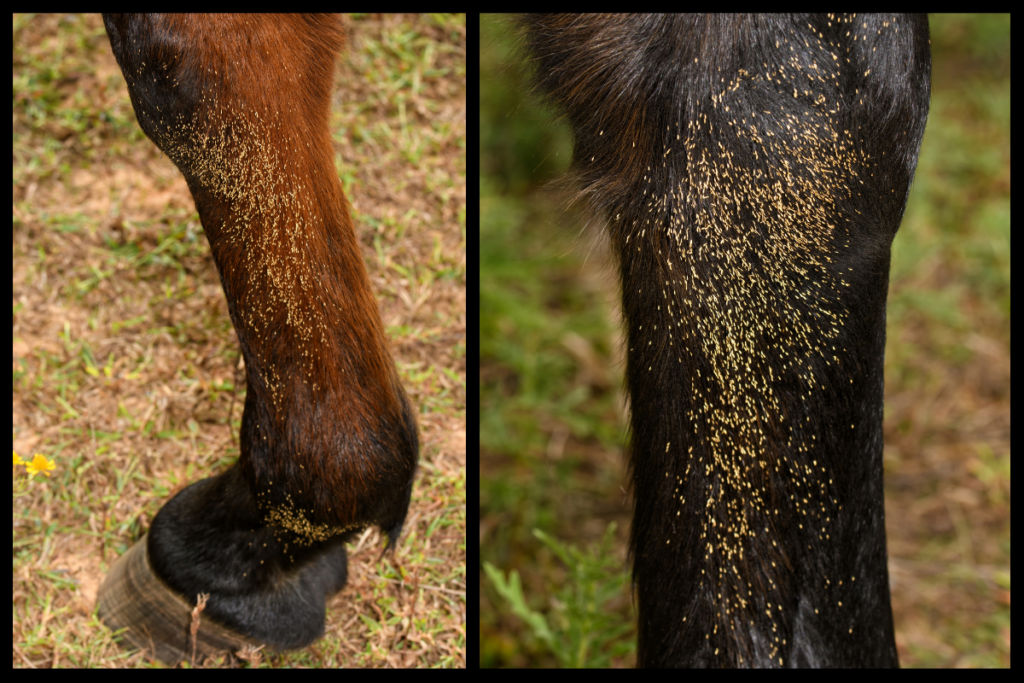
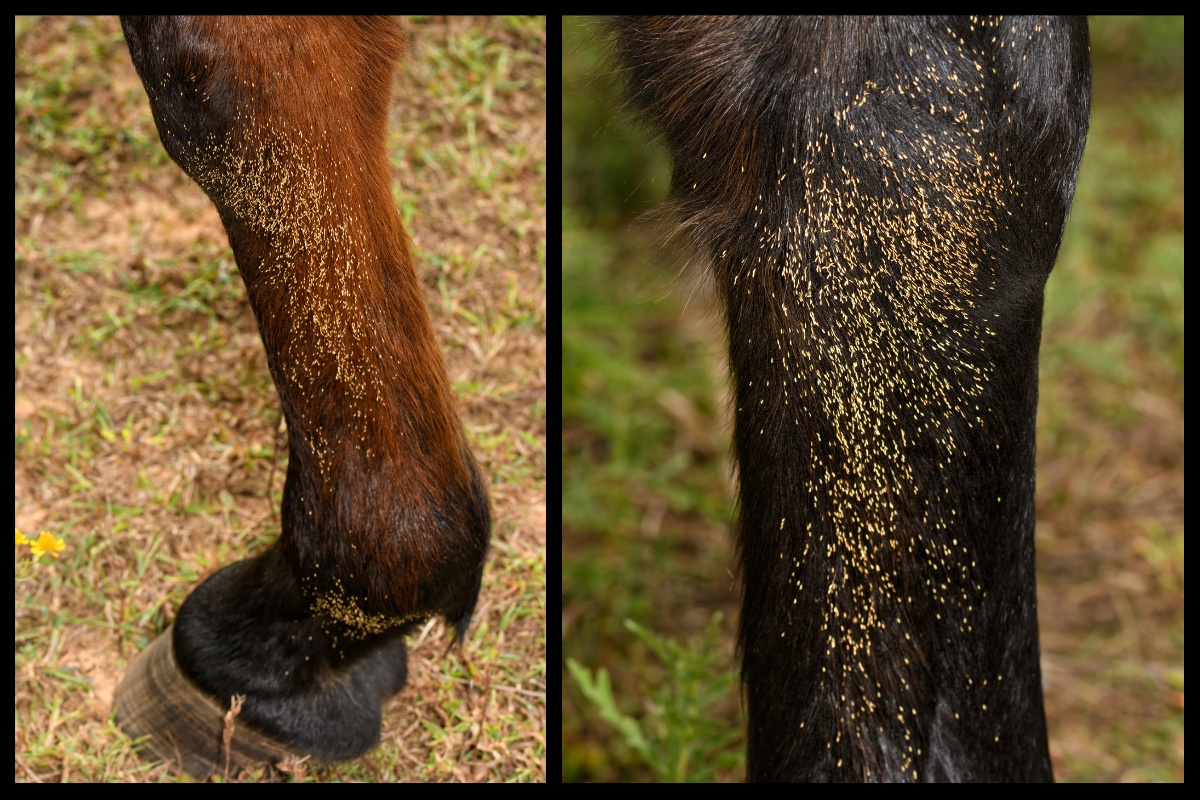
Have you ever noticed tiny yellow specks stuck to the hairs on your horse’s legs and wondered what they were? Those little dots could be bot fly eggs, and they’re the beginning of a parasite life cycle that can eventually take up residence inside your horse.
Bots are a common parasite of horses, but if you’re new to horse ownership, their life cycle can sound a little unsettling (and, frankly, pretty gross!). Here’s what every horse owner should know about these unwelcome hitchhikers.
How Bots Affect Your Horse
Flies in the Oestridae family, bots lay eggs on areas of the horse’s body that he can reach with his muzzle. When a horse licks the eggs, they hatch and larvae enter his mouth to mature inside his gastrointestinal system. Larvae exit via manure, starting the process again.
Smart deworming decisions are based on regular fecal egg count tests that identify which horses in a herd need to be treated for particular parasites. This guidance, however, doesn’t apply to controlling bots. That’s because thanks to the botfly’s life cycle, there are no bot eggs in manure to detect. Therefore, protecting your horse requires other measures.
How to Remove Bot Eggs
In many regions, droves of botflies appear in the late summer and fall. So keep an eye out for bot eggs this time of year. Shaped like small grains of rice, bot eggs are sticky and yellowish. They are commonly deposited on a horse’s knees, forearms, and chest. If you see eggs, remove them with one of two tools:
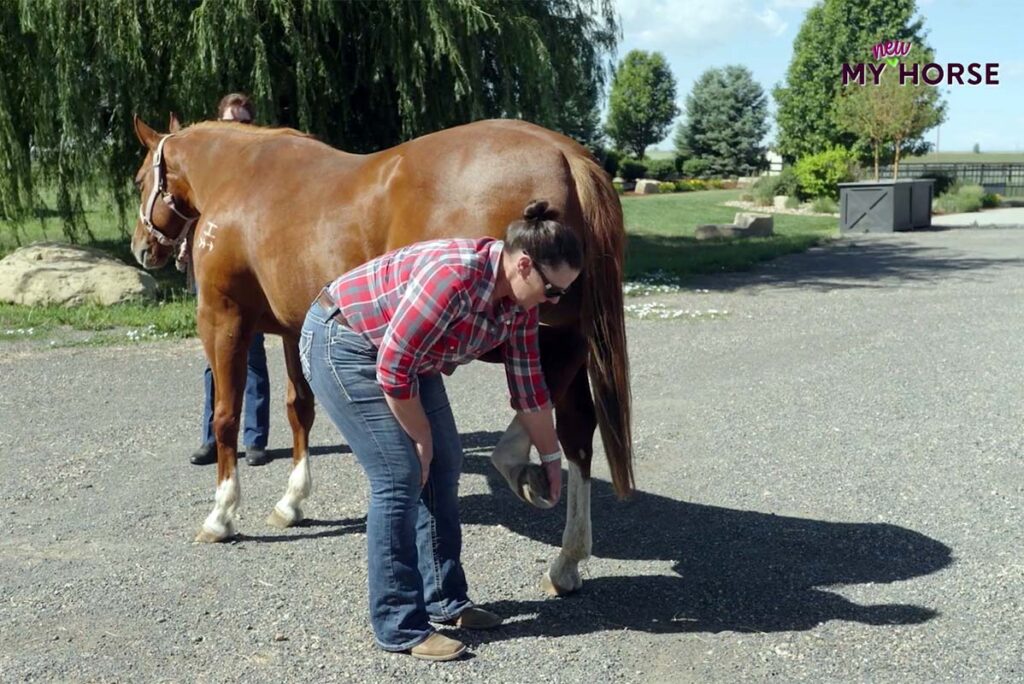
- A bot knife, which has a rounded blade with a serrated edge. Place the knife above the egg and scrape downward. The egg will fall to the ground, so be sure to do this far from where your horse grazes.
- A porous, fiberglass “bot block,” which can also be used to encourage shedding out. When rubbed over the coat, the block’s edge “grabs” the eggs. To clean the block itself and sharpen the edge, scrape it across a hard surface, keeping in mind that you might be leaving bot eggs behind.
To Treat or Not to Treat?
If you are vigilant about looking for and removing these eggs, you can skip deworming your horse for bots this year. Don’t worry if you think one or two eggs may have slipped by. That level of infestation isn’t going to be harmful, and overzealous use of dewormers will contribute to parasite resistance.
On the other hand, if you don’t regularly search and scrape, deworm your horse with a dose of moxidectin or ivermectin after the first frost in your area. A single dose will be sufficient to control the parasite for the coming year.
Related:
- Frequently Asked Questions About Deworming Horses
- Navigating 4 Common Horse Skin Issues
- Your Guide to Fall Horse Care: An Essential Checklist
This information originally appeared on Equus.
Are you enjoying this content? Sign up for My New Horse’s FREE newsletter to get the latest horse owner info and fun facts delivered straight to your inbox!