
Have you ever found yourself staring at your horse’s water bucket thinking, Did he drink enough today? Is this normal? Should I be concerned? Monitoring your horse’s water intake is one of the simplest—and most important—ways to support his health. From digestion and temperature regulation to performance and colic prevention, proper hydration plays a role in nearly every body system. In this article, we’ll break down how much water horses typically need, how to tell if your horse is drinking enough, and practical ways to encourage better hydration.
How Much Water Do Horses Need?
Most adult horses drink about 5-10 gallons of water per day (roughly 20-40 liters). That’s a good baseline for a mature, healthy horse at rest in mild weather. Water needs can vary, however, based on several factors:
- Temperature and weather: Hot, humid weather can easily double water needs.
- Work level: Exercising, training, or long rides increase water requirements because of sweat loss.
- Pregnancy or lactation: Mares that are nursing might need significantly more water daily.
- Diet: Horses eating high-moisture pasture grass might drink less than those on dry hay diets.
A typical daily requirement translates to about 60-70 milliliters of water per kilogram of body weight, or ~30 liters (8 gallons) per day for a 500-kilogram (1,100-pound) horse. Most horses fall somewhere in this range:
| Condition | Typical Daily Water Intake |
| Mild weather | ~5-10 gallons (19-38 L) |
| Hot weather or heavy work | 10-20+ gallons (38-75+ L) |
| Lactating mares | 15-30+ gallons (56-113+ L) |
How to Tell If Your Horse Is Drinking Enough
You don’t have to guess whether your horse is well-hydrated. Here are some things to watch for:
Good Signs
- Your horse empties his water bucket or trough daily.
- His urine is light yellow and frequent.
- Your horse appears bright and alert.
- His manure isn’t unusually dry or hard.
Warning Signs
- Sunken eyes, dry mucous membranes, tacky gums.
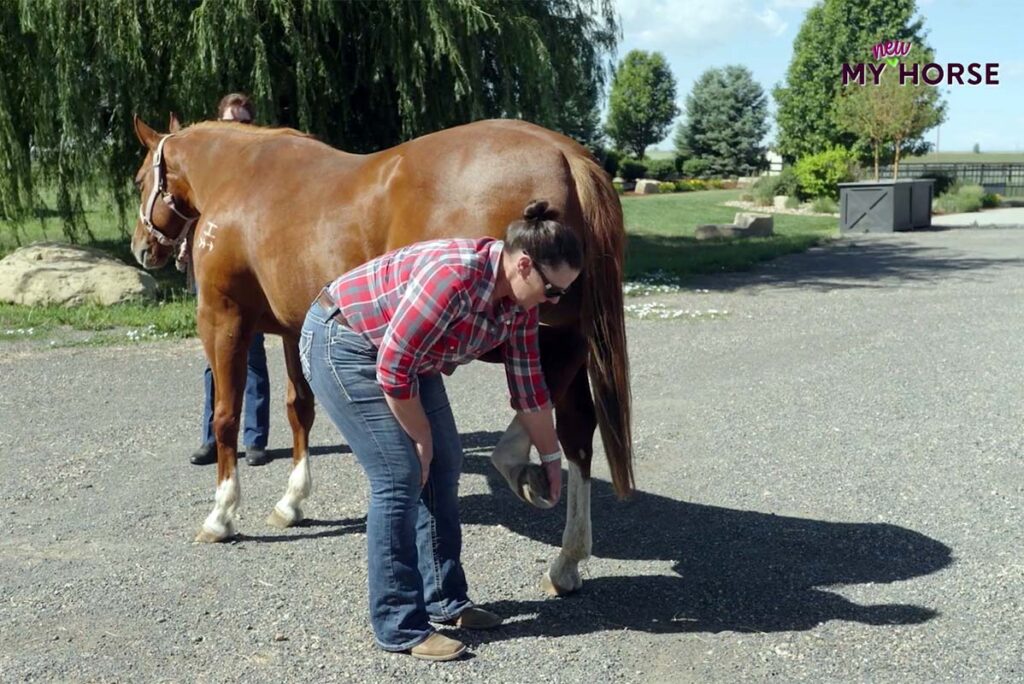
- When you perform a skin tent test (pinch the skin on the neck), it doesn’t snap back quickly.
- Reduced manure moisture or very dry manure.
- Decreased urine output.
- Lethargy or poor performance.
Note how much water intake is normal (especially in heat or hard work) for your individual horse so you can pick up on hydration changes quickly. Certain conditions make monitoring water intake even more important.
For instance, when horses are on stall rest due to illness or lameness, they might drink less. In these cases, keep feeding moist forage or water-soaked hay to help hydration. Horses usually don’t drink enough during long trailer rides, either. Offering familiar water sources, taking frequent water breaks, and supplementing with electrolytes can help prevent dehydration. As always, ask your veterinarian for guidance if it’s your first time in one of these scenarios.
Related Reading: A Guide to Choosing Equine Water Sources
How to Encourage Your Horse to Drink More
Sometimes horses are picky or uninterested in the water in front of them. Here’s how to help them drink enough:
Keep water clean and fresh: Horses will refuse dirty, stagnant water. Change water and clean buckets or troughs daily if possible.
Manage water temperature. Horses prefer water that’s not too cold. In winter, offering slightly warm water (45-65°F or 7-18°C) can improve intake.
Use salt and electrolytes wisely. Salt and electrolytes can help stimulate thirst, but use them appropriately (and ask your veterinarian for guidance).
Change things up. Some horses prefer different types of water supplies. Experiment with delivery methods (e.g., bucket vs. trough vs. automatic waterer) to see if your horse drinks better from one compared to another.
Add flavor. A tasty additive such as apple juice or Gatorade can encourage your horse to drink, especially if you’re traveling, as some horses are picky when it comes to unfamiliar water sources.
Take-Home Message
While precise needs can vary, a typical adult horse drinks about 5-10 gallons a day. Hot weather, work, and lactation will increase a horse’s water requirements. Offer your horse clean, palatable water at all times, and watch his behavior and manure and urine output to make sure he’s getting enough. If you suspect a hydration issue, call your veterinarian right away.
Related Reading:
Are you enjoying this content? Sign up for My New Horse’s FREE newsletter to get the latest horse owner info and fun facts delivered straight to your inbox!