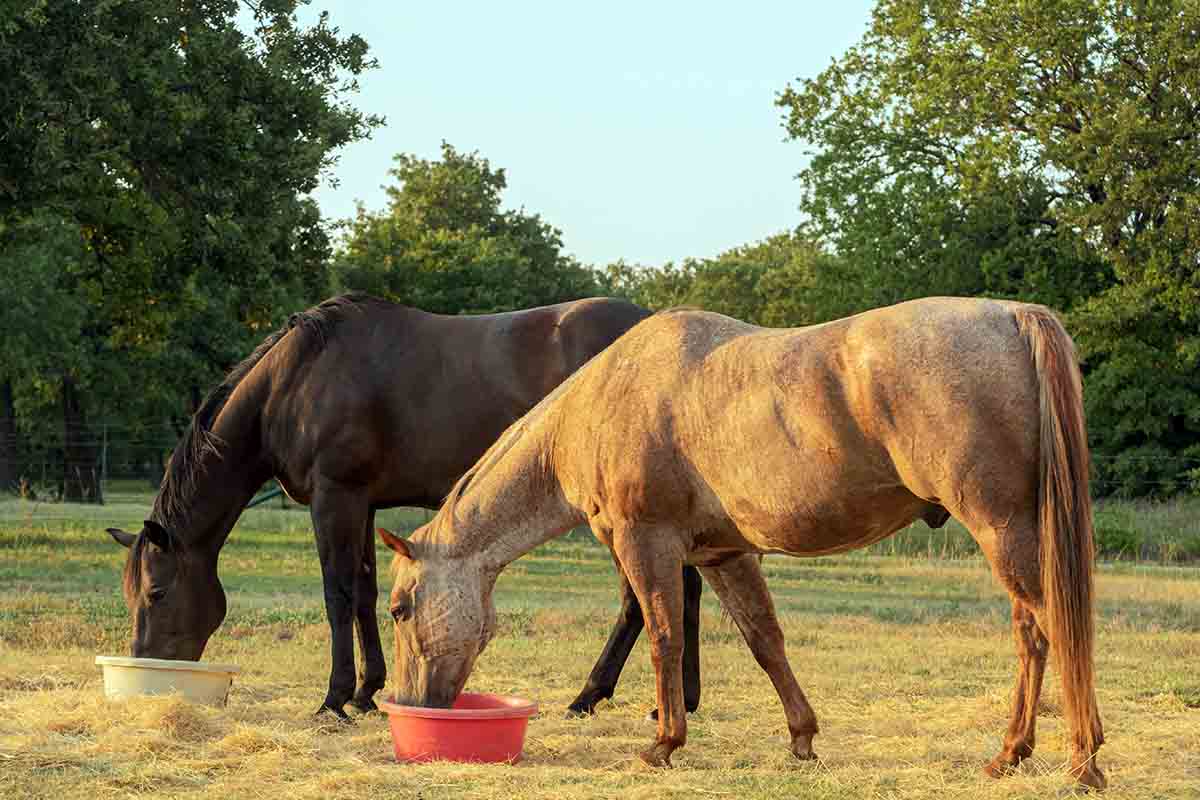
No need to excuse yourself from a dinner invitation to feed the horses at a specific time. A ration delivered a few hours earlier or later won’t harm a pleasure horse or one in light work. If anything, varying the schedule may help prevent anticipatory behaviors such as pacing and stall kicking.
One key to feeding time flexibility is to offer free-choice hay and then enough grain to maintain a horse’s condition, divided into as many meals a day as possible. Chowing down a heaping serving of starchy grain on an empty stomach can lead to laminitis or colic.
When Timing Matters More
While many horses tolerate flexible schedules, some situations require greater consistency.
High-Performance Horses
Competition horses in intense training or racing have high energy demands. Precise feeding schedules help ensure:
- Optimal digestion.
- Steady energy supply.
- Maximum nutrient absorption.
Even then, minor variations (usually within about 30 minutes) are generally acceptable.
Horses With Medical Conditions
Certain health issues might require more consistent feeding schedules, including:
- Horses prone to gastric ulcers.
- Horses with metabolic disorders.
- Horses recovering from illness or surgery.
In these cases, your veterinarian might recommend strict meal timing.
Practical Tips for Busy Horse Owners
Life happens. Traffic, work obligations, and social events can occasionally interfere with barn routines. Fortunately, a few management strategies can make feeding schedules more forgiving while still supporting your horse’s health.
1. Provide Plenty of Hay
The single most helpful strategy for flexible feeding schedules is ensuring your horse has consistent access to forage. Horses are designed to graze for much of the day, and their digestive system functions best when fiber is moving through it regularly.
When hay is available between meals, a slightly delayed grain feeding is unlikely to cause problems. A horse that always has something to nibble on is also less likely to develop stress-related behaviors or digestive upset.
If free-choice hay isn’t possible (for example, if your horse gains weight easily) try offering multiple smaller hay feedings throughout the day instead of one or two large piles.
2. Use Slow Feeders or Hay Nets
Slow feeders and hay nets are useful tools for extending forage consumption. They limit how quickly a horse can pull hay out, helping a single feeding last longer. This can be especially helpful if:
- Your schedule sometimes delays evening feeding.
- Your horse finishes hay quickly and then stands around for long periods without forage.
- You want to mimic natural grazing patterns.
Slow feeders can also reduce boredom and help prevent stall vices such as cribbing, wood chewing, or stall walking.
Related Reading: Smarter Feeding: Using Hay Nets for Horses
3. Divide Grain Into Multiple Meals
If your horse requires grain or a concentrate feed, splitting it into two or three smaller meals per day is safer than offering one large portion. Smaller meals:
- Improve digestion.
- Reduce starch overload in the hindgut.
- Lower the risk of digestive upset.
For example, instead of feeding 6 pounds of grain once daily, divide it into two or three meals so your horse can process the nutrients more efficiently. This approach also means missing or delaying one meal has less impact than if the horse relies on a single large feeding.
4. Feed Forage Before Grain
Offering hay before grain can help buffer stomach acid and slow how quickly a horse consumes concentrates. A horse that eats forage first is less likely to gulp down grain on an empty stomach. This simple habit can reduce the risk of digestive problems such as colic, particularly in horses that receive high-grain diets.
5. Keep Water Available at All Times
Constant access to clean water is essential for digestion and overall health. Adequate hydration helps fiber move through the digestive tract and supports normal gut function. If feeding time is delayed, a horse with access to hay and water is much less likely to experience digestive discomfort than one standing in a stall with nothing to eat or drink.
6. Use Barn Help or Automated Solutions
If your schedule frequently conflicts with feeding times, consider management tools that maintain consistency for your horse. Options include:
- Asking a barn mate to feed when you’re delayed.
- Hiring barn staff for routine feeding.
- Using automatic feeders designed for grain.
These solutions can help maintain predictable feeding intervals, especially for horses with higher nutritional needs.
Related Reading: Horse Time Commitments: Balancing Life With Ownership
7. Maintain Overall Consistency
While occasional changes in feeding time are usually harmless, dramatic shifts every day are not ideal. Horses do best when their general routine stays fairly predictable. Try to keep feeding times within a reasonable window when possible. Even if a meal is occasionally early or late, maintaining a generally consistent daily rhythm helps horses stay calm and keeps their digestive systems functioning smoothly.
With thoughtful management, most horse owners can enjoy a little flexibility in their schedules without compromising their horse’s health or well-being.
Related Reading:
Part of this article originally appeared on Equus.
Are you enjoying this content? Sign up for My New Horse’s FREE newsletter to get the latest horse owner info and fun facts delivered straight to your inbox!