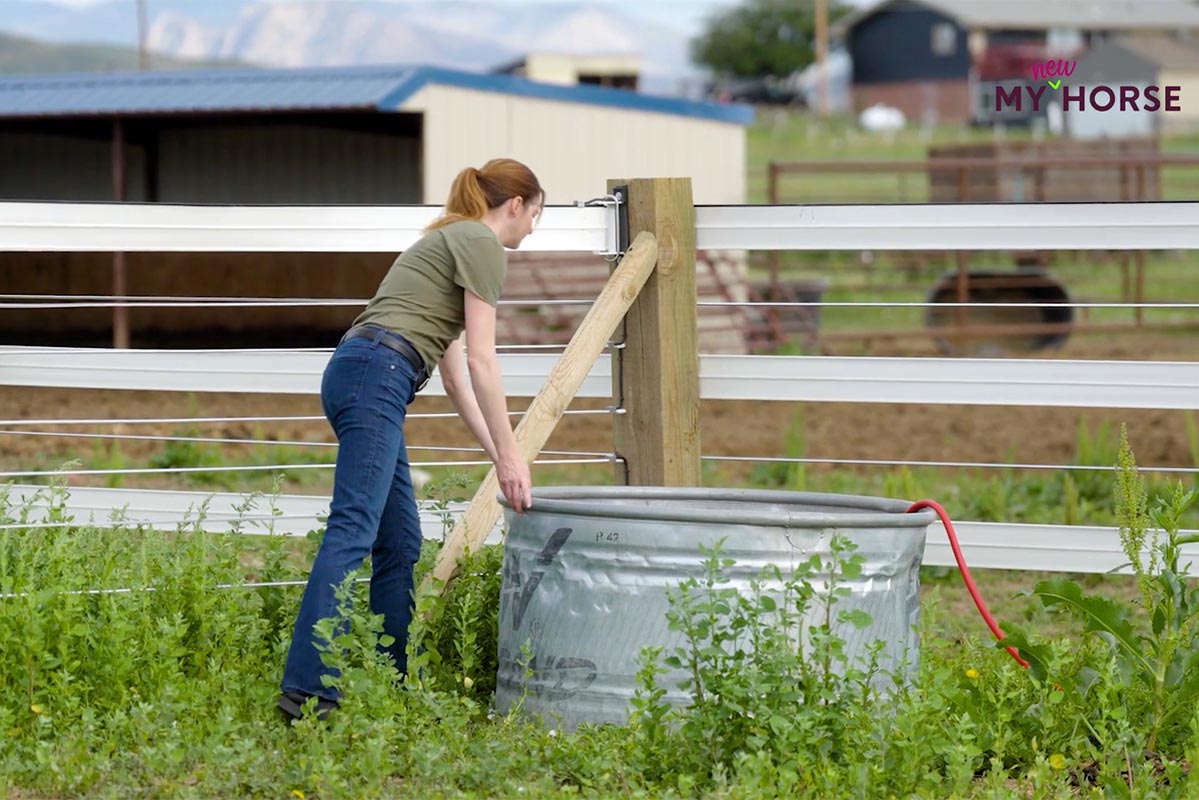
To avoid dehydration, horses need access to water 24 hours a day, in paddocks and fields as well as in stalls. To ensure they keep drinking, you’ll need to be vigilant in making sure water troughs and other containers are clean, safe, and accessible. Here are 4 ways to do just that:
Choose a Safe Material
Cast-off bathtubs have long served as animal watering troughs, but their knee-banging rigidity, sharp edges, and tendency to rust make them poor choices. Instead of these relics, choose inexpensive fiberglass tubs engineered for livestock use. They do not rust, crack, or develop skin-snagging protrusions, making them safe for watering even the largest, rowdiest herd.
If you need a watering trough for a single-horse enclosure, cut a plastic barrel (choose one that was previously used as a bulk container for a safe liquid) in half to create two ample water containers. The wholesale goods industry is likely to have such barrels for free or a nominal fee.
Check and Clean Regularly
Be diligent in maintaining your water stations. Check all troughs daily to monitor water cleanliness and the volume of the horses’ intake. When the water level is low, scrub the sides with a clean toilet brush or similar long-handled tool, and bail out the remaining water so you can drain it outside the immediate vicinity. Simply turning the trough over on the spot produces quagmires that create dangerous footing and insect breeding grounds.
Related Reading: How to Clean Horse Feed and Water Buckets
Provide a Proper Amount of Water
Fill the trough with no more than a three-day supply for the pasture population. Stagnant, dirty water loses its appeal, and horses tend to drink it only when they must. On average, each horse drinks about 10 gallons of water per day, so calculate your water needs based on how many horses you have and how often they have access to that source.
If horses are on full-time turnout, put in no more than 36 gallons per horse at one time. Partial-day turnout might drop the needed volume to a third of that. Of course, you can never go wrong by having more water available than the horses can drink; only the opposite matters.
Avoid Contamination
Your horses likely won’t be the only imbibers at the trough. When thirsty rodents, birds, and other wildlife drop by for a drink, they won’t cause harm unless they fall in and drown. An animal carcass in a water source can cause any number of illnesses in horses forced to drink the tainted water.
To avoid this toxic possibility, fit every water trough with an animal escape route: A 2-by-4 plank anchored to the edge of the container so it floats at varying water levels and can act as a life raft and escape ramp for small animals that get stranded inside the tub. Finally, impose an absolute swimming ban on any dogs that have been treated with flea-control products.
Related Reading:
This article originally appeared on EquusMagazine.com.
Are you enjoying this content? Sign up for My New Horse’s FREE newsletter to get the latest horse owner info and fun facts delivered straight to your inbox!