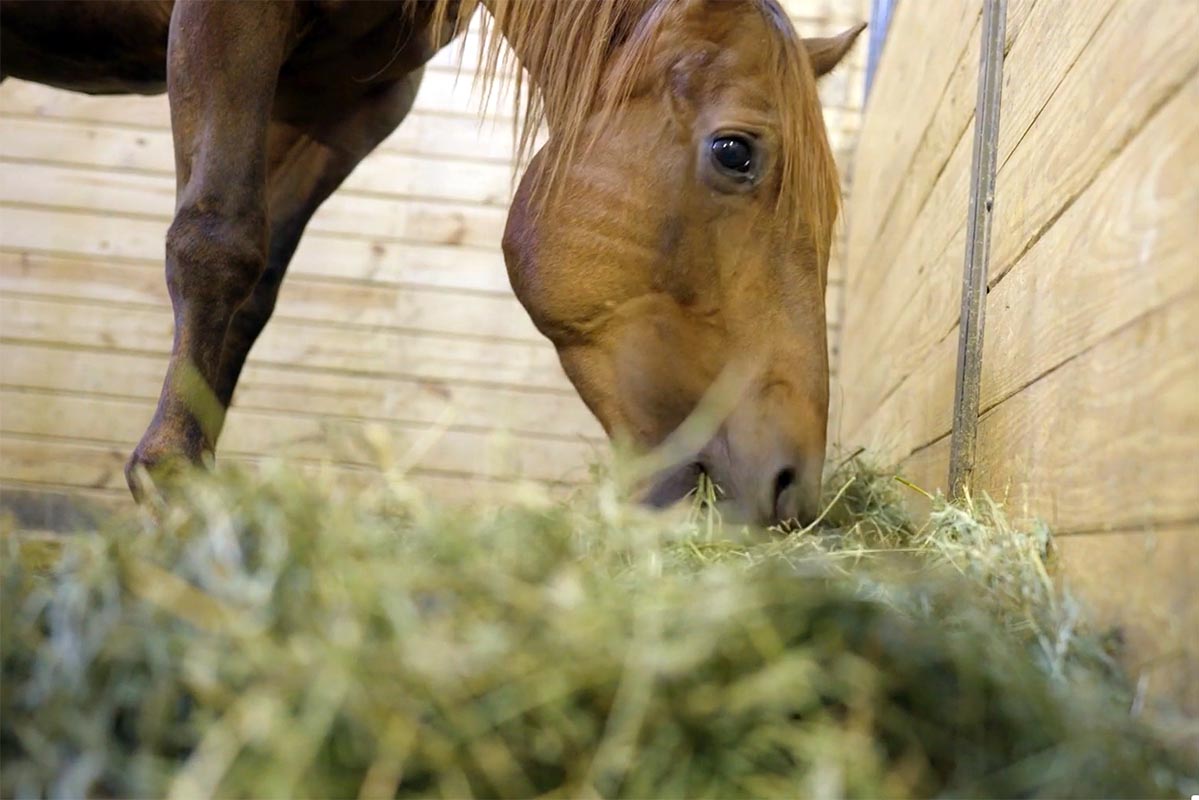
Most horse owners rely on sight, smell, and feel to judge hay quality. While those are great starting points, they don’t tell the whole story. That’s where hay testing comes in. It’s one of the most valuable (and underused) tools for managing your horse’s diet.
Why Hay Testing Matters
Hay usually accounts for about 85% of a horse’s diet or more, providing most of the nutrients they rely on each day. So even small nutritional imbalances can have big impacts over time. Testing your hay can help you:
- Know exactly what your horse is eating. Two bales that look identical can have very different nutrient profiles, due to factors such as hay type, soil quality, weather, forage maturity, and storage.
- Design a balanced diet. Based on the results, you can accurately fill in any nutritional gaps with concentrate feed or supplements.
- Prevent and address health issues. A hay analysis helps you evaluate forage suitability when horses have nutrition-related conditions like insulin dysregulation, other metabolic conditions/concerns, or hyperkalemic periodic paralysis (HYPP).
- Save money. You might be feeding supplements your horse doesn’t actually need or missing ones he does.
When Should You Test Your Hay?
Ideally, you want to test your hay any time you get a new batch or cutting. Consider testing when:
- You switch hay suppliers.
- You start feeding a new cutting (first, second, etc.).
- Your horse’s health or weight changes unexpectedly.
- You’re managing a horse with special needs (e.g., metabolic issues, senior horses).
- You have a breeding operation.
- You’re balancing a precise diet with a nutritionist.
If you buy a large quantity of hay at once (like a full season’s supply), testing a representative sample early on can guide your feeding program for months. Horse owners who need to buy hay frequently might find it more challenging to test every time. So if you buy often and from the same supplier and field, simply spot-check it occasionally.
How Hay Testing Works
Hay testing involves sending a sample to a forage testing lab. The key is getting a representative sample:
- Use a hay probe (often available through extension offices or feed stores).
- Take small core samples from at least 10-20% of the bales and from different areas of the stacked hay.
- Mix them together into one sample.
- Send it to a lab in a sealed bag, labeled with the hay type and date sampled.
If you don’t have a hay probe, you can grab handfuls from different bales, but the results will be less accurate. You can also contact your feed store or supplier, and they can usually work with their feed supplier’s sales representative.
What Do Hay Test Results Tell You?
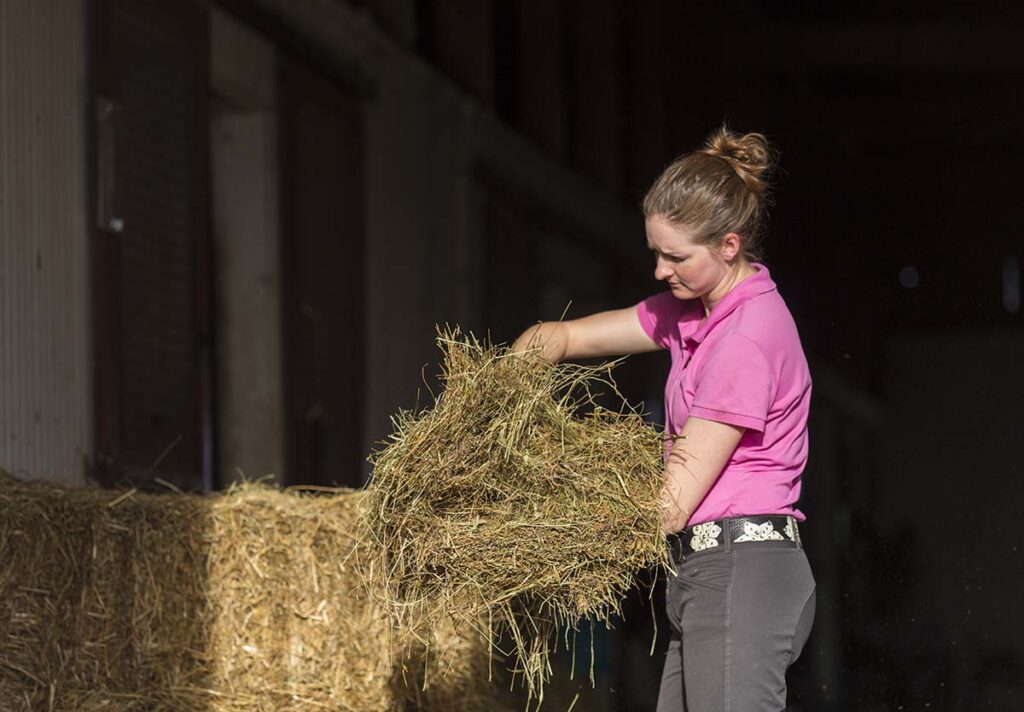
When you get your results back, you’ll see a report full of numbers and abbreviations. It can feel overwhelming at first, so let’s break down the key pieces.
- Moisture (dry matter) indicates how much water is in the hay, with ideal levels around 10-15%. Too much moisture can lead to mold. Too little can mean overly dry, brittle hay.
- Protein (crude protein) is essential for muscle development, growth, and overall health. Grass hay typically has ~8-12% protein (although it might be less depending on the region in which it grows), while legume hay (like alfalfa) has ~15-20%. Young, growing horses or performance horses need more protein than easy keepers.
- Fiber (ADF and NDF) provides information about hay’s digestibility and palatability. The lower the ADF (acid detergent fiber), the more digestible the hay. The higher the NDF (neutral detergent fiber, a measure of insoluble fiber), the less digestible and palatable. Work with your local feed dealer and feed representative for good ranges of ADF and NDF.
- Sugar and starch levels (nonstructural carbohydrates or NSCs) are important to monitor for horses prone to metabolic issues, because high NSC can trigger problems such as laminitis. For at-risk horses, aim for < 10-12% NSC.
- Minerals (calcium, phosphorus, magnesium, potassium, etc.) should be in the right balance. The calcium-to-phosphorus ratio is especially important (ideally around 1.5-2:1).
- Energy (digestible energy) indicates how many calories the hay provides and whether your horse will likely maintain, gain, or lose weight on it. While the ideal amount depends on the individual horse, a comfortable DE value is generally around 0.80-0.90 Mcal/lb.
How to Use the Results
Getting a hay test is only the first step. The real value comes from applying it. Here’s how to put your results into action:
- Adjust feed and supplements to fill in nutritional gaps instead of guessing.
- Match the hay to the horse. Easy keeper? Choose lower energy, lower NSC hay. Hard keeper? Look for more digestible, energy-dense hay.
- Work with a professional. An equine nutritionist, feed representative, or veterinarian can help you take and test hay samples and balance the entire diet using your hay analysis.
The Bottom Line
Hay testing takes the guesswork out of feeding your horse. Instead of relying on assumptions and appearances, you get clear, actionable information about what’s in your horse’s primary food source. It’s one of the simplest ways to improve your horse’s health, performance, and overall well-being.
Related Reading:
This article is brought to you by Sentinel Horse Feed.
Are you enjoying this content? Sign up for My New Horse’s FREE newsletter to get the latest horse owner info and fun facts delivered straight to your inbox!