If your horse hasn’t had its teeth checked in the past year, fall is one of the best times to do it. Over the next few months, most horses go from grazing on soft, moist pasture to living almost entirely on hay, and digesting that hay is what keeps them warm in winter. A mouth that chews efficiently turns it into heat and body condition. A mouth with sharp points or uneven wear can quietly cost your horse weight when he can least afford to lose it.
The tricky part for newer horse owners is that dental problems rarely announce themselves. Horses are stoic, and a thickening winter coat does a great job of hiding a slow decline in body condition. In this article, we’ll explain why your horse’s teeth need attention, what to watch for, and when to schedule a dental appointment, so you can go into the cold months with one less thing to worry about.
Equine Teeth Don’t Work Like Ours
Horses have what are called hypsodont teeth: Long teeth that keep erupting from the jaw throughout most of the horse’s life. Grinding forage wears the chewing surface down at roughly the same rate the tooth pushes up. When everything’s working well, the system balances itself out.
The catch is it rarely lines up perfectly. A horse’s upper jaw is wider than its lower jaw, so the outer edge of the upper cheek teeth and the inner edge of the lower cheek teeth don’t fully meet. Those unworn edges can develop sharp enamel points over time. Points on the upper teeth rub the inside of the cheeks; points on the lower teeth rub the tongue.
Sharp points are normal, not a sign of neglect. They just need to be managed so they don’t cause ulcers and abrasions in the mouth. Uneven wear can also create:
- Hooks and ramps: Overgrown projections at the front or back of a row of teeth, usually where a tooth has nothing directly opposite to wear against.
- Waves and steps: An uneven, up-and-down chewing surface, often from a missing or abnormally worn tooth.
- Retained caps: Baby teeth that haven’t shed cleanly in young horses.
The routine fix is called “floating,” which involves rasping down points, hooks, and uneven surfaces so the teeth meet properly and chewing is comfortable again.
Why Winter Raises the Stakes
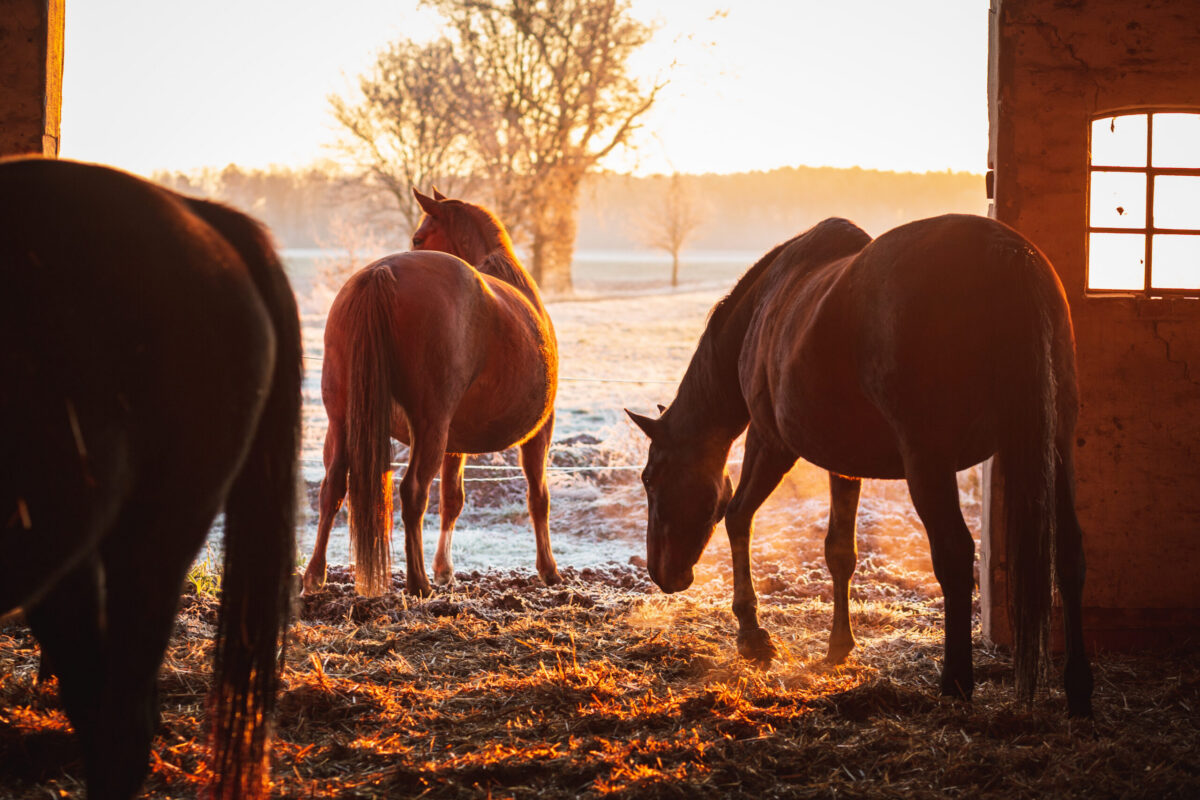
Winter puts more demand on your horse’s mouth at the same time it puts more demand on the body:
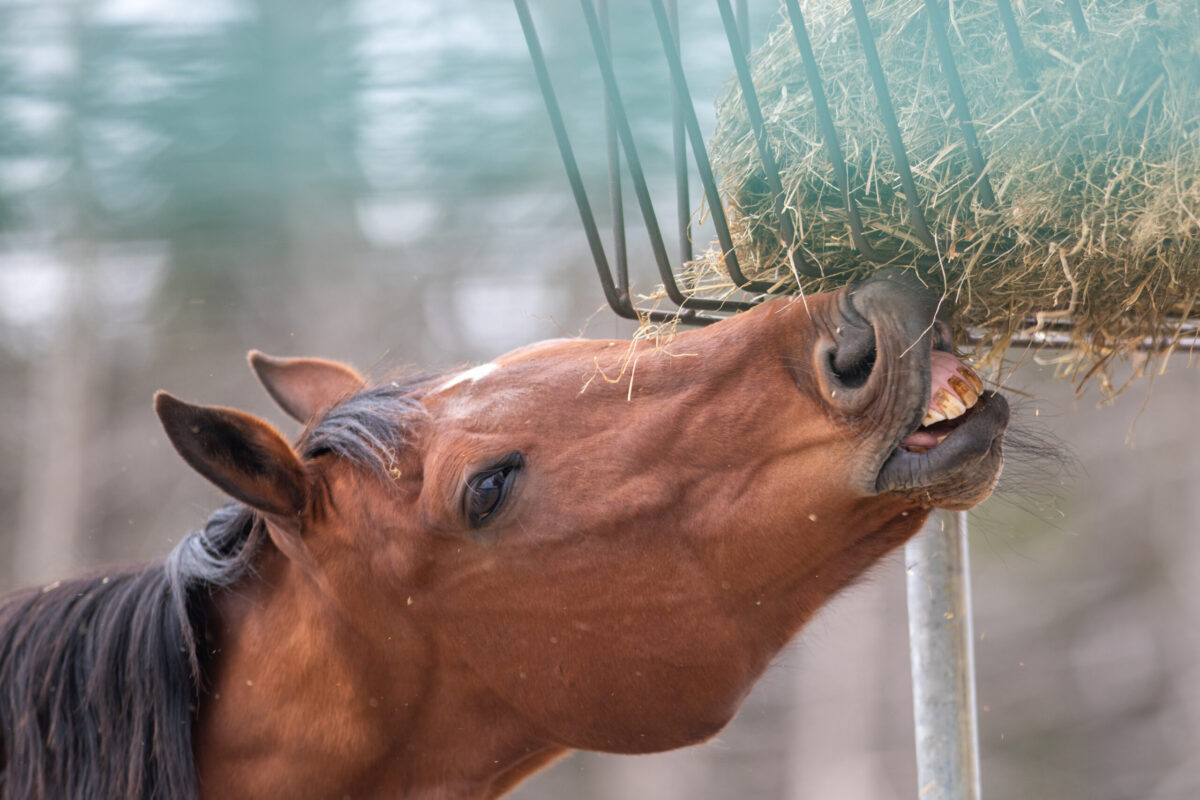
The diet gets tougher to chew. Spring and summer grass is soft and moist. Dry hay is coarser and takes more grinding to break down, putting more pressure on any sore spots, sharp points, or loose teeth.
Hay is your horse’s furnace. Gut microbes in the hindgut ferment fiber, and that fermentation gives off heat, which is why veterinarians and nutritionists recommend feeding extra hay rather than grain to help horses stay warm. A horse that’s uncomfortable chewing might eat less hay when he needs it most.
Weight loss hides under a winter coat. A fluffy coat can make a horse that’s losing condition look fine from across the paddock. By the time you notice, you’re trying to put weight back on during the coldest, most challenging part of the year.
Poorly chewed hay is a colic and choke risk, especially in older horses. Sudden diet changes and less water consumption in winter can cause horses to colic. Add poor chewing to the equation, and colic risk increases even more. Choke and large colon impaction are associated with dental disease in geriatric horses, and a large study of donkeys in the UK found dental disease was significantly associated with impaction colic.
Related: Winter Weight Loss in Horses: When to Worry
Signs Your Horse’s Teeth Need Attention
Many horses with dental problems don’t show obvious signs, which is why routine exams are so important. Still, watch for these warning signs that it’s time to schedule your horse’s dental:
At feeding time
- Quidding, or dropping wads or clumps of half-chewed hay from the mouth. Check the ground around the feeder.
- Dropping a lot of grain while eating or eating slower than usual.
- Tilting the head to one side while chewing or chewing on one side only.
- Refusing to eat or picking at hay.
- Whole grain kernels or long pieces of fiber in the manure.
Around the head and face
- Foul-smelling breath.
- Nasal discharge, especially from one nostril only.
- Swelling along the jaw or face, or pus draining from the cheek or below the jaw.
Under saddle
- Resisting the bit, head tossing, or head shaking.
- Leaning on or fussing with one rein, or a sudden change in how the horse carries his head.
Over weeks and months
- Gradual weight loss, often easiest to catch by running your hands over the ribs and topline rather than by eye once the winter coat comes in.
These are all reasons to call your veterinarian rather than waiting for the next scheduled visit.
Related: Caring for Equine Teeth: Why Your Horse Needs Dental Exams
Who Should You Call?
The American Association of Equine Practitioners considers equine dentistry part of veterinary medicine, but rules vary by state. In Minnesota, for example, nonveterinarians can float teeth only under a veterinarian’s direct supervision. For a new owner, the simplest path is to start with your regular equine veterinarian. Sedation, diagnosing disease, and pulling teeth all require a veterinarian, and yours can refer you to a dental specialist if your horse needs one.
How Often Should Your Horse’s Teeth Be Checked?
The AAEP recommends a dental exam for every horse at least once a year, with more frequent checks for young horses. Your veterinarian might suggest a different interval based on what they find.
| Age | Typical exam schedule | What the vet is watching for |
| Foals | Within the first 30 days, then at 3 months | Congenital defects, jaw alignment (overbite or underbite) |
| 6 months to 5 years | Every 6 months | Baby teeth (caps) shedding on time, wolf teeth, eruption problems, sharp points on soft baby teeth |
| Adults (about 5 to 15) | Once a year | Sharp points, hooks, and ramps; fractured teeth; early gum disease |
| Seniors (about 15+) | Once a year at minimum; often every 6 months | Loose, worn, or missing teeth; gum disease; food packing between teeth |
If your horse’s annual exam usually falls in spring, there’s no need to panic. But if it’s been more than a year, or you just bought the horse and have no dental history, early fall is a smart time to book.
Take-Home Message
A fall dental exam can help ensure your horse goes into winter with a comfortable, functional mouth and that you know about any problems while there’s still time to adjust his diet. That’s important for a horse that will spend the next few months chewing hay to stay warm.
If you’re not sure where your horse stands, call your veterinarian. He or she would much rather talk teeth in October than treat choke or colic in January.
Related: