
If your horse looks a little leaner as winter progresses, you’re not alone, and you’re not necessarily doing anything wrong. Minor weight loss during the colder months is common, and even normal, for many horses. But how do you know when “normal” has turned into a problem?
In this article, we’ll explain why some horses lose weight in winter, how to assess their body condition, and what steps you can take to help your horse maintain or add weight this season.
Why Do Horses Lose Weight in Winter?
Winter puts extra demands on a horse’s body. Even with good care, several factors can contribute to seasonal weight loss:
- Increased calorie needs: Horses burn more calories to stay warm, especially in cold, wet, or windy conditions.
- Lower forage quality: Winter hay might be less nutrient-dense than fresh pasture.
- Reduced appetite: Some horses simply eat less in colder weather.
- Dental issues: Older horses or those with dental problems might struggle to chew hay efficiently.
Don’t panic if you notice a slight drop in weight. Noticeable rib outlines, topline loss, or a dull appearance, however, are signs to take action.
Monitor Your Horse’s Body Condition Score
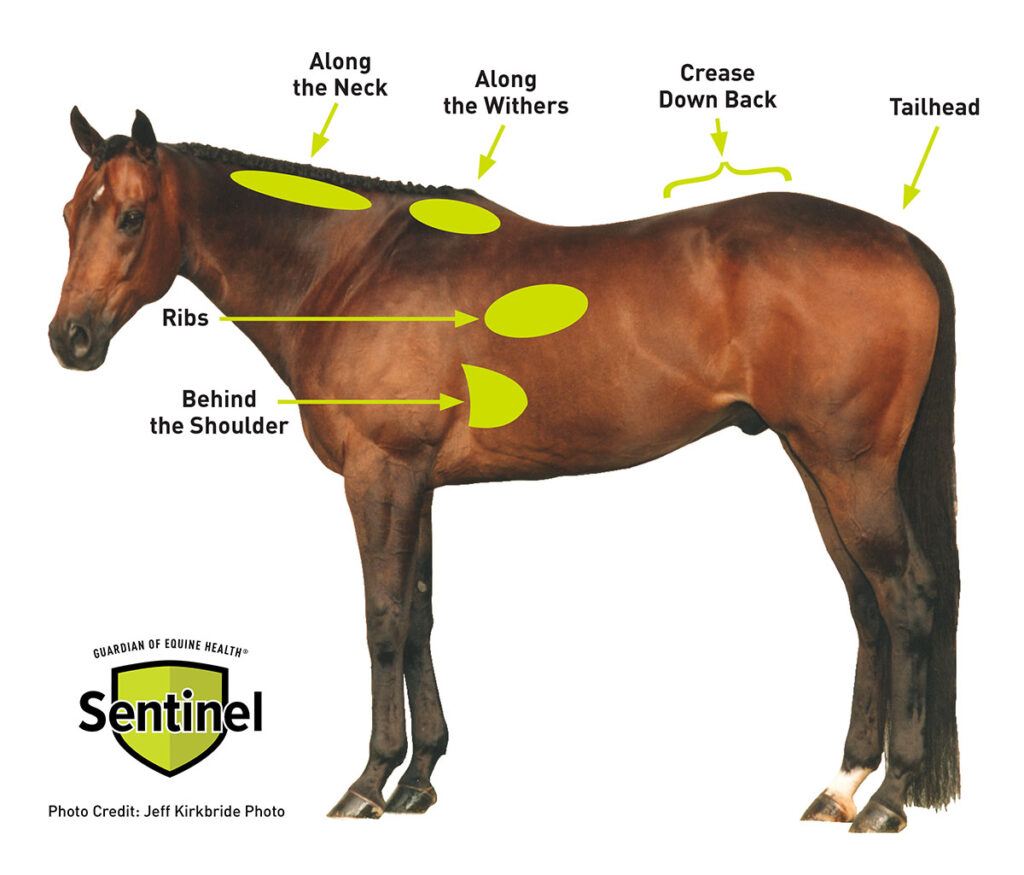
Because thick winter coats and cozy blankets can hide weight loss, relying on sight alone isn’t enough. Perform hands-on checks weekly so you can monitor your horse’s body condition and catch weight changes early.
Body condition scores (BCS) in horses run from 1 (emaciated) to 9 (obese). Most horses should stay around a BCS of 4-6, even in winter. Run your hands over and feel these key areas:
- Ribs: You should be able to feel ribs easily but not see them prominently.
- Withers: Should feel rounded, not sharp.
- Back and topline: Look for a smooth, level back with no ridge or deep dip.
- Neck: Avoid a hollowed appearance or sharp crest.
- Tailhead: Should feel soft and slightly padded, not bony.
Assign each one a score and calculate the average to get your horse’s BCS.
Related Reading: How To Easily Determine Your Horse’s Body Condition Score
When Winter Weight Loss Becomes a Concern
It’s time to intervene if you notice:
- Visible ribs or hip bones.
- Loss of muscle along the topline.
- Decreased energy or attitude changes.
- Poor coat quality.
- Weight loss despite quality free-choice hay and concentrate/grain.
Young horses, seniors, hard keepers, and horses with medical or dental challenges need especially close monitoring. If you detect noticeable weight loss, take these steps to help your horse add pounds.
1. Talk to Your Vet
If you have concerns about your horse’s weight or condition, call your veterinarian. Depending on your horse’s signs, he or she might want to rule out an underlying health issue that could be causing weight loss.
2. Prioritize Forage
Hay is your horse’s primary heat source in winter. Digesting fiber produces internal warmth and calories.
- Offer free-choice hay when possible.
- Use slow feeders to extend eating time.
- Choose higher-quality hay for hard keepers.
3. Feed for Calories, Not Just Volume
If hay alone isn’t enough, add a balanced concentrate or performance feed designed for weight maintenance. Look for feeds with digestible fiber and fat rather than excess sugar. And avoid sudden feed changes by making gradual diet adjustments.
4. Consider Fat Supplementation
Fat is a safe, calorie-dense way to add weight. Good fat sources include stabilized rice bran, flaxseed, and commercial high-fat feeds or supplements. A little goes a long way, and fat won’t spike energy the way sugars can.
Related: How (and Why) to Add Fat to Your Horse’s Diet
5. Ensure Proper Dental Care
Even the best feed won’t help if your horse can’t chew it properly. Schedule regular (annual) dental exams. Also watch for signs that something’s wrong with your horse’s teeth, such as dropped feed, eating slowly, quidding (leaving behind wads of hay or grass), passing long forage fibers in manure, and head-tilting while eating.
6. Support Warmth and Comfort
Horses burn extra calories to stay warm in cold climates. Make sure you’re providing shelter from wind and moisture (e.g., a run-in shed in the pasture). Blanket thin, clipped, elderly, or hard-keeping horses appropriately, and ensure constant access to fresh, unfrozen water.
The Bottom Line
While some winter weight loss in horses can be normal, don’t ignore significant or ongoing weight changes. By assessing body condition routinely and ensuring your horse is getting enough feed and forage to meet elevated energy needs, you can help your horse stay healthy, comfortable, and well-nourished all season.
And remember, weight loss isn’t always just related to feed. Stress, herd dynamics, illness, or parasites can play underlying roles. If weight loss is rapid, unexplained, or continues despite diet changes, it’s time to involve your veterinarian or equine nutritionist.
Related Reading:
This article is brought to you by Sentinel Horse Feed.
Are you enjoying this content? Sign up for My New Horse’s FREE newsletter to get the latest horse owner info and fun facts delivered straight to your inbox!