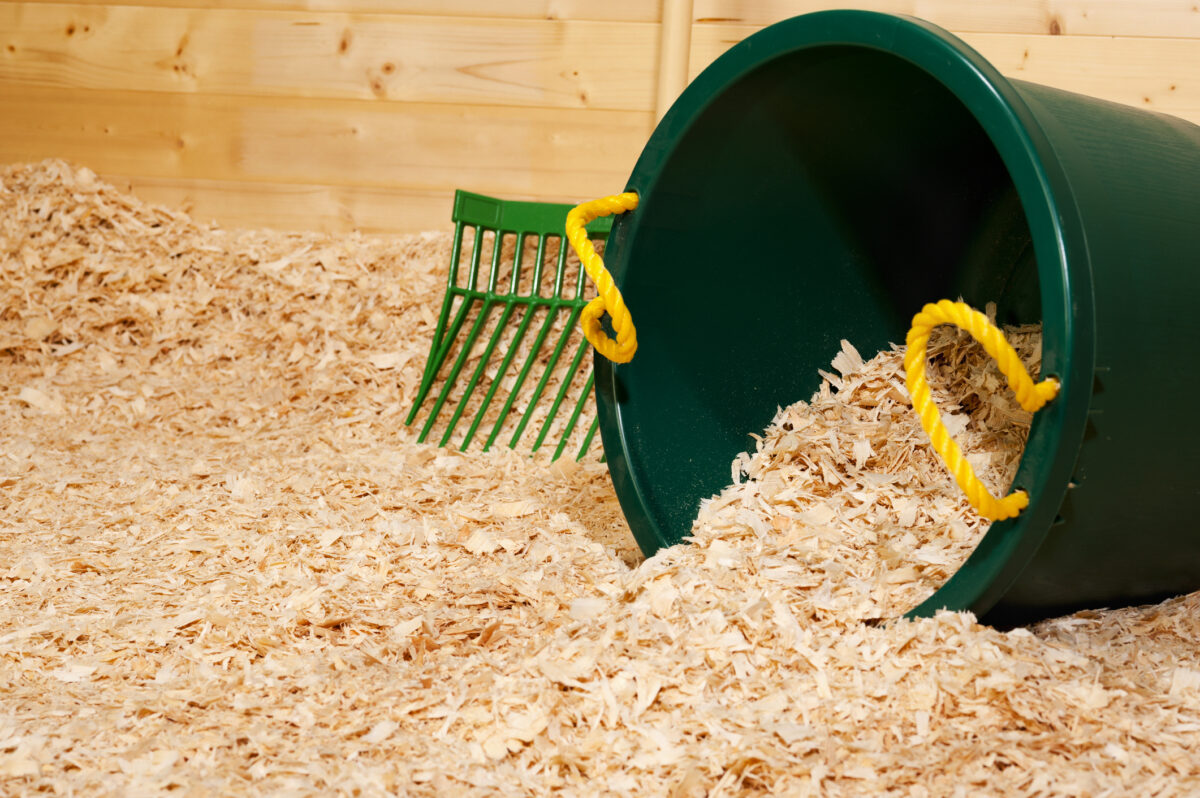
Whether just sampling shavings or hoovering up every bit of straw, some horses like to eat their bedding. This behavior can pose problems, however, including an increased risk of impaction colic. Understanding why it occurs can help horse owners address the issue.
The Digestive Connection
The horse’s entire gastrointestinal tract has one job: To continuously process a steady stream of cellulose-rich plants. This all begins with the often-underappreciated horse behavior of chewing. Of all the visible behaviors a horse performs throughout the day, chewing is likely the most frequent. On average, a horse feeding on pasture will chew about 60,000 times per day. Chewing begins digestion by crushing and grinding tough plant fibers. But equally important, and unlike in people, the very act of chewing triggers most of a horse’s saliva production.
Most owners have a standard 5-gallon water bucket in their barns. This is a useful visual for better understanding two aspects of the horse’s digestive system. First, when horses are fed appropriately and have adequate chew time, they produce about two of those buckets’ worth of saliva in a day. Saliva begins the digestion process, rendering the food bolus (chewed plant matter) easier to swallow. It also plays a vital role in buffering stomach acid, which is powerful enough to dissolve certain metals. This strength is needed to kill pathogens ingested by the horse as well as break down tough plant cell walls to release nutrients.
Secondly, horses produce stomach acid continuously, whether they are chewing, digesting, or neither. This production amounts to a volume of about two buckets’ worth of acid per day. When horses don’t have adequate chew time, it creates an imbalance. If saliva isn’t being produced by chewing, and the stomach acid has nothing to digest, gastric ulcers can quickly form. This is because the horse’s stomach is relatively small and only lined with a protective coating on the lower two-thirds. Excess and “unemployed” acid can splash up onto the unprotected top third of an empty stomach, especially if there isn’t a mat of fibrous plant matter there to minimize splashing. This causes horses physical discomfort or pain, as well as psychological distress, which can also trigger other unwanted behaviors, such as aggression.
Related: Gut Check: Feeding to Prevent Colic in Horses
When A Horse’s Needs Aren’t Met
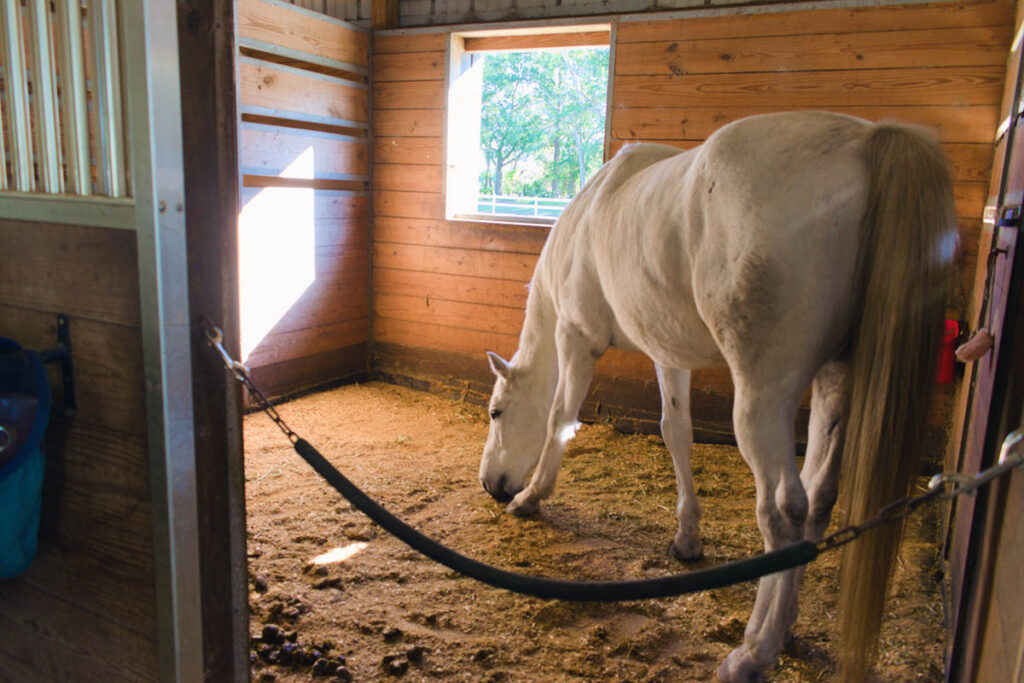
When animals can’t engage in normal, species-specific behaviors, it causes them to experience stress. For horses, the ability to chew and digest forage continually is an inborn need. If they cannot perform these behaviors, such as when a fed ‘meal’ is consumed quickly, they will naturally look for other things to chew and eat. For some, the obvious choice will be their bedding. They are driven to do this in an effort to alleviate stress and discomfort and fulfill strong, normal needs.
The Impact of Calorie-Reduced Diets
Partly as a result of modern management, the horse world has seen a dramatic rise in equine obesity and metabolic diseases that require strict control of some horses’ caloric intake. Because of the rich nutritional profile of many hays, this results in horses being fed smaller volumes of food daily. Smaller portions, particularly when fed loose rather than in slow-feeder hay nets, drastically reduce chew time, while also forcing the horse to fast involuntarily. This can lead to horses that are desperate to ingest anything fibrous, including their bedding.
In instances when calories must be cut, horse owners should consult with a qualified (ACVN, PhD, or MSc) equine nutritionist who can devise a diet low in calories that still provides adequate chew time (e.g., a low-calorie hay supplemented with edible straw). They can also identify other possible nutritional causes for this behavior, such as a deficiency in digestible fiber or protein.
Boredom as a Cause?
Finally, boredom is an often-cited reason for this behavior as well. However, such attempted explanations place blame on the horse for a perfectly normal response to factors beyond their control. Horses have evolved to move, chew, and graze almost continuously. Depriving them of this can lead to unwanted behaviors, such as bedding eating, as the horse attempts to fill a void created through management practices.
Take-Home Message
While the occasional nibble of bedding material isn’t necessarily cause for concern, ingesting bedding on a regular basis could be. When a horse eats his bedding, remember his species-specific needs so you can take steps to both solve the problem and improve his welfare.
Related Reading
Lauren Fraser, MSc, FFCP, has helped people understand horse behavior problems since 2006. With a background working as a horse trainer, an MSc in clinical animal behavior, and more than a decade working as an equine behavior consultant, Lauren’s approach gets to the heart of why horses behave the way they do and addresses issues using low-stress methods. Lauren also guest lectures at universities, presents at conferences, and creates educational programs for horse owners and equine professionals.
Are you enjoying this content? Sign up for My New Horse’s FREE newsletter to get the latest horse owner info and fun facts delivered straight to your inbox!