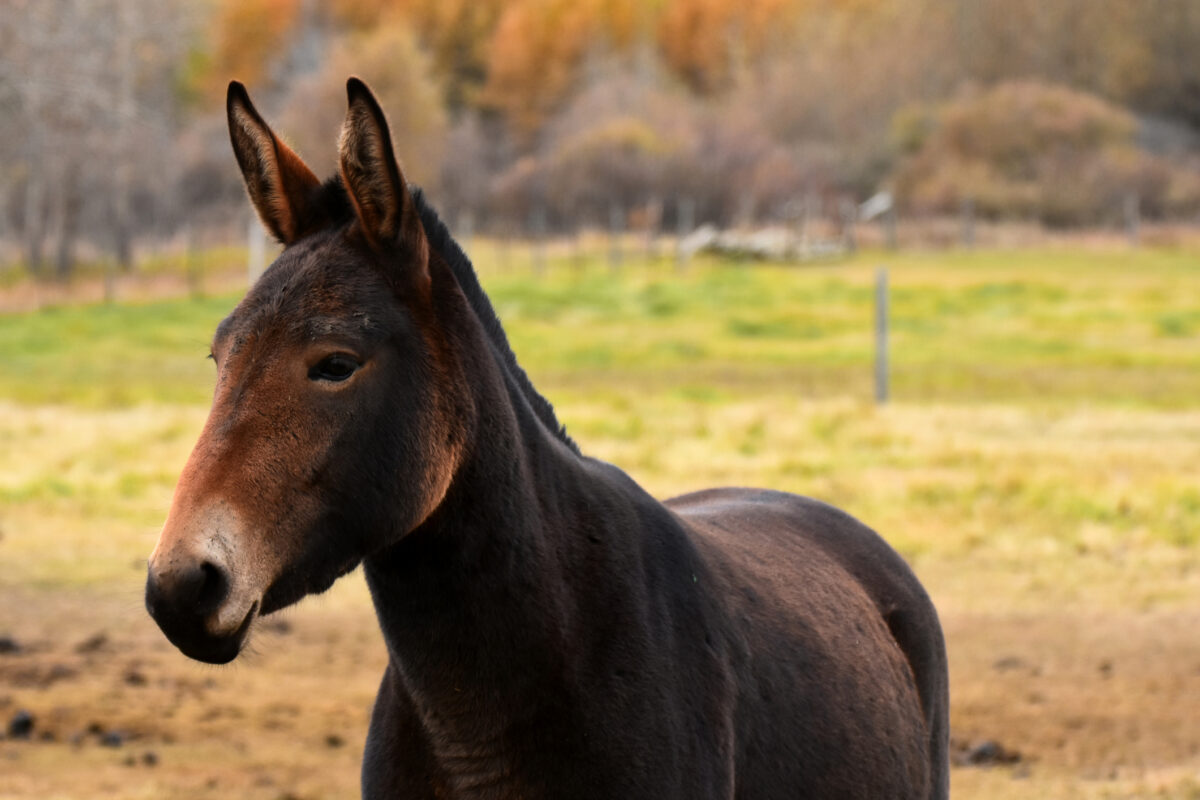
If you’re thinking about bringing home your first equid, don’t overlook the mule. Long valued for their strength, surefootedness, and intelligence, mules have earned a devoted following among trail riders, ranchers, and recreational horse owners alike. But while they share many similarities with horses, mules have unique personalities, care needs, and training considerations that every prospective owner should understand. Before deciding whether a mule is the right fit for you, it’s worth learning what makes these animals different, and why so many people wouldn’t trade them for any other mount.
What Exactly Is a Mule?
A mule is the offspring of a male donkey (a jack) and a female horse (a mare). Cross a female donkey (a jenny) with a male horse (a stallion) instead, and you get a hinny. The latter is a less common cousin that looks similar to a mule but is a bit rarer to find. Because a horse has 64 chromosomes and a donkey has 62, mules end up with an odd number, 63, which is part of why they’re almost always sterile.
That genetic mash-up is exactly what makes mules so interesting. They tend to inherit the donkey’s toughness, intelligence, and self-preservation instinct and the horse’s size, athleticism, and trainability. The result is an animal that’s often described as the best of both worlds. Like any good hybrid, however, it comes with its quirks.
Who Should Consider Getting a Mule?
Mules aren’t for everyone, but they’re a fantastic match for certain kinds of horse people:
- Trail and backcountry riders. Mules are renowned for being surefooted on rocky, steep, or unpredictable terrain, which is why they’ve long been a go-to choice for pack strings and wilderness outfitters.
- Riders who want a thinking partner. Mules are often described as more cautious and self-protective than horses. They won’t push through a situation they deem unsafe. Some riders find this frustrating; others find it reassuring.
- People in dry, hot, or rugged climates. Mules generally handle heat, sparse forage, and rough ground better than many horse breeds.
- Owners looking to stretch their budget. Because of their donkey heritage, mules are typically easy keepers with less demanding nutritional needs.
- Riders who want a new challenge. Many longtime horse owners get into mules specifically because they enjoy the different relationship-building process.
If you’re a first-time owner with little handling experience, most mule people will gently steer you toward starting with a well-trained horse (or a well-trained mule from an experienced program) rather than a green mule. The learning curve for reading mule body language is real, and a seasoned animal makes a much better teacher than a green one, regardless of species.
The Pros of Mule Ownership
They’re tough and low-maintenance. Mules are generally hardy, less susceptible to many common equine ailments, and comfortable on modest, lower-quality forage. These factors can mean lower feed and vet bills over time.
Their feet and legs hold up well. Mules are known for having exceptionally strong, durable hooves and legs, which is a big reason they’ve historically been prized as pack and trail animals.
They’re really smart. Mules have a reputation for excellent memory and problem-solving ability. Once a mule learns something, it tends to stick.
They form strong bonds. Many owners describe mules as deeply affectionate and loyal once trust is established.
They’re more versatile than people expect. Mules today compete in dressage, jumping, reining, driving, and gymkhana, not just trail riding. The U.S. Equestrian Federation officially opened its shows to mules in 2004.
The Cons of Mule Ownership
They can be harder to find and train. Well-started mules and knowledgeable mule trainers are less common than their horse counterparts. Plus, mules often require a different training approach than horses do.
They think for themselves, for better and worse. That self-preservation instinct that makes mules so safety-conscious on the trail can also translate into what looks like stubbornness when a mule simply doesn’t agree with what you’re asking.
Limited acceptance in some circles. While mules are now welcome at USEF-recognized shows, they’re still excluded from certain breed-specific or purely horse-focused competitions.
No breeding future. Because most mules are sterile, they cannot produce offspring. This is an important consideration if you were hoping to breed your animal in the future.
Obesity risk. The mule’s easy-keeper metabolism is also a liability. They can gain weight quickly on rich pasture, putting them at risk for laminitis and metabolic issues. So you might need to manage their pasture and grain intake carefully.
Special Considerations for New Mule Owners
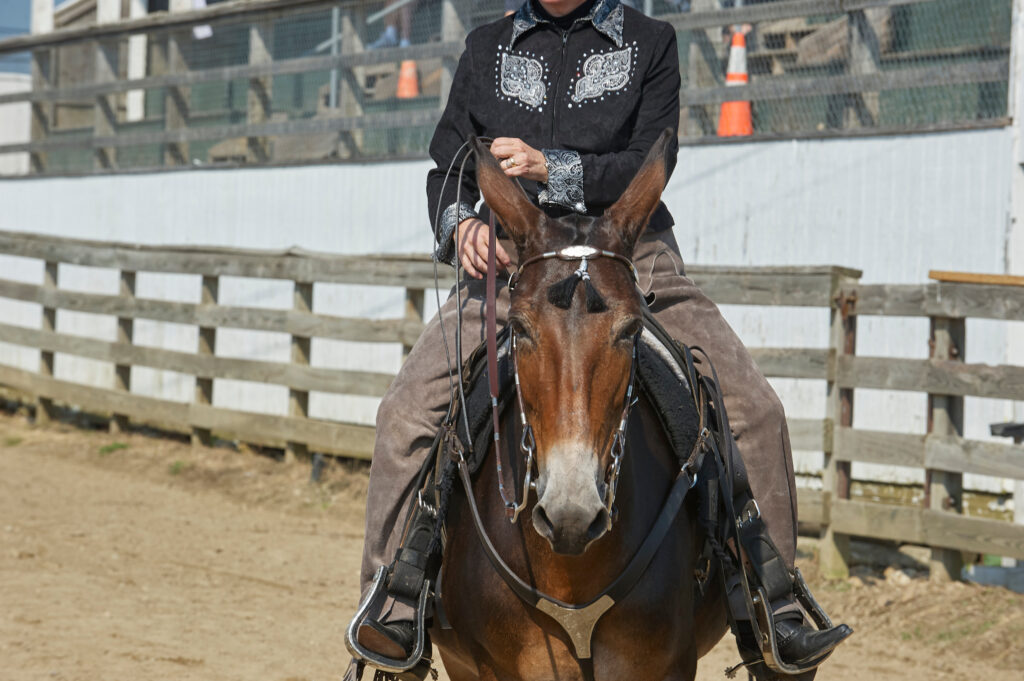
Find a veterinarian and farrier who know mules. Mules’ anatomy, temperament, and even sedation and pain responses can differ from a horse’s. A veterinarian and farrier with mule experience will serve you better than one who’s only ever worked on horses.
Manage their diet like you would a donkey’s. Lower-calorie forage, controlled grazing, and attention to body condition matter more with mules than with many horse breeds, given their tendency toward obesity and related metabolic disease.
Learn to read mule body language. Mules communicate differently than horses in subtle ways. Understanding those signals is one of the biggest keys to a good partnership. Early, gentle handling and patient, trust-based training tend to produce the best results.
Expect a different training relationship. Many experienced mule trainers describe training mules as more of a negotiation than a directive. You’re generally better off building willing cooperation than trying to force compliance.
Connect with the mule community. Because mules are still a smaller niche than horses, plugging into breed and enthusiast organizations is a great way to find trainers, veterinarians, farriers, and mentors near you.
Related: How to Find a Horse Trainer
Helpful Resources
- American Mule Association — The sanctioning body for mule and donkey competitions across multiple disciplines.
- American Donkey and Mule Society — The oldest U.S. registry and information source for donkeys, mules, and hinnies.
- NIH/PMC: Welfare of Mules and Hinnies — Peer-reviewed overview of mule behavior, handling, and welfare research.
Take-Home Message
Mules reward patience, curiosity, and a willingness to meet them halfway. If you’re drawn to an animal that’s tough, loyal, and whip-smart—and you’re prepared to learn a slightly different playbook than the one you’ve used with horses—a mule might just become your best equine partner.
Related: The 10 Best Horse Breeds for Beginners
Are you enjoying this content? Sign up for My New Horse’s FREE newsletter to get the latest horse owner info and fun facts delivered straight to your inbox!