Don’t make major dietary changes just because your horse is getting older.
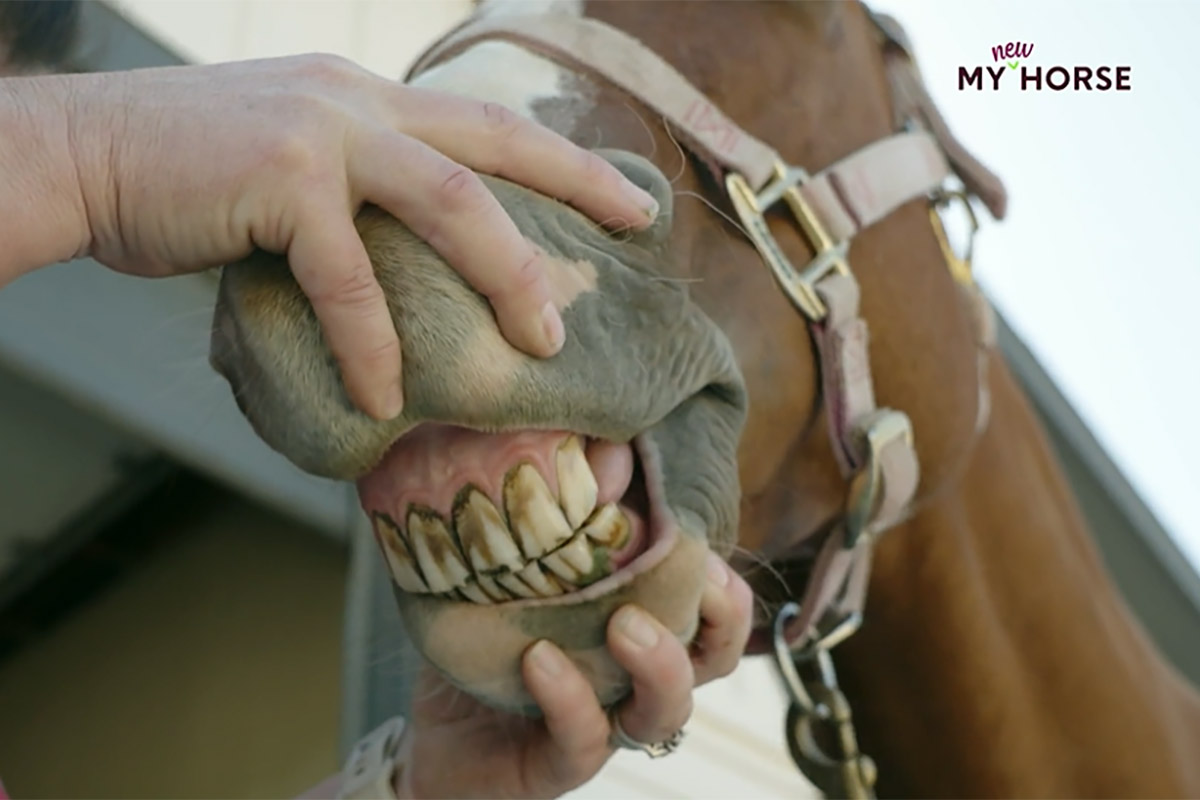
If your senior horse is healthy and maintaining good body condition, you probably don’t need to make major diet changes. Simply watch for weight loss, difficulty chewing, or an unthrifty appearance. If you notice these signs, consult your equine nutritionist or veterinarian.
The type of senior feed you choose matters.
Older horses with metabolic or dental issues often benefit from senior feeds formulated for high fiber, easy digestion, and balanced nutrition. If your horse can still chew hay well, you might opt for a concentrated senior feed designed to be fed alongside forage. If he struggles to eat hay, look for a complete senior feed designed to meet all his nutritional needs without added hay or forage.
Look for easy-to-chew forage and fiber options.
As a horse’s ability to chew declines, it’s important to provide him with easily digestible, high-fiber forage. Hay alternatives include soaked hay cubes, beet pulp, chopped hay, and pelleted hay extenders. For senior horses with severe dental problems, consider feeding an extruded feed for easy chewing. Soaking feeds can also help make it easier to chew.
Horses with endocrine conditions need special diets.
If your horse has a metabolic disorder, make sure his feed is labeled as having low NSC levels to avoid dangerous insulin spikes.
Related:
Are you enjoying this content? Sign up for My New Horse’s FREE newsletter to get the latest horse owner info and fun facts delivered straight to your inbox!