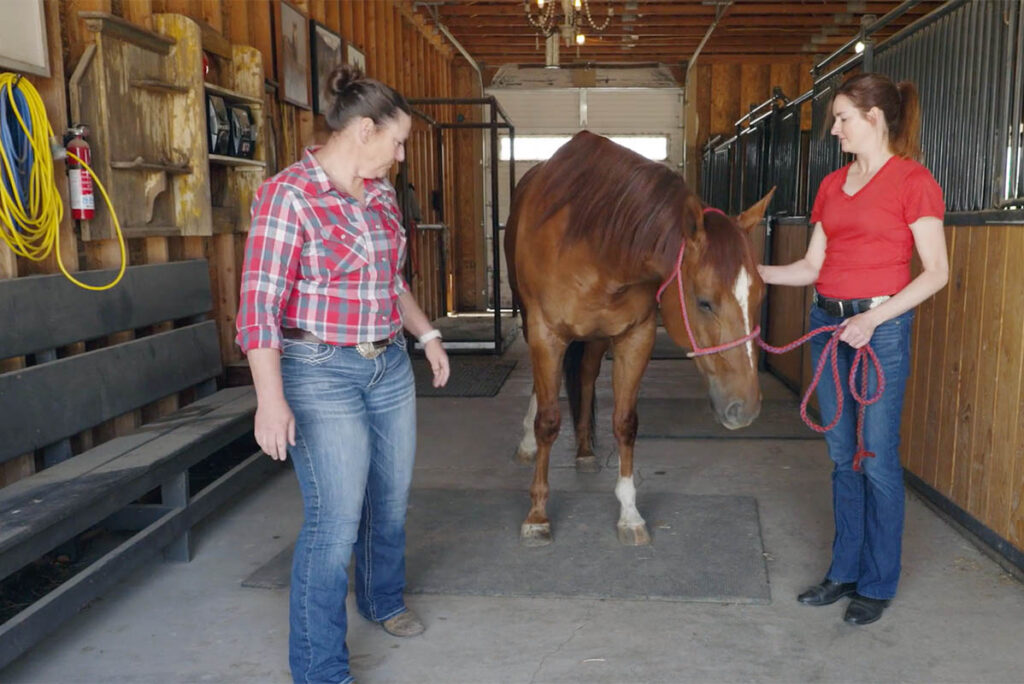
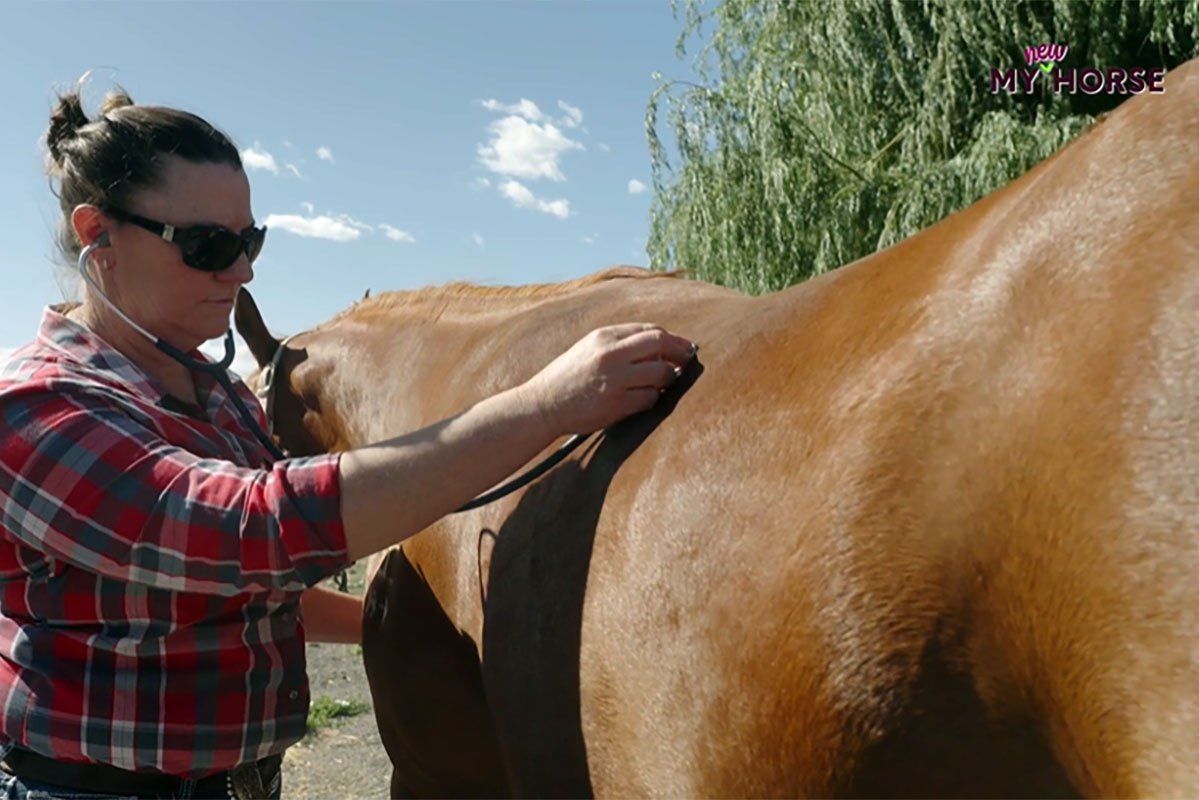
Anna Bracken, DVM, clinical instructor in equine field service at Colorado State University, walks us through the steps she takes when performing a physical exam on a horse. First, she assesses the horse’s behavior and mentation.
“Are we happy? Are we alert? Are we oriented to the environment? Are we standing squarely on all four feet? Are we resting a limb, showing signs of obvious pain? Do we look dull in the eyes? Things like that,” she explained.
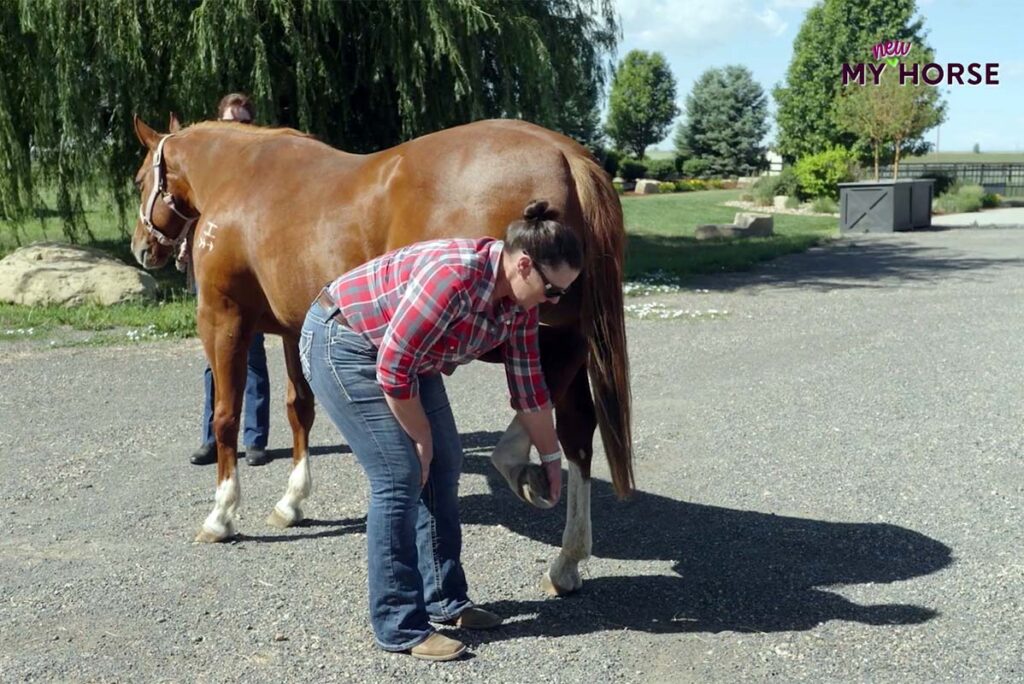
Then Bracken does a nose-to-tail evaluation, looking at the horse’s gums, eyes, hydration status, and vital signs such as heart rate, respiration, gut sounds, and temperature. She palpates the horse’s limbs and feet. At the same time, she checks for a digital pulse at the back of the fetlock, which might indicate inflammation. She also demonstrated how to take a horse’s heart rate and respiration without a stethoscope.
“This is the process that I, as your vet, am going to go through when I come out to evaluate your horse for pretty much any reason,” said Bracken. “If it’s a routine wellness exam, if we’re worried about colic, if we’re worried about any sort of medical condition, I need to know this information. And it’s good to know how to perform these on your own so that when you do have a call into the vet, you can provide answers as far as what is my horse’s heart rate today, what is their respiratory rate, do I have a fever? These are all important things for us to know when we’re trying to figure out how best to help your horse.”
Related:
Are you enjoying this content? Sign up for My New Horse’s FREE newsletter to get the latest horse owner info and fun facts delivered straight to your inbox!