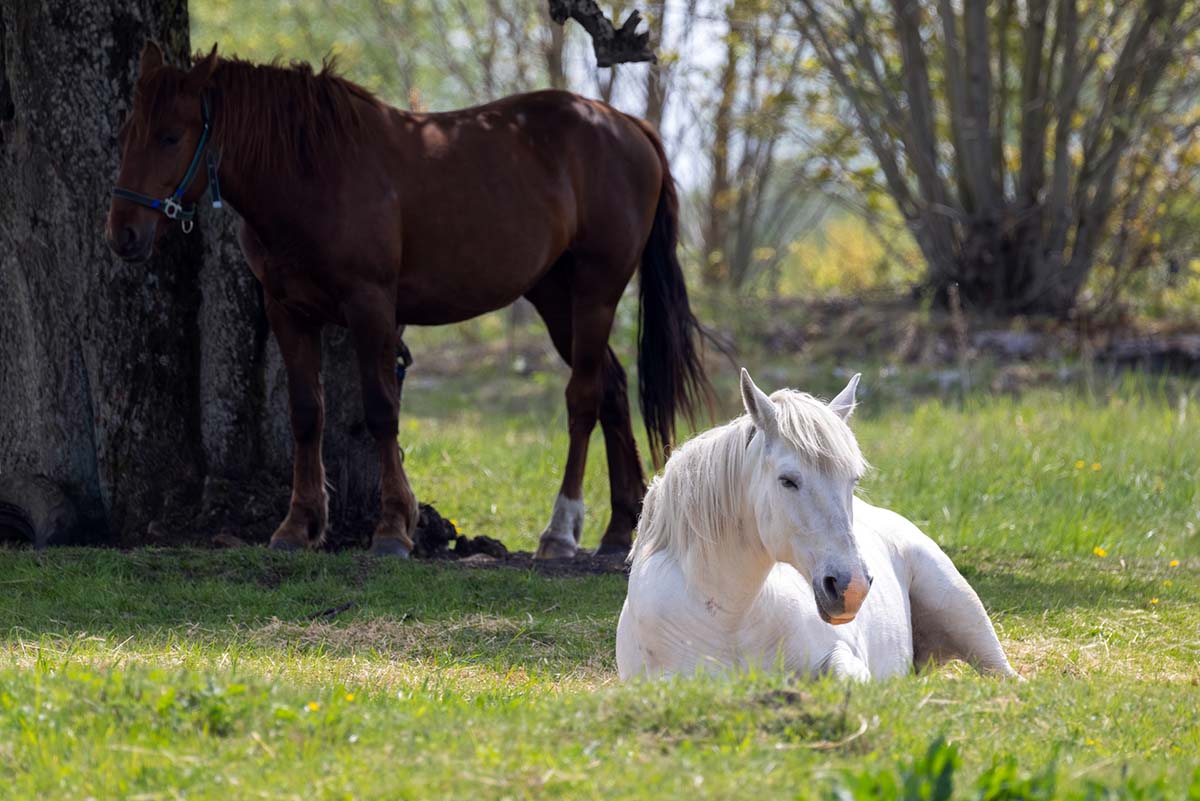
When the weather is warm and the sun is shining, most horses will happily spend hours grazing in the pasture. But just like people, horses can get sunburned. If your horse has a pink nose, white markings, or light-colored skin, they’re especially vulnerable to painful sun damage.
Knowing which horses are most at risk, how to recognize the signs of sunburn, and the best ways to protect your horse can help keep them comfortable on sunny days. Here’s what every horse owner should know about sunburn in horses.
Yes, Horses Do Get Sunburned
Just like people, horses can be burned by the sun’s ultraviolet (UV) rays. Horses with pale skin, and even dark horses with white markings on the face or legs, are vulnerable to sunburn. Because skin pigment (or lack thereof) correlates with risk, these types of horses are most vulnerable:
- Paints, Pintos, and Appaloosas with pink skin under their white patches.
- Grays and cremellos, especially as they lighten with age.
- Any horse with a wide blaze, snip, or white socks.
- Horses recently clipped or shedding their winter coat, which exposes fresh skin.
It’s similar to how fair-skinned people burn more easily than those with more melanin.
What to Look For
Sunburn in horses occurs in the areas with the thinnest hair coverage and the least pigment. Skin around the eyes, the tips of the ears, the muzzle, and even the tail head are common trouble spots. Sunburn risk tends to peak in spring and early summer, right when horses are shedding their winter coats and daylight hours are longest. Mild cases look like reddened, slightly irritated skin. More severe sunburn is quite painful and can swell, blister, or peel.
Sunburn vs. Photosensitization
Sometimes what looks like an angry sunburn is actually a more serious issue called photosensitization. Photosensitization differs from ordinary sunburn because it can affect both pigmented and unpigmented skin.
According to the Merck Veterinary Manual, photosensitization happens when certain compounds that react to UV light build up in the skin, get “activated” by sunlight, and trigger a chemical reaction that damages skin cells, leading to ulcers and fluid buildup, most often on the lips, eyelids, and ear tips.
Horses typically end up in this situation in one of two ways:
- Primary photosensitization. The horse eats or contacts a plant, medication, or compound that reacts with sunlight. Culprits include St. John’s wort, buckwheat, clover, and perennial ryegrass, along with certain antibiotics and drugs such as tetracycline.
- Secondary photosensitization. This stems from liver problems. A healthy liver clears a compound called phylloerythrin, a byproduct of chlorophyll breakdown. When the liver isn’t working properly, phylloerythrin builds up in the bloodstream and reacts with sunlight in the skin. As such, sudden or severe photosensitization is sometimes the first sign a horse has an underlying liver issue.
In 2016, researchers at the University of California, Davis, documented alfalfa hay as a trigger for primary photosensitization in horses. Alsike clover has also long been recognized as a cause of liver-related photosensitivity. The challenge is that symptoms can show up weeks after a horse has eaten a problem plant. And because the toxins don’t break down in drying, contaminated hay can cause issues long after the pasture itself has gone dormant.
Bottom line: If you see swelling, blistering, or crusting that seems more dramatic than a pink sunburn, or if it’s showing up on pigmented skin, call your vet.
Related: Hidden Dangers: 10 Plants Toxic to Horses
How to Protect Your Horse From Sunburn
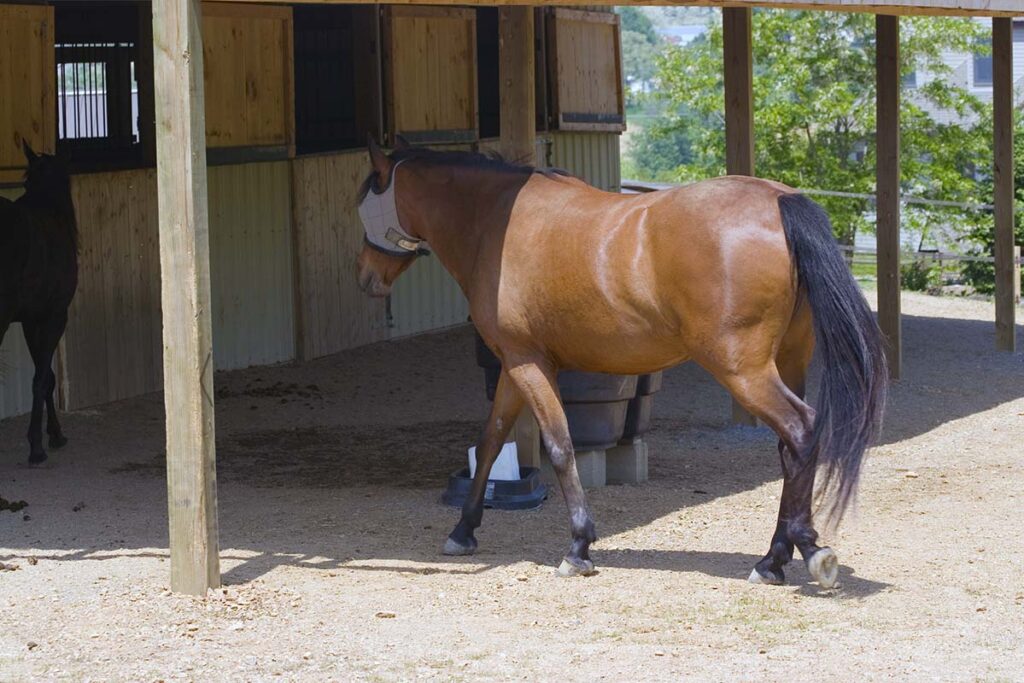
The good news is normal sunburn in horses is manageable with a few practical habits:
- Provide shade. Access to a run-in shed, trees, or a shaded paddock area lets a horse get relief from the sun.
- Limit turnout during peak sun. Keep at-risk horses in during the most intense midday hours, and avoid turnout without shade access.
- Use fly masks with nose coverage. Fly masks that extend down over the muzzle double as sun protection for the nose and face.
- Apply a horse-safe sunscreen. Test the sunblock on a small patch of skin first before applying it more broadly, and keep it away from the eyes.
- Consider a UV-protective sheet or fly sheet for horses with large areas of pink skin, particularly grays and Paints.
- Know what’s in your pasture. Because plants like alsike clover and certain photosensitizing weeds can hide in hay and pasture, it’s worth having your county extension agent help identify what’s growing in your fields, especially if you notice recurring skin issues.
Related: Why and How to Switch Your Horse to Night Turnout
When to Call the Vet
A little pink on the nose that fades with a fly mask and shade access is manageable at home. But reach out to your veterinarian if you notice:
- Blistering, oozing, or peeling skin.
- Swelling around the eyes, muzzle, or coronet band.
- Sunburn-like symptoms on pigmented skin, not just white markings.
- Skin reactions that appear or worsen weeks after a pasture or hay change.
- Signs of sunburn in addition to changes in appetite, weight, or behavior (possible signals of liver involvement).
Your veterinarian might want to run bloodwork to check liver function, especially if the reaction seems disproportionate to your horse’s sun exposure.
Take-Home Message
Horses can absolutely get sunburned, and pink-skinned horses need consistent sun management in the form of shade, fly masks, and a bit of sunscreen. Because sunburn’s more serious lookalike—photosensitization—can point to liver problems or toxic plants in the pasture, it pays to know the difference and call your vet if something looks off.
Related:
- A Comprehensive Guide to Common Horse Coat Colors
- Watch for These 8 Summer Horse Health Risks
- Fly Sheets for Horses: What New Owners Need to Know
Are you enjoying this content? Sign up for My New Horse’s FREE newsletter to get the latest horse owner info and fun facts delivered straight to your inbox!