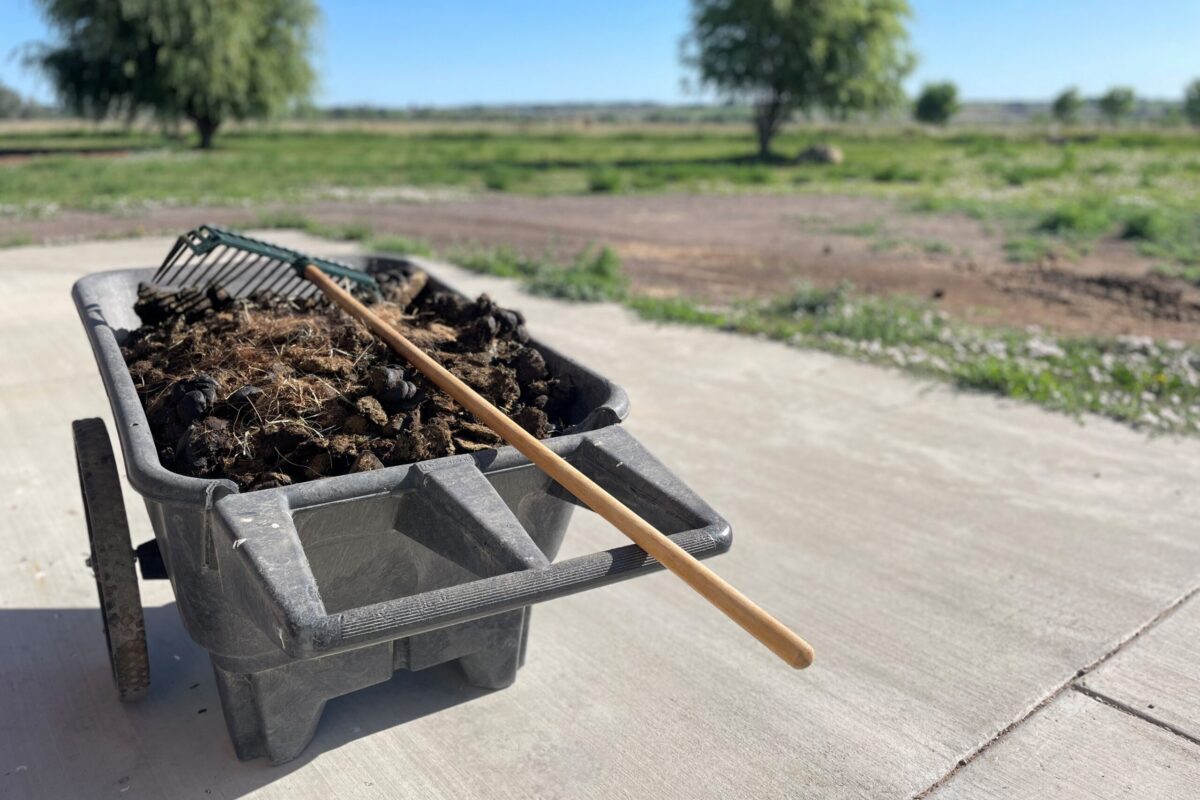
A healthy horse typically poops 6 to 10 times a day, though the normal range can stretch from about 4 to as many as 13. Add it all up, and you’re looking at roughly 35 to 50 pounds of manure per day. (Welcome to horse ownership!)
Horses are “hindgut fermenters” built to graze almost constantly, and that steady stream of forage moving through a long digestive tract means a steady stream of manure coming out the other end. So, lots of poop piles mean the gut is doing exactly what it’s supposed to do.
Why the Range Is So Wide
A few things will dictate how frequently your horse poops:
- Diet. Horses on high-fiber diets (lots of hay and pasture) produce more manure than horses eating less forage.
- Age and life stage. Foals and stallions tend to poop more often than mares and geldings. Foals do it because they’re on a liquid diet, and stallions partly for scent-marking and territory behavior.
- Body size. Bigger horses generally produce bigger, more numerous piles than ponies or Minis.
- Exercise. Movement stimulates gut motility, so a horse in regular work might pass manure more often than one standing in a stall all day.
- Stress and environment. New surroundings, trailering, or a new horse in the herd can all temporarily shift frequency and consistency.
Because of these variables, the most useful number to know is your horse’s normal. Spend a couple of weeks paying attention during turnout and stall cleaning, and you’ll start to notice your horse’s baseline manure output.
What to Look for Every Day
Veterinarians often recommend evaluating three things when mucking stalls and paddocks:
- Color. Normal manure is greenish-brown to brown. Very dark, tarry, or unusually pale manure is worth a second look.
- Consistency. Healthy manure forms distinct, moist (not wet, not dry) fecal balls that hold their shape but break apart easily when you nudge them. You shouldn’t see whole, undigested grain or long fiber strands. That can be a sign of dental problems or a diet the horse isn’t processing well.
- Quantity/frequency. This is where knowing your horse’s normal pays off. A sudden reduction, a complete stop, or a noticeable increase in frequency are all things worth flagging.
A little bit of liquid passing before or after a pile is normal, and manure often turns soft and cowpie-like after exercise, in hot weather, or when a horse is nervous. On its own, that’s usually not a red flag. But it might be when it becomes the norm or shows up out of the blue.
Related: How (and Why) to Remove Manure from Your Horse Pasture
Signs Something Might Be Wrong
Keep an eye out for:
- No manure for several hours, especially paired with pawing, looking at the flank, or general restlessness. This combination can point to colic and warrants a call to your veterinarian.
- Very dry, hard piles, sometimes coated in mucus, can be a sign of dehydration or slowed gut motility.
- Diarrhea or consistently loose manure, which can indicate anything from a diet change to infection or parasites. This is an especially urgent issue in foals.
- Visible blood or excessive mucus.
- Persistent undigested feed (grain, long hay stems, or grass) in the pile, which can point to dental issues (common in older horses) or a diet that’s moving through the gut too fast.
- A sudden, unexplained change from your horse’s normal pattern. This is often the earliest and most useful clue you have, well before other signs show up.
When in doubt, call your veterinarian to relay your observations and get their advice.
Take-Home Message
Manure isn’t a glamorous part of horse ownership, but it’s one of the most honest. Your horse can’t tell you when something feels off, but his manure often will, well before other signs appear. A minute or two of attention to those piles each day can help you catch problems early.
Related:
- How Clean Does a Horse Stall Really Need to Be?
- Manure Management on Small Horse Farms
- Clean Stall, Happy Horse: A Beginner’s Guide to Stall Cleaning
Are you enjoying this content? Sign up for My New Horse’s FREE newsletter to get the latest horse owner info and fun facts delivered straight to your inbox!