All horses, from the pastured broodmare to the Olympic champion, should have certain basic life skills. Standing calmly for the farrier is one of these.
Horses aren’t born knowing to stand calmly while someone handles their feet. So, for their comfort and welfare and for the safety of anyone handling them, we need to patiently teach them how to tolerate the experience. Farriers are frequently exposed to situations that put them at risk of being injured on the job. Dangerous behavior from the horse is one of the greatest risks they face.
When horses have negative experiences during farrier work or they aren’t taught how to behave, it’s problematic for them, too. Stress and fear compromise horse welfare, and situations that trigger it should be resolved.
Identifying What We Want
We’ve identified “standing calmly for the farrier” as one important skill for horses to have. But there is so much more to it than training this one behavior. It involves the concept of shaping: Breaking the complex desired behavior (stand calmly for the farrier) into small, achievable steps that build toward the end goal. I strongly encourage my clients to become familiar with shaping and creating shaping plans, as this method can immediately make them better trainers.
A good shaping plan starts by identifying two things: the end goal behavior and the closest thing the horse can already do toward that end goal. Once we identify both, we can fill in successive approximations, which are the behaviors that logically build between them. These behaviors should have two qualities. They should be things we can observe the horse doing, and not things that start with words like “not” or “stop.”’
For example, “stand calmly for the farrier” passes both tests, but “not pull the leg away” or “stop kicking the farrier” do not. Training is much easier—and usually more ethical—when we identify what we do want to see, than to start from the perspective of what we don’t want the horse to do. There are endless things the horse shouldn’t do in any situation, but usually only one thing we want them to do. Focusing on what you do want is a key component of using shaping to train desirable behaviors.
Teaching Through Shaping
When showing people how to create shaping plans, I often demonstrate it as a set of stairs. The closest thing the horse can already do toward the end goal is at the bottom of the stairs. The goal is at the top. Between those two points are successive approximations. An example shaping plan for teaching a horse to stand calmly for the farrier might look like this:
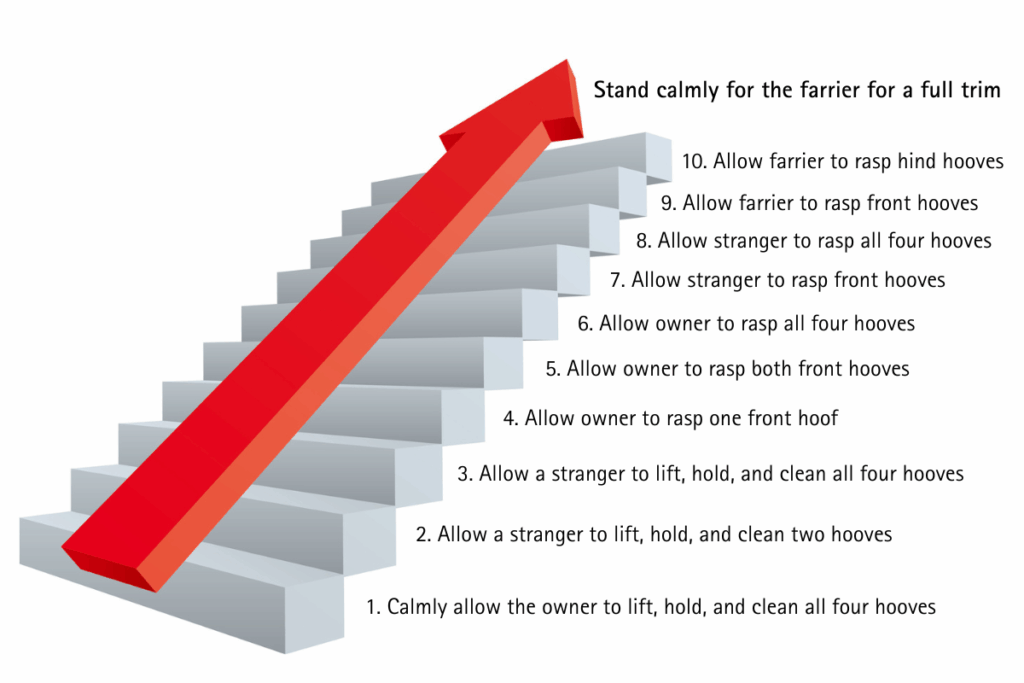
A shaping plan is a loose guide. During training, we often need to make a step easier for the horse so he can be successful. We should also consider how “the three Ds”—duration, distance, and distractions—can impact learning. For example, how long the horse needs to hold his hoof up (duration), how high he must lift it (distance), and under what conditions (different handlers, environments) he might need to do it (distractions). This helps horses generalize new skills, building their confidence and skill in performing the behavior in a variety of contexts.
Red Flags
Balancing on three legs with one leg bent is physically challenging. If a horse shows fear or stress during training or farrier work, struggles to balance, or fails to progress, always consider whether he’s in pain.
If a horse has developed serious fears or phobias about farrier work, seek help from a veterinarian and a qualified horse behavior professional. These issues are best addressed using techniques such as counterconditioning to change emotional responses, and only after you’ve addressed any underlying pain.
Take-Home Message
In summary, standing calmly for the farrier is a teachable life skill that all horses should learn. It can easily be done using low-stress methods such as shaping and reinforcement-based training. Serious fears of the farrier are best addressed with professional guidance from qualified professionals.
Related Reading
- Farrier Visit 101: How To Prepare and Handle Your Horse
- Understanding the Basics of How Horses Learn
- How to Teach Your Horse to Pick Up His Foot
Lauren Fraser, MSc, FFCP, has helped people understand horse behavior problems since 2006. With a background working as a horse trainer, an MSc in clinical animal behavior, and more than a decade working as an equine behavior consultant, Lauren’s approach gets to the heart of why horses behave the way they do and addresses issues using low-stress methods. Lauren also guest lectures at universities, presents at conferences, and creates educational programs for horse owners and equine professionals.
Are you enjoying this content? Sign up for My New Horse’s FREE newsletter to get the latest horse owner info and fun facts delivered straight to your inbox!