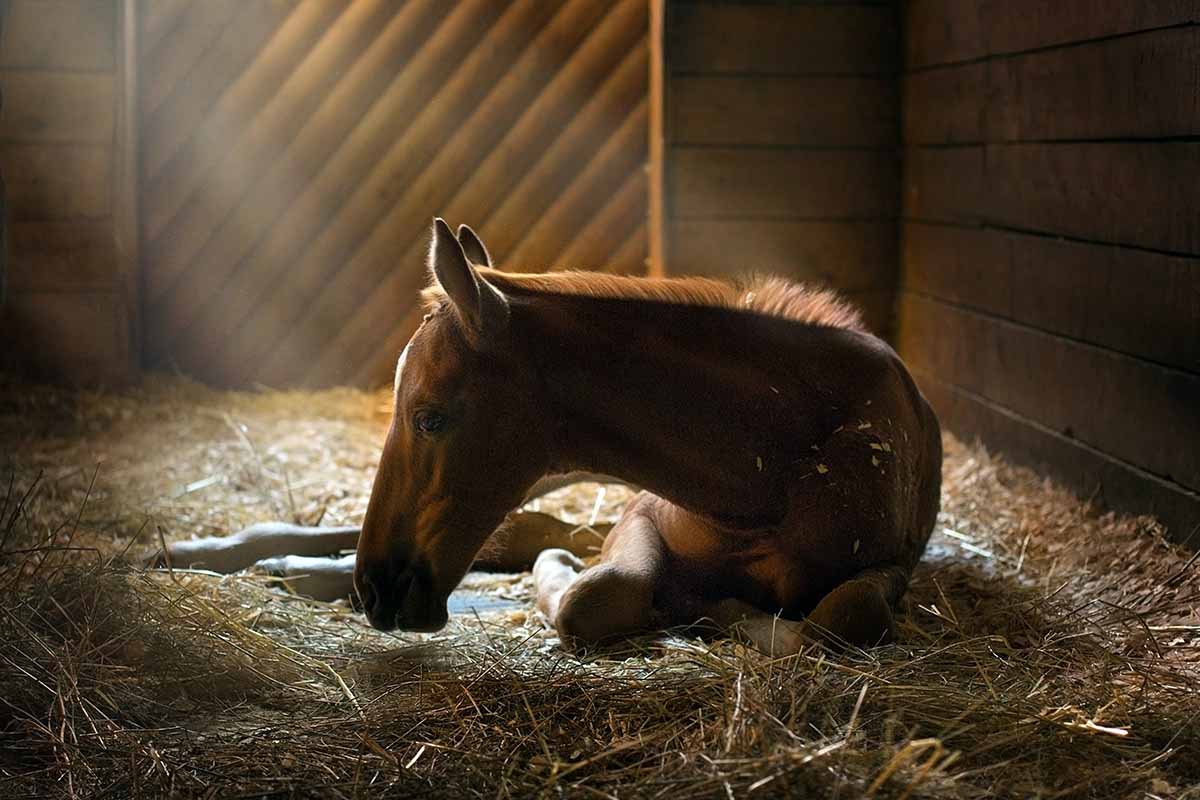
Sometimes horses can get stuck, or “cast,” in their stall—a predicament that can be dangerous to both horse and handler. This happens when a horse lies down or rolls in such a way that he ends up positioned with his legs so close to the stall wall that he can neither get up nor reposition himself to roll the other way.
Most horses panic when they find themselves cast. They might struggle violently, banging their legs against the stall wall (making quite a racket) and even banging their heads.
A cast horse will need your help to become “unstuck.” You’ll need to do this in a way that’s safe and will get the horse repositioned as quickly as possible.
What Should You Do?
First, get help. Horses are heavy. Even if you think you’re strong enough to move the horse by yourself, it’s always wise to have someone else there when you go into a small area with a panicked horse.
Always stay behind the horse’s back, never on the same side as his legs/feet. If the horse is positioned up against the side of the stall where the door is located, open the door and talk to the horse so you don’t startle him. Once you think the horse is paying attention to you, pet him lightly to make sure he really does realize you are there and to see if he’s going to react violently to your touch. Then get to the belly and climb over the horse as quickly as you can.
If the horse is not directly against the door, still enter with caution. Make sure you have his attention before getting too close. If he manages to push himself onto his back and roll over, you could be within reach of his legs.
Next, try to move the front end of the horse toward the center of the stall. The horse will be facing the wall and either lying flat on his side or, if very close to the wall, be on a bit of a tilt, with his legs folded against his body.
Never try to move or drag a horse by pulling on the halter. You can do serious damage to his spine. Position yourself at the middle of the horse’s neck, grab hefty handfuls of mane, and pull straight back toward you.
After the horse is back far enough to be able to fold his legs underneath himself and roll onto his belly, get out of the way. Preferably, leave the stall. Once the horse has restored control of his front end, he will often be able to figure out how to flex his hind legs and get up. If he can’t, you’ll need to pull his hind end free too, using his tail. Keeping the tail aligned with the horse’s spine, pull back to slide the horse away from the wall. Don’t pull up, as if trying to lift the horse.
Related: Protect Yourself From Kicks When Working With Horses
Tips to Stay Safe
- Don’t approach a horse that is thrashing. Wait for him to quiet down.
- Don’t pull on the halter to move the horse.
- Don’t pull on the horse’s legs.
- Don’t try to roll the horse over toward the center of the stall by pulling on his legs. He’ll resist and, even if you are successful, this will put you directly in the line of thrashing legs.
- Don’t go into the stall until someone else is there to help you or make sure you get out safely.
Warning: Stay as far back from the horse as you can after repositioning him. As soon as the horse thinks he might be able to get up, there’s a chance he will start thrashing around trying to do just that. By always staying on the back side of the horse, away from the legs, you will be safe from injury from flailing legs. But because of fear, panic, disorientation, and fatigue, these horses often throw themselves around a few times before getting up successfully. Once the horse has enough room to sort himself out, exit the stall. If you don’t have a clear exit, stay as far back as possible.
In Summary
Once the horse is on his feet, he’ll quiet down. Give him a few minutes to regain his composure, making sure he’s reacting normally to your presence. Then check him over for cuts or obvious swellings. Most horses escape unscathed. But others, especially if they were trapped for a long time, can be banged up.
Recheck the horse after several hours because swelling might not occur right away. It’s wise to remove the halter until that second check. If he develops swelling along his head or face, the pressure from the halter could do further damage. Call your veterinarian if you have any concerns that your horse might be injured.
Related Reading
This article originally appeared on EquiSearch.com.
Are you enjoying this content? Sign up for My New Horse’s FREE newsletter to get the latest horse owner info and fun facts delivered straight to your inbox!