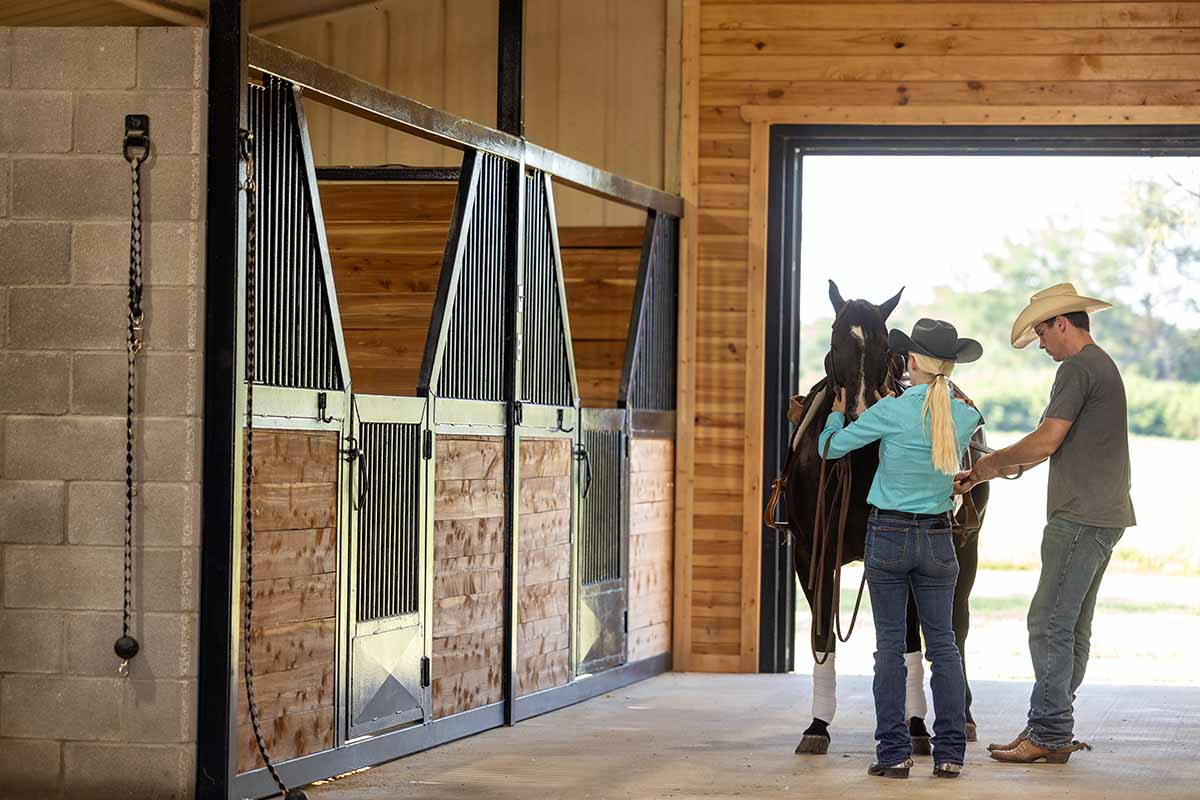
Girthiness is a common issue many horse owners face. We use the term to describe horses that use aggressive behaviors (e.g., ear pinning, bite threats, biting) or escape or avoidance behaviors (e.g., moving around or away) to stop or delay tightening of a cinch or girth. Approaches that try to interrupt or stop the behavior, however, don’t address the heart of the issue—that your horse is trying to communicate something important in the only way he can.
Girthiness Usually Signals Pain, Not Bad Behavior
Research has shown that pain triggered or worsened by girthing or saddling is the primary reason for girthiness. When horses experience pain, they will try to alleviate it, just as humans do. If someone tightened a belt around your waist and it hurt, you might lash out in anger, yell, push back, or try to run away. For horses, pinning ears, threatening to bite, behaving defensively, or trying to escape are all normal, understandable responses to pain. They’re also clear signs we should intervene for our horse’s welfare.
Pain can be caused by the tack itself. A girth that rubs or pulls the hair or skin or a saddle that fits poorly can all cause pain. Alternatively, the equipment might apply pressure to existing underlying musculoskeletal issues in the sternum, ribs, or back. Constrictive equipment can also worsen pain from conditions such as gastric ulcers or ovarian or uterine pain. Finally, if a horse has chronic pain unrelated to being girthed or saddled, such as osteoarthritis in a leg joint, any additional pain felt during tacking up can be the proverbial straw that breaks the camel’s back, causing the horse to lash out.
Related: Understanding Behavioral Signs of Pain in Horses
Do’s and Don’ts When Dealing With a Girthy Horse
Do start by having a thorough veterinary work-up.
Always consider pain when horses show these signs. Unfortunately, it sometimes takes time and money to get to the source.
Do consider how you tack up.
Some horses behave defensively during girthing because of prior poor handling, even if the current handler is more considerate. Rapid or overtightening or even punishing the horse for reacting when being saddled can cause this behavior.
Don’t punish the horse.
Your horse’s behavior is the only way he can communicate what he’s experiencing. While we might need to interrupt a horse to stay safe in the moment, it should not be our go-to response or first-line treatment to address girthiness. Suppressed behavior isn’t changed behavior, and punishment can worsen this issue or cause new unwanted behaviors.
Do tack up your horse politely.
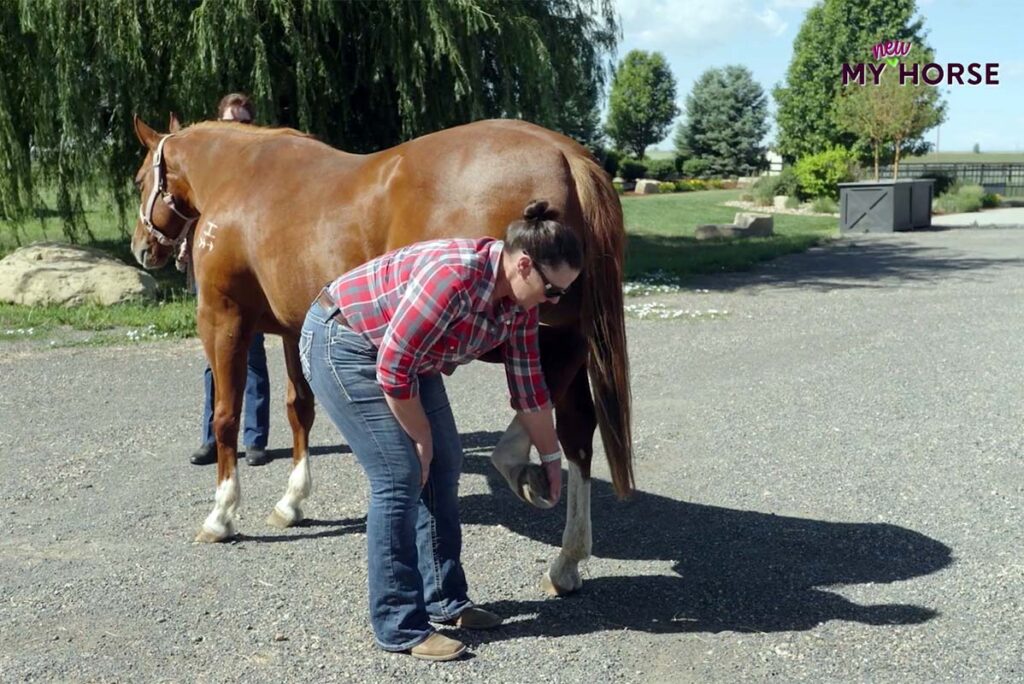
Make sure the hair lies smooth beneath any equipment. Consider how different materials might impact your horse. For instance, some horses react to neoprene, and certain materials can painfully pull long winter hair coats. Do the girth up in small increments. When it is sufficiently tight to stabilize the saddle, walk your horse out a little between tightenings.
Do consider your horse’s conformation when checking girth tightness.
You may know to check your horse’s girth one last time before you mount. Most people do this in the hollow near the horse’s elbow. But differences in conformation can give you a false feeling of looseness when you check this area, resulting in overtightening. I always advise checking in two places: The hollow near the elbow, and with two fingers where the girth crosses the sternum. Based on a horse’s shape, the girth can feel loose near the elbow, but when you check the sternum, it might be so tight you can’t even insert a fingertip there. Use these two data points to guide you on the proper tightness of your individual horse’s cinch or girth.
Do seek professional guidance if needed.
If you’re still seeing signs of discomfort after treating your horse for underlying pain or disease, checking all equipment for fit, and tightening the girth politely, you might need professional behavioral guidance from an equine behaviorist or trainer. Horses that have had prior negative experiences being girthed or saddled often benefit from evidence-based behavior modification techniques, such as counterconditioning, to change how they feel about the equipment and the process.
Related: How to Find Help if Your Horse Is Misbehaving
In Summary
Our horses communicate with us through their behavior. Behaving aggressively or trying to escape during girthing or saddling is a sign that something isn’t right. We can improve their health and welfare by paying attention to such signs and seeking help when needed.
Related Reading
Lauren Fraser, MSc, FFCP, has helped people understand horse behavior problems since 2006. With a background working as a horse trainer, an MSc in clinical animal behavior, and more than a decade working as an equine behavior consultant, Lauren’s approach gets to the heart of why horses behave the way they do and addresses issues using low-stress methods. Lauren also guest lectures at universities, presents at conferences, and creates educational programs for horse owners and equine professionals.
Are you enjoying this content? Sign up for My New Horse’s FREE newsletter to get the latest horse owner info and fun facts delivered straight to your inbox!