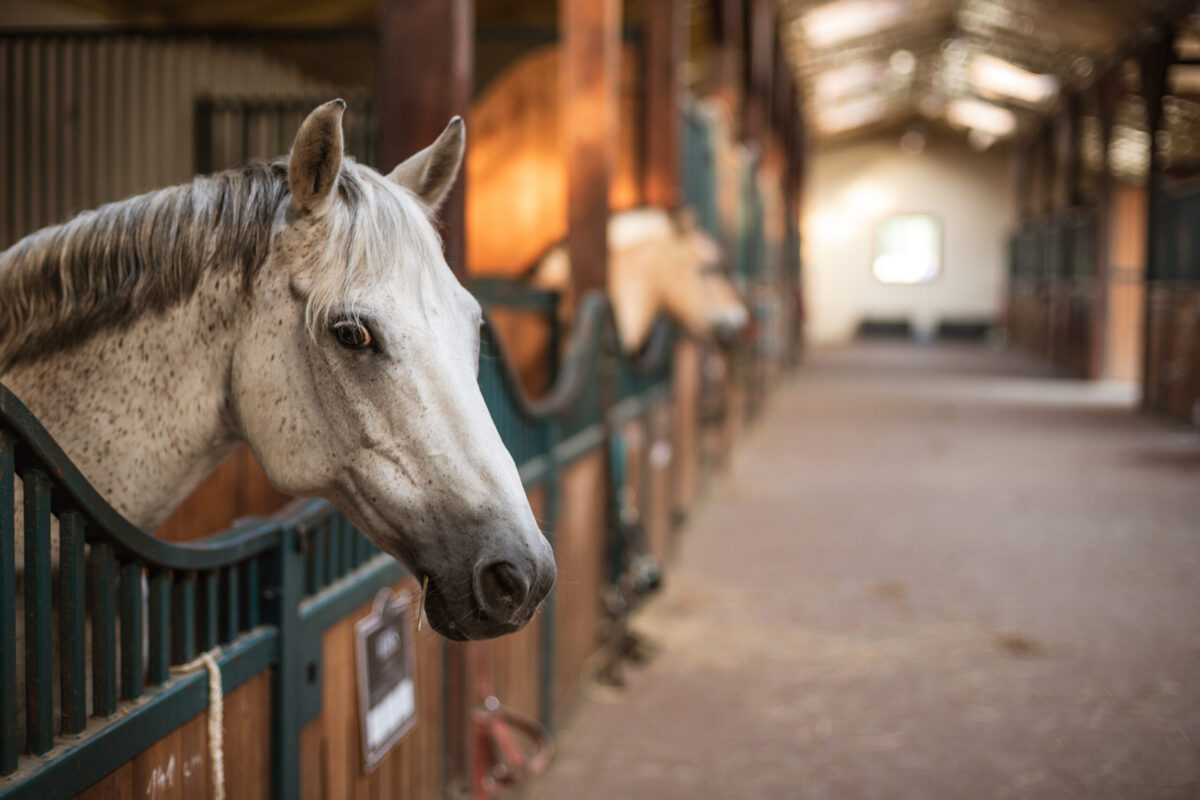
It’s hard to mistake the dramatic sound of a horse kicking their stall wall or door. Stall kicking poses a risk of injury to the horse and can also damage property. As such, the behavior often gets corrected or punished. But horses stall kick for a number of reasons, and punishment might not be the best way to address the issue or improve equine welfare.
Why Do Horses Stall Kick?
Kicking—lifting one or both hind legs off the ground and rapidly extending them backward with intent to hit a target—is a normal equine behavior. It can occur for many reasons, such as:
- When horses are frightened.
- When they feel they cannot escape a dangerous situation.
- To control access to resources like food.
- To control the opportunity to court a mare.
Horses at play will also make inhibited kick threats toward one another, where the kick doesn’t connect or it does so with a light touch. Stall kicking typically happens for one of three reasons:
1. Pain
When a horse experiences pain, the brain processes it in such a way that it also triggers a negative emotion. These emotions can prompt the animal to try to reduce the pain sensation by kicking out. Or, if a horse is in a situation where they cannot reduce their pain, they might become angry or frustrated and lash out as a result. Any horse displaying this behavior should be examined by an equine veterinarian.
2. Social Conflict
If we think about how horses have evolved to live versus how we often house and manage them, it is easy to understand why conflict can occur between neighboring horses. Confinement prevents horses from being able to engage socially in a normal fashion. For example, if a horse pins their ears as a mild threat toward another, under natural conditions the threatened horse can convey they have received the message and respond by moving away. When confined, such delicate communication is often impossible, which can lead to more intense forms of communication, such as stall kicking.
Additionally, horses living under natural conditions can choose when, with whom, and for how long to engage socially. Confinement in proximity to others removes this choice entirely, and horses are simply stuck with whoever ends up beside them. Limiting a horse’s ability to engage in normal social communication and relationships can lead to chronic stress. In cases where social conflict is a cause for stall kicking, moving horses so they share a stall partition with a more compatible neighbor can sometimes help.
Related: Help, My Horse Doesn’t Get Along With Others
3. Frustration
Anger or frustration about certain factors can cause horses to kick stall walls or partitions. For example, horses fed set meals that they consume quickly can feel physical and psychological distress as a result. This is because the horse’s gastrointestinal tract has evolved to trickle feed, processing a near-steady stream of food 24 hours a day.
Not being able to move freely and engage in a wide range of normal behaviors also causes stress, which we can alleviate by providing more turnout time. Performing an audit of a horse’s management and making any necessary changes to ensure their needs are being met can stop behaviors like stall kicking, without need for corrections.
Summary
No horse wants to engage in behaviors such as stall kicking. Stall kicking is a sure sign something in that horse’s life is causing them high levels of stress, whether physical, psychological, or both. By understanding why horses perform unwanted behaviors like this and addressing the underlying cause, we can alleviate stress, improve welfare, and resolve problems without the need for punishment or corrections.
Related Reading:
- How To Deal With Food Aggression in Horses
- How to Find Help if Your Horse Is Misbehaving
- Dealing With a Horse That Paws: Causes and Solutions
Lauren Fraser, MSc, FFCP, has helped people understand horse behavior problems since 2006. With a background working as a horse trainer, an MSc in clinical animal behavior, and more than a decade working as an equine behavior consultant, Lauren’s approach gets to the heart of why horses behave the way they do and addresses issues using low-stress methods. Lauren also guest lectures at universities, presents at conferences, and creates educational programs for horse owners and equine professionals.
Are you enjoying this content? Sign up for My New Horse’s FREE newsletter to get the latest horse owner info and fun facts delivered straight to your inbox!