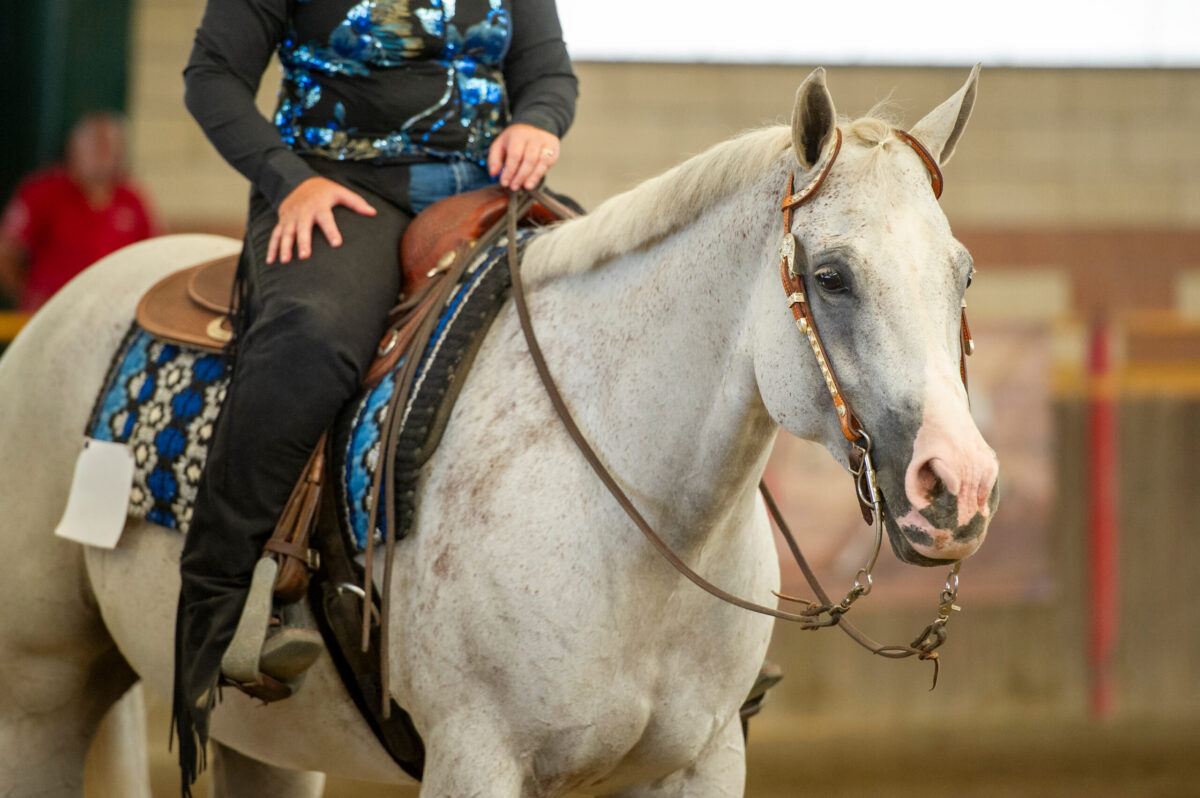
Have you ever paused mid-ride and wondered, “Have we been out here too long?” Well, the answer isn’t always straightforward. The “right” ride length depends on a handful of moving parts, including your horse’s fitness, what discipline you’re riding, how hard you’re working, the weather, and your horse’s age and body condition. Most importantly, it involves learning to read the horse beneath you.
Here’s what the research and experts say about how long you should ride your horse.
Baseline Recommendations
For a healthy, appropriately conditioned horse, a typical recreational ride might last about 30-60 minutes, including walking, schooling, and periods of harder work. But that’s a starting point, not a rule.
A 45-minute ride spent mostly walking is a very different workout from a 45-minute dressage schooling session, a jumping lesson, or a trail ride with lots of hills. In fact, the National Research Council’s (NRC) Nutrient Requirements of Horses considers duration, frequency, and intensity when describing a horse’s workload.
So instead of asking, “How many minutes should I ride?” it might be more useful to ask, “How much work is appropriate for my horse today?”
Start With Your Horse’s Fitness Level
One of the biggest mistakes a rider can make is assuming their horse can handle a certain ride simply because the horse looks fit or has done it before.
If your horse has been off for several weeks or months, don’t make the first ride back a two-hour trail adventure. Build duration and intensity gradually.
A horse that is exercised regularly might comfortably handle a longer recreational ride than a horse coming back from time off. An older horse, young horse, overweight horse, or horse recovering from an injury or illness will likely need a different plan. The American Association of Equine Practitioners recommends consulting your veterinarian about an appropriate exercise program for an individual horse, particularly after a period of inactivity or rehab.
For a horse just getting back into work, think minutes, not miles. Start with mostly walking and short periods of more demanding exercise, then gradually increase the workload as your horse becomes fitter.
Related: How to Get Your Horse Back in Shape This Spring
Considerations by Riding Discipline
A ride isn’t necessarily hard just because it lasts a long time. Likewise, a relatively short ride can be physically demanding.
Trail Riding
A leisurely trail ride can last an hour or more, particularly if much of the ride is at a walk. But terrain matters. Hills, deep footing, heat, and long stretches of trotting can turn an easy-looking trail ride into a significant workout.
If you’re a new rider or your horse isn’t conditioned for longer rides, start with shorter outings and build distance gradually. Penn State Extension recommends planning your trail route in advance and riding at a speed that’s comfortable for the least-experienced horse and rider in the group.
Dressage and Flatwork
A hack can be shorter than a trail ride but still provide plenty of exercise. For a typical schooling ride, 30-45 minutes of total riding time might be plenty, especially for a novice horse or rider. You don’t need to spend that entire time asking for trot or canter. Incorporate walking breaks, transitions, changes of direction, and periods of relaxed work.
Jumping
Jumping can be physically and mentally demanding, and a session doesn’t need to be long to be effective. Rather than spending an hour going over jump after jump, you might spend 30-45 minutes warming up, working on flat exercises, jumping a limited number of efforts, and cooling down.
Western Disciplines
Reining, cutting, ranch riding, barrel racing, and other Western disciplines vary considerably in intensity. A relaxed ranch ride might involve substantial walking and jogging, while arena disciplines often include repeated high-speed stops, turns, spins, or other maneuvers, creating a much more demanding workout.
Endurance Riding
Endurance is a completely different category. Horses competing in endurance events may work for hours and cover many miles, but they are specifically conditioned for that workload. The NRC places endurance horses among those performing very heavy workloads.
Related: How To Choose the Right Horseback Riding Discipline
Don’t Forget the Warm-Up and Cooldown
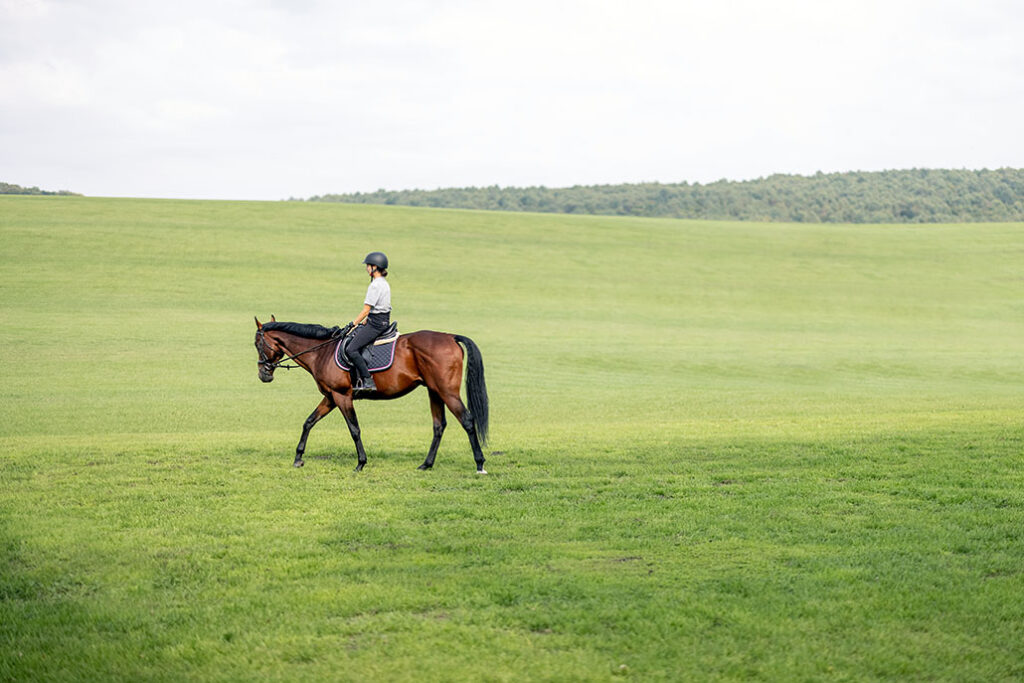
Your ride isn’t just the time you spend trotting, cantering, jumping, or practicing maneuvers. Give your horse time to warm up before asking for harder work. A guide from Utah State University Extension recommends 10-20 minutes of active, forward walking before more demanding exercises.
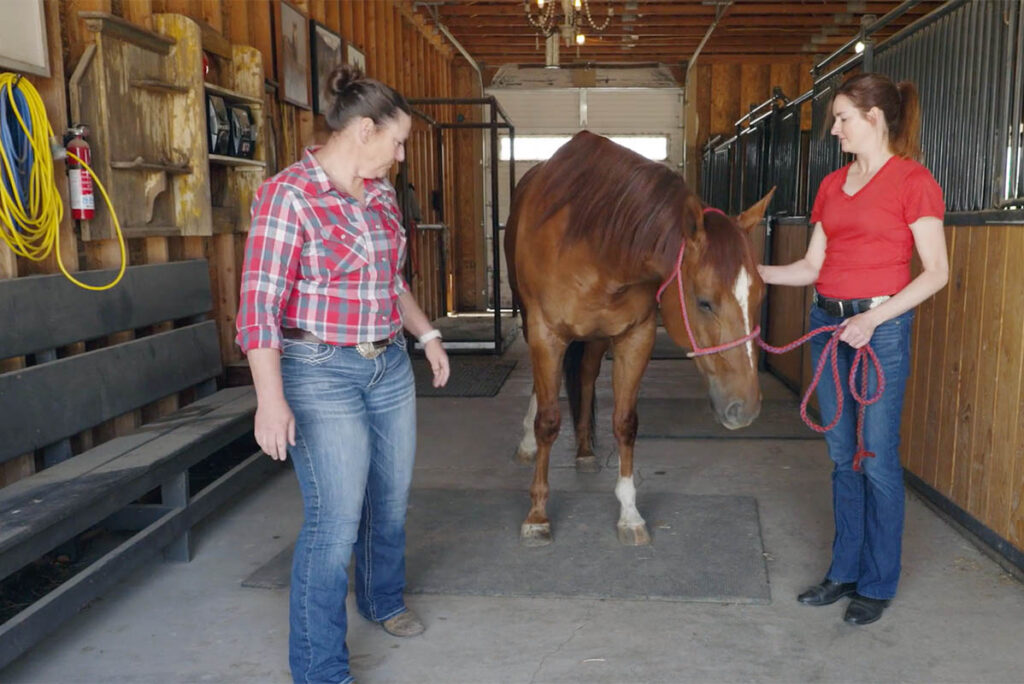
A warm-up gives you another benefit: It’s an opportunity to see how your horse feels that day. Is he moving freely? Is he attentive? Does he feel sound, symmetrical, and comfortable? Is he unusually stiff, reluctant, or resistant? Those observations might tell you whether your planned workout is appropriate.
Likewise, finish with an adequate cooldown. Walk your horse until his breathing and heart rate have lowered, and he is no longer hot and blowing heavily.
Related: The Importance of Warming Up and Cooling Down Your Horse
Signs Your Horse Is Tiring
An exhausted horse is an unsafe horse. Fatigue rarely arrives suddenly. It builds gradually, and horses generally show telltale signs before things become serious. Keep an eye out for:
- Losing focus or becoming less responsive to your cues.
- Slower responses than usual.
- Stumbling or becoming less coordinated.
- Difficulty maintaining a gait.
- Becoming unusually resistant or irritable.
- Heavy or labored breathing.
- Excessive sweating.
- Reluctance to continue.
- Changes in his way of going.
- A noticeable decline in the quality of his work.
Research also shows that fatigue can affect how a horse moves. In a treadmill study, researchers observed changes in stride duration, stride frequency, and joint motion as a horse became fatigued.
Heat adds another layer to the equation. Penn State Extension recommends considering temperature, humidity, and the horse’s fitness level when exercising in hot conditions. On particularly hot or humid days, shortening the ride or skipping it altogether might be the safest choice.
When Should You Call it a Day?
Sometimes the best ride is the one you end early. If you’ve accomplished what you set out to do and your horse is still feeling good, there is little benefit to adding another 20 minutes just because you planned to ride for an hour. And if your horse starts showing signs of fatigue, discomfort, or loss of coordination, that’s your cue to wrap things up.
There’s also nothing wrong with ending on a simple success. If your horse gives you one particularly good transition, relaxed stretch, or confident response to a new exercise, you don’t necessarily need to keep drilling it.
Take-Home Message
A fit endurance horse might comfortably cover ground for hours, while a horse just starting back into work might be genuinely tired after 20 minutes of trotting circles. So don’t get too hung up on hitting a specific number of minutes. Instead, use this basic approach:
Start easy → warm up → do your planned work → take breaks → watch your horse → stop before he’s exhausted → cool down.
Over time, you’ll learn what your individual horse feels like when he’s fresh, comfortably working, and starting to tire. The goal of a good ride isn’t to keep your horse working for as long as possible. It’s to give him an appropriate amount of work for his fitness, goals, and health and finish while he’s still feeling good.
Related Reading:
- On the Move: The Importance of Regular Exercise for Horses
- How Hot Is Too Hot to Ride a Horse?
- How Often Can or Should I Ride My Horse?
Are you enjoying this content? Sign up for My New Horse’s FREE newsletter to get the latest horse owner info and fun facts delivered straight to your inbox!