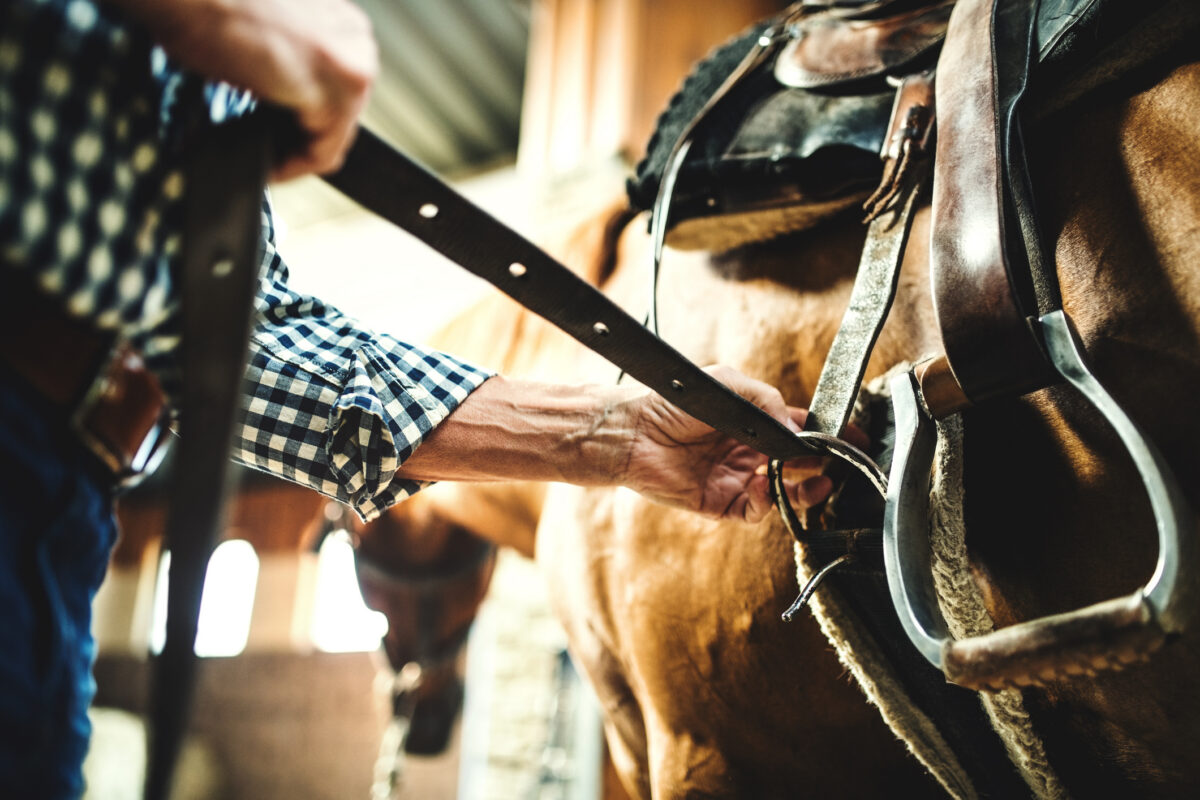
You know your horse’s girth or cinch needs to be snug enough to keep the saddle secure and prevent it from slipping while you ride. But can you tighten it too much? And if so, could it make your horse uncomfortable or even cause harm? Fortunately, science offers some answers. In this article, we’ll share research findings, as well as important rules of thumb and things to watch for, so you can tack up with confidence.
Girth vs. Cinch
If you ride English, the strap that secures your saddle is called a girth. If you ride Western, it’s a cinch. They do the same job, but they attach a little differently. For the rest of this article, we’ll use “girth” and “cinch” interchangeably, but we’ll flag the differences where they matter.
Why Girth Tightness Matters
It’s tempting to think “tighter is safer.” After all, you don’t want your saddle sliding sideways mid-ride. But science suggests that overtightening comes with consequences. Researchers in Australia exercised eight racehorses on a treadmill with girths tightened to a range of tensions and found that horses’ movement and comfort were measurably affected as girth tension increased. Very tight girths correlated with visible pressure marks and decreased performance during exercise.
The data makes sense when you think about it: Every time your horse breathes, especially during exercise, his rib cage expands. A too-tight girth can restrict that expansion right when he needs oxygen most. Equine biomechanics expert Dr. Hilary Clayton has explained that an overly tight girth can be uncomfortable and might even limit performance, particularly in disciplines that demand cardiovascular effort.
On the flip side, a girth that’s too loose is a safety hazard. A saddle that shifts or slips can startle your horse, throw off your balance, or cause a dangerous fall. The goal isn’t loose vs. tight; it’s finding that appropriately snug middle ground.
The Two- or Three-Finger Rule
The most widely taught guideline for both girths and cinches is that you should be able to comfortably slide two to three fingers, up to the first or second knuckle, between the girth and your horse’s body once it’s tightened for riding. If you can only wedge in a fingertip, it’s too tight. If your whole hand slides in with room to spare, it’s too loose.
Related: Saddle Fitting 101: How and Why To Check Your Horse’s Tack
How to Tighten a Girth or Cinch the Right Way
Snug it up gradually. Don’t crank the girth to full tightness the moment you put the saddle on. Tighten it just enough to keep the saddle in place, then walk your horse a few steps and tighten again in stages. Most horses relax their body after a few minutes, which makes a final tightening easier and more comfortable.
Check it again before you mount. A girth that felt snug five minutes ago might have loosened as your horse settled. Always give it a check and, if needed, one more small tighten right before you get on.
Recheck it again after warm-up or a few minutes of riding. As your horse warms up and moves, especially in Western riding where saddles tend to shift more during the first few minutes, the cinch can loosen. You might want to take a quick pause to snug things up mid-ride.
Tighten evenly. For English girths with billets on both sides, most riders tighten from the horse’s left/near side. But ideally, you want roughly even tension on both sides rather than cranking one side dramatically tighter than the other, which can twist the saddle out of balance.
Loosen it before you get off, and loosen it further once you’re done riding, so your horse can breathe and relax right away.
Other Cinching Tips
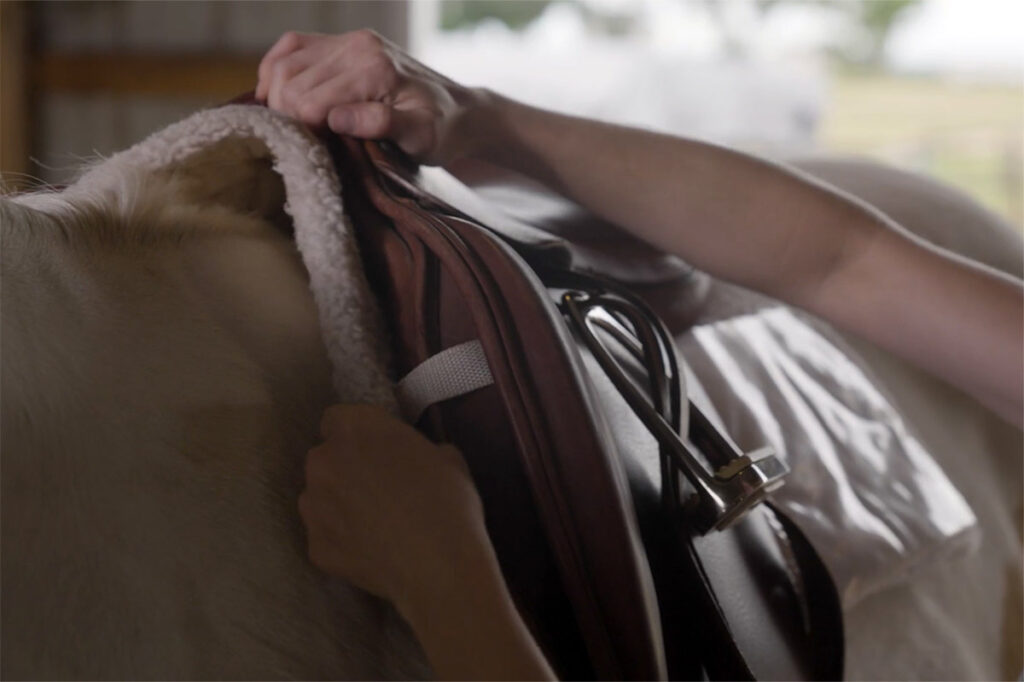
Whether you use a girth or a cinch, make sure it sits about an inch or two behind your horse’s elbow, in the natural “girth groove.” Too far forward and it can rub or pinch with every stride. Too far back and it can slip forward once your horse starts moving.
If you’re riding Western with a double-rigged saddle, remember the rear or flank cinch matters too. It should be snug enough to prevent the back of the saddle from popping up, but it should never be pulled drum-tight, and it should always be attached. A swinging, loose rear cinch can cause a horse to buck or spook.
Watch for Girthiness
If your horse pins his ears, swishes his tail, tries to bite, or braces every time you tighten the girth, don’t just chalk it up to a bad attitude. This behavior, sometimes called girthiness or girth aversion, is often a sign of physical discomfort rather than a training problem. The most common cause is gastric ulcers, followed by orthopedic issues and poor saddle fit.
If your horse is consistently girthy, it’s worth a conversation with your veterinarian and a saddle fitter rather than assuming the girth is too tight or he just “doesn’t like being tacked up.”
Related: Why Is My Horse Girthy? Common Causes and What to Do
Take-Home Message
Keep these tips in mind when tacking up so you can achieve the ideal girth tightness:
- Aim for two to three fingers of slack under a properly seated girth or cinch.
- Tighten in stages, not all at once.
- Recheck before mounting and again early in your ride.
- Too tight can restrict breathing, movement, and comfort, while too loose risks a slipping saddle.
- Consistent resistance to girthing up is worth investigating as a possible pain signal, not just a behavioral issue.
Girth and cinch tightness isn’t something you’ll master on Day 1. Pay attention to your horse, ask your trainer or a more experienced horse owner to check your work, and over time you’ll develop a feel for what “just right” means for your horse.
Related:
Are you enjoying this content? Sign up for My New Horse’s FREE newsletter to get the latest horse owner info and fun facts delivered straight to your inbox!