You walk out to the paddock, and your horse ambles over to you with an unmistakable limp. Your stomach drops a little. Is this an emergency? Should you call the vet right now, or can it wait until morning? If you’re new to horse ownership, a lame horse can feel like a five-alarm fire. Fortunately, there’s a pretty methodical checklist most owners can work through to get answers. Here’s what to do.
Step 1: Stay Calm and Assess the Situation
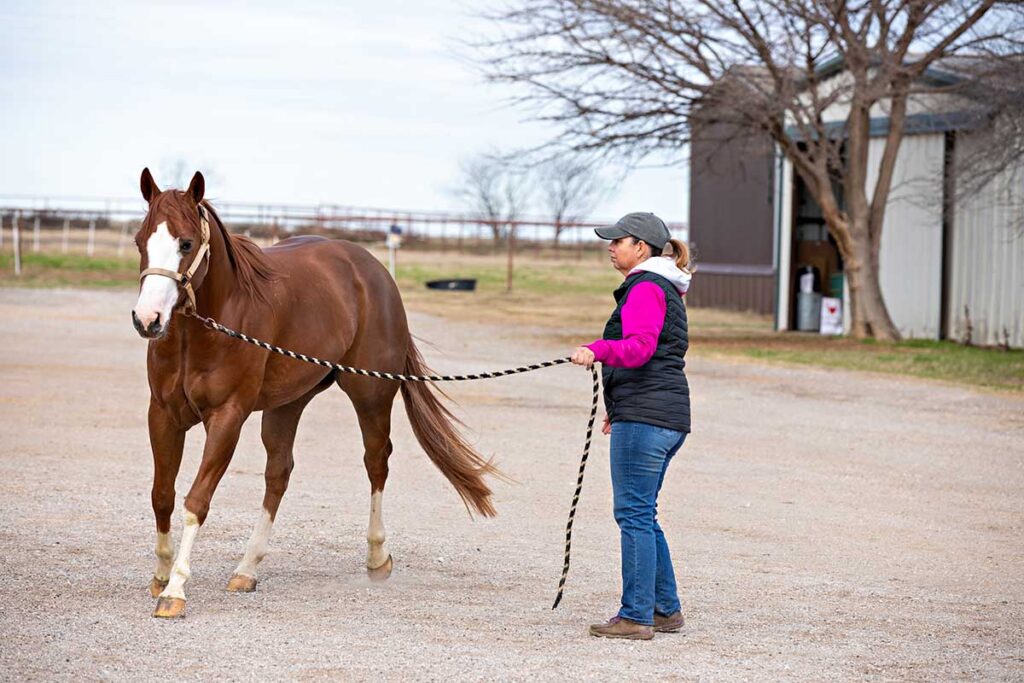
Start with the power of observation. Recruit a helper to hand-walk and (if possible) jog your horse in a straight line, then in large circles both directions. Make sure they’re doing this on flat, level ground (a driveway or barn aisle works better than grass). Ask yourself:
- Is the limp obvious at a walk, or does it only show up when trotting?
- Is your horse touching the toe down but avoiding full weight, or refusing to put the hoof down at all?
- Which leg (or legs) seem affected?
- Did anything unusual happen recently, such as a hard ride, turnout in a new pasture, a shoeing appointment, or a change in footing?
You don’t need to know what’s wrong yet. You just need to be able to describe what you’re seeing, because that’s the information your veterinarian will ask for when you call.
Related: Identifying Lameness in Horses: Which Leg Hurts?
Step 2: Check the Hoof First
Many causes of sudden lameness originate at the bottom of the leg, not the top. So you’ll want to start your hands-on examination at the feet. Pick up each hoof and look for:
- A rock, stick, or debris wedged into the sole or frog.
- A visible nail, puncture wound, or embedded object (don’t remove anything you find lodged deep in the foot; let your vet handle that).
- Dark bruising on the sole.
- Heat in the hoof wall or a strong, pounding digital pulse (feel gently at the back of the fetlock, along the sides).
- Hoof cracks.
- A loose or lost shoe or a shoe that’s shifted out of place.
A stone bruise or an abscess brewing beneath the sole is one of the most common causes of sudden, dramatic lameness—and often one of the easiest to resolve.
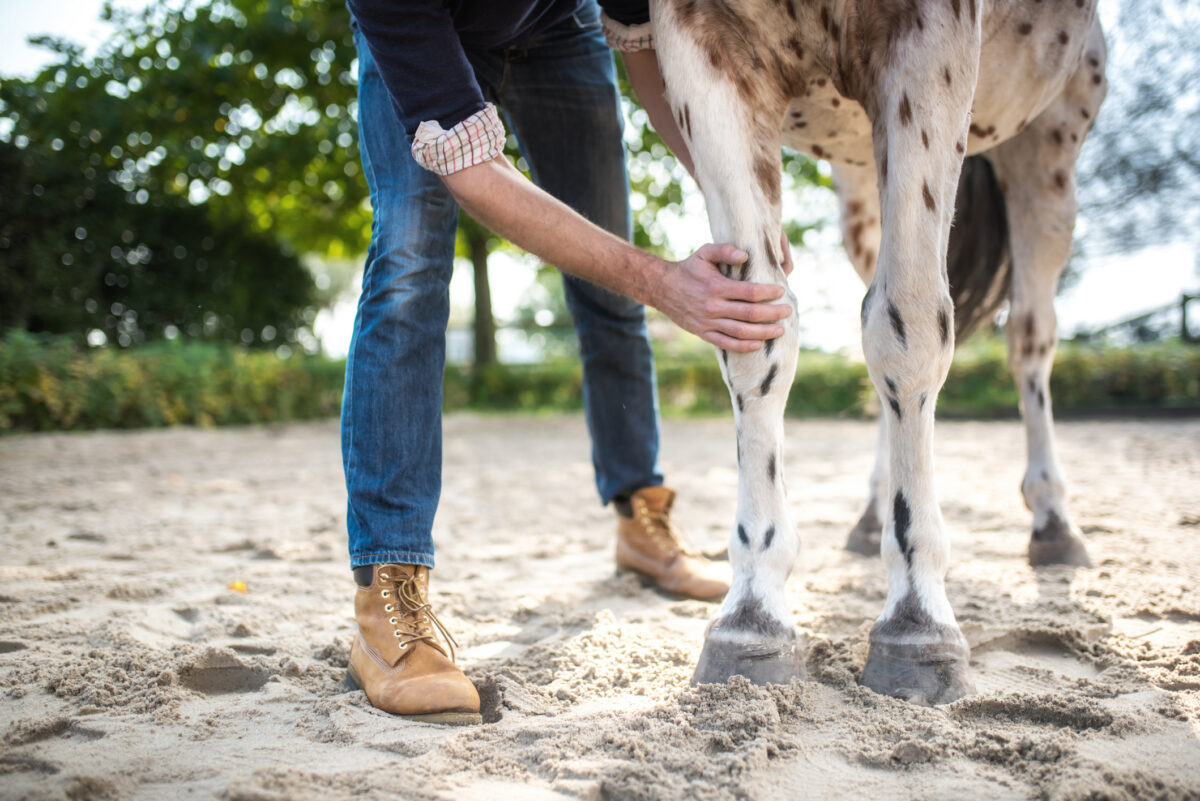
Step 3: Run Your Hands Down the Leg
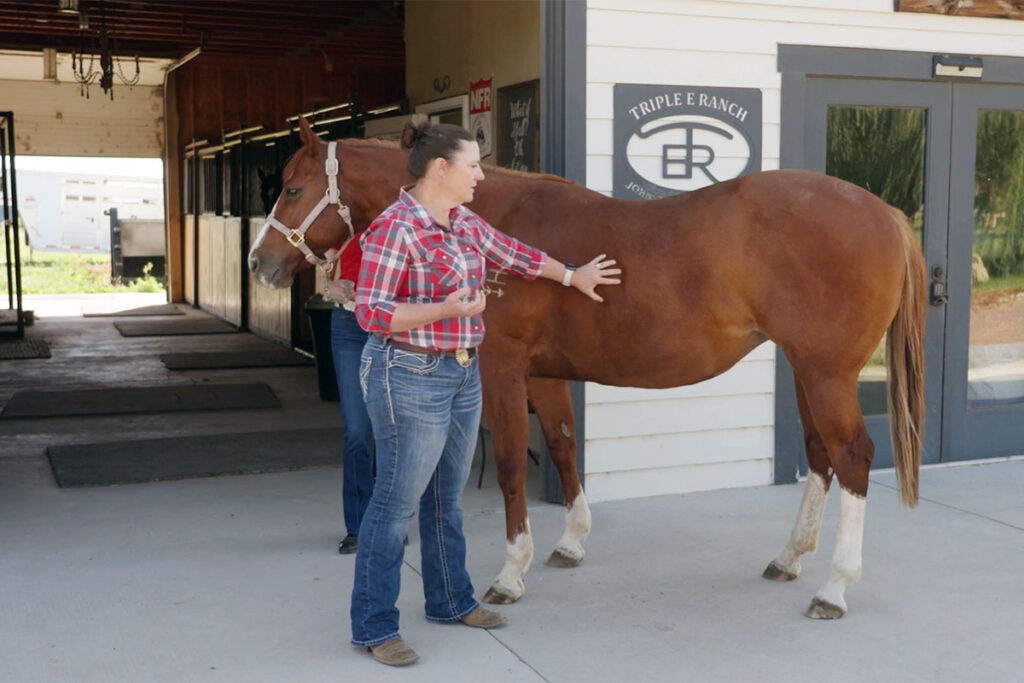
Next, work your way up from the hoof, feeling both legs of the same pair (both front or both hind) so you have a normal limb to compare against. You’re checking for:
- Heat, which can indicate inflammation.
- Swelling or puffiness, especially around a joint or tendon.
- Sensitivity when you apply gentle pressure.
- Any obvious wound, cut, or swelling.
If one leg feels noticeably warmer or more swollen than its coordinating leg, make a mental (or written) note of exactly where.
Step 4: Decide How Urgent This Is
Not every limp needs an emergency vet visit, but some absolutely do. Situations that call for an immediate call to the vet include a horse that won’t bear any weight on a limb, a leg that’s obviously swollen or misshapen, sudden severe lameness paired with heat and a bounding digital pulse (a hallmark of laminitis), or any wound near a joint or tendon sheath.
A milder, weight-bearing lameness that came on suddenly is generally considered urgent but not a middle-of-the-night emergency. Give your vet a call that day or first thing the next morning. A mild, intermittent unsoundness that’s been there a while and isn’t getting worse can often wait for a scheduled farm call.
When in doubt, call your veterinarian’s office anyway. Describe what you found on your exam (e.g., which leg, how severe, if there’s heat or a pulse, and whether your horse will even walk). A veterinarian or vet tech on staff can help you triage over the phone, and it usually costs nothing to ask.
Related: When to Call the Vet for a Horse
Step 5: Make Your Horse Comfortable While You Wait
Know how to provide basic supportive care while you’re waiting for a vet visit. Make sure you’re comfortable handling these tasks before they’re needed, and ask an experienced horse owner, trainer, or veterinarian to demonstrate how to do them. Steps your veterinarian might recommend include:
- Moving your horse to a stall or small paddock so they can’t reinjure themselves moving around.
- Cold-hosing a warm, swollen leg for 15-20 minutes if there’s no open wound.
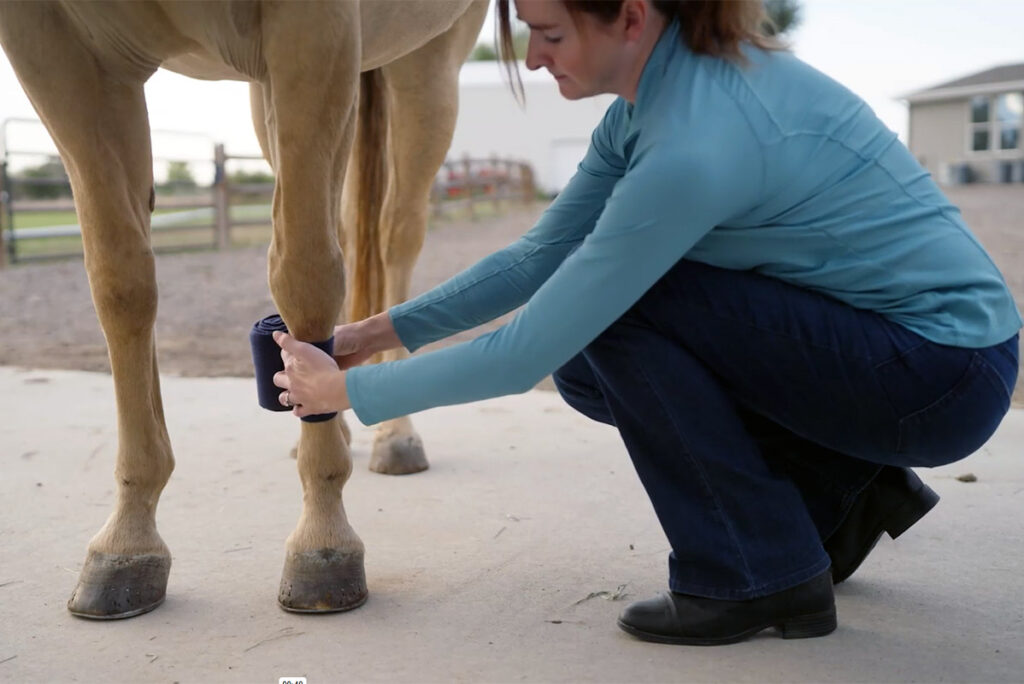
- Wrapping a leg with a standing bandage only if you’re confident in how to do it correctly, because an improper wrap can cause more harm than good.
- Icing the foot and lower limb if you suspect laminitis.
Never give pain medications like bute or banamine before consulting your vet. They can mask important signs your vet needs to see, and incorrect dosing can cause its own problems.
Take-Home Message
Finding your horse limping can be unsettling, but don’t panic. Work through these steps in order: Observe the gait, check the feet, run your hands down the legs, gauge the severity, and get your vet on the phone with useful information in hand. The horses with the best outcomes are almost always the ones whose owners noticed something early, looked closely, and didn’t wait to ask for help.
Related Reading
- What to Do If Your Horse’s Leg Is Swollen
- Why Is My Horse Limping? Causes of Equine Lameness
- What Does it Mean if Your Horse Is ‘Stocking Up’?
This article is for general education and isn’t a substitute for veterinary care. Always consult your veterinarian for diagnosis and treatment of your horse.
Are you enjoying this content? Sign up for My New Horse’s FREE newsletter to get the latest horse owner info and fun facts delivered straight to your inbox!