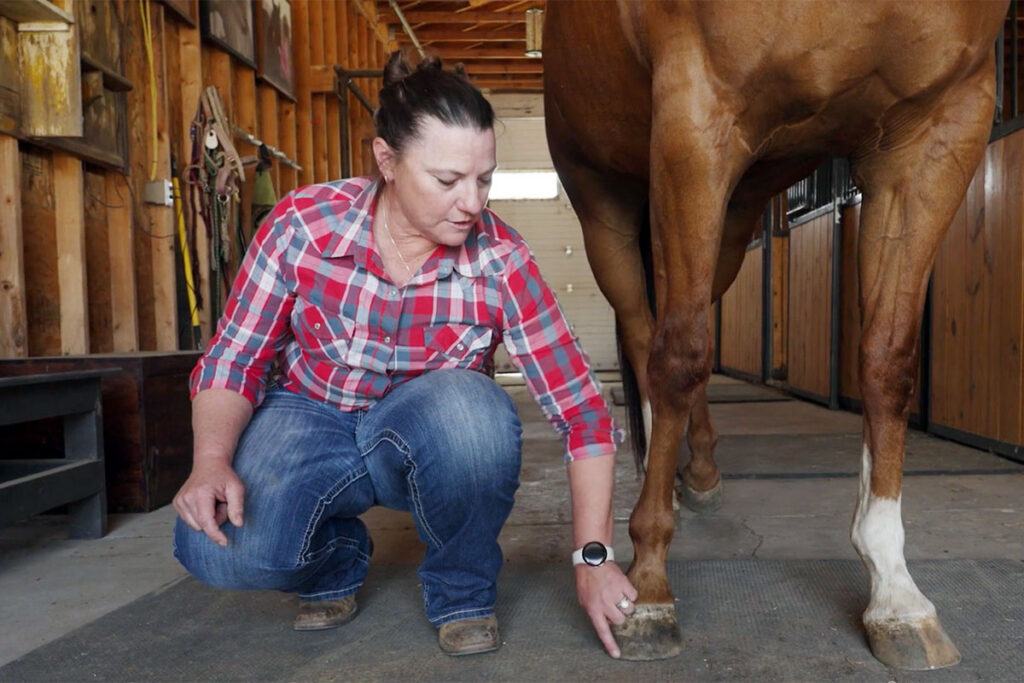
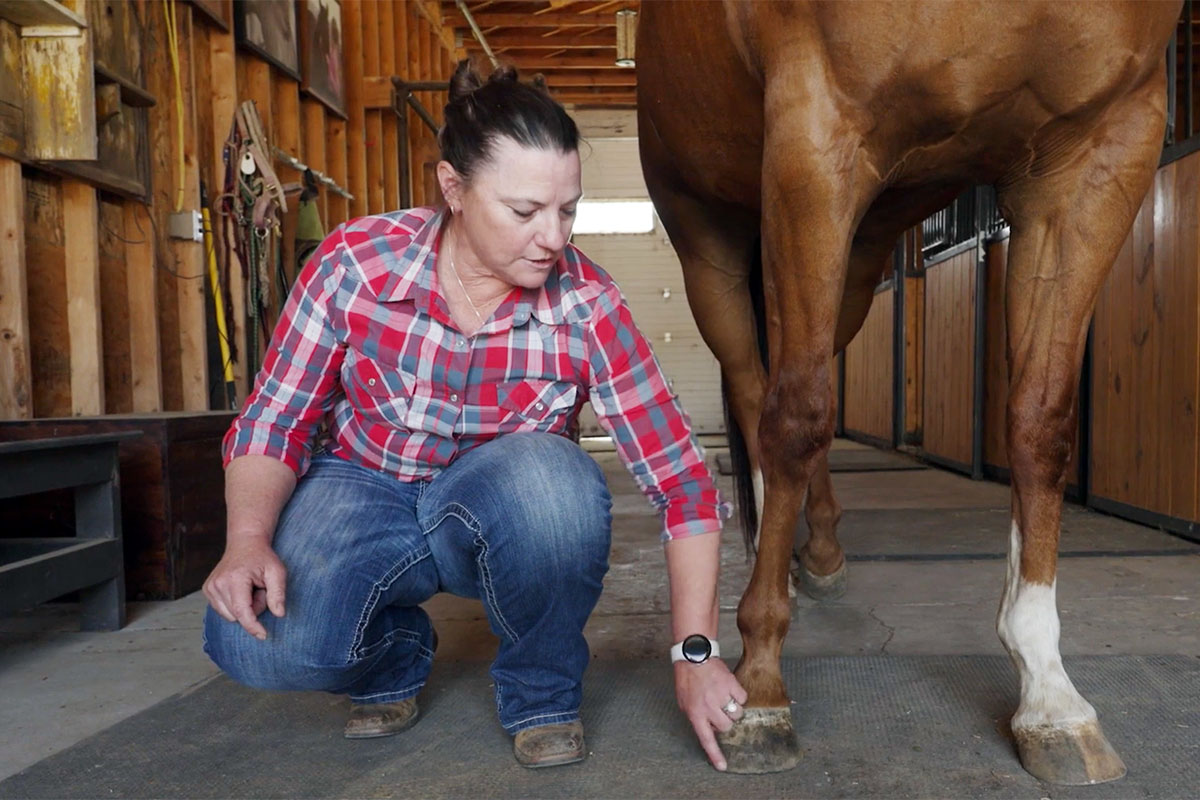
When assessing the health of your horse’s hooves, you’ll want to look at hoof quality, symmetry, and the bottom of the foot. Anna Bracken, DVM, clinical instructor in equine field service at Colorado State University, says she starts by comparing the hooves’ symmetry.
“Nobody is 100% perfect, but I want them to be more or less equivalent,” she says. “You might appreciate that one (hoof) is a little bit higher than the other, but the distance from coronet bands to the ground should be relatively proportional, left versus right.”
The hoof capsule is a dynamic structure that changes in response to how a horse moves, developing wear patterns based on how each foot lands. While mild differences between hooves are normal, a pronounced imbalance—such as one hoof becoming tall and upright while the other grows flatter—can indicate the horse is unweighting one limb and landing more heavily on the other.
Next, Bracken looks at the horse from the side to determine whether the angle of the hoof matches the angle of the shoulder. Major asymmetries are red flags of underlying issues. She says she also checks for cracks in the hoof wall, explaining that chipping around the toes doesn’t usually indicate a problem, but a significant crack, especially on the quarter of the foot, can point to an imbalance requiring veterinary and farrier attention.
Lastly, she looks at the foot from the bottom to evaluate the quality of the frog and the shape of the hoof. “I want the foot to be more or less concave,” says Bracken. “The frog should be in contact with the ground, and the hoof wall should be the primary weight-bearing surface of the foot. So if your horse is landing very flat and putting too much pressure on the sole, then that can make them quite sore.” While looking at the sole, she also looks for signs of thrush.
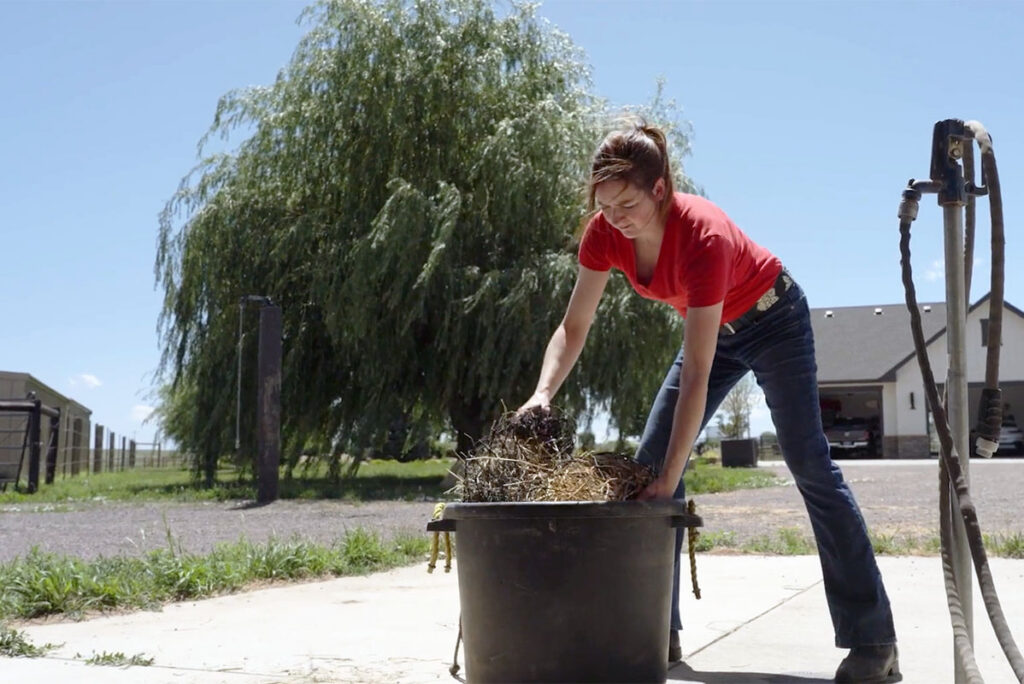
In closing, Bracken recommends thoroughly cleaning out your horse’s feet every day and paying attention to anything unusual.
Related:
- Common Horse Hoof Problems and How To Manage Them
- Horse Hoof Anatomy: What Every Owner Should Know
- How To Communicate With Your Horse’s Farrier
Are you enjoying this content? Sign up for My New Horse’s FREE newsletter to get the latest horse owner info and fun facts delivered straight to your inbox!